Language
 中文简体
中文简体 English
 عربى
عربى русский
Content
- 1 The Main Types of Wire Drawing Machines Explained
- 2 Side-by-Side Comparison: Which Machine Fits Which Scenario
- 3 How to Match Machine Type to Your Production Requirements
- 4 Key Technical Specifications to Evaluate Before Buying
- 5 Real-World Scenario: Choosing the Right Machine for Three Common Production Lines
- 6 Total Cost of Ownership: Beyond the Purchase Price
- 7 Final Recommendation: A Decision Framework
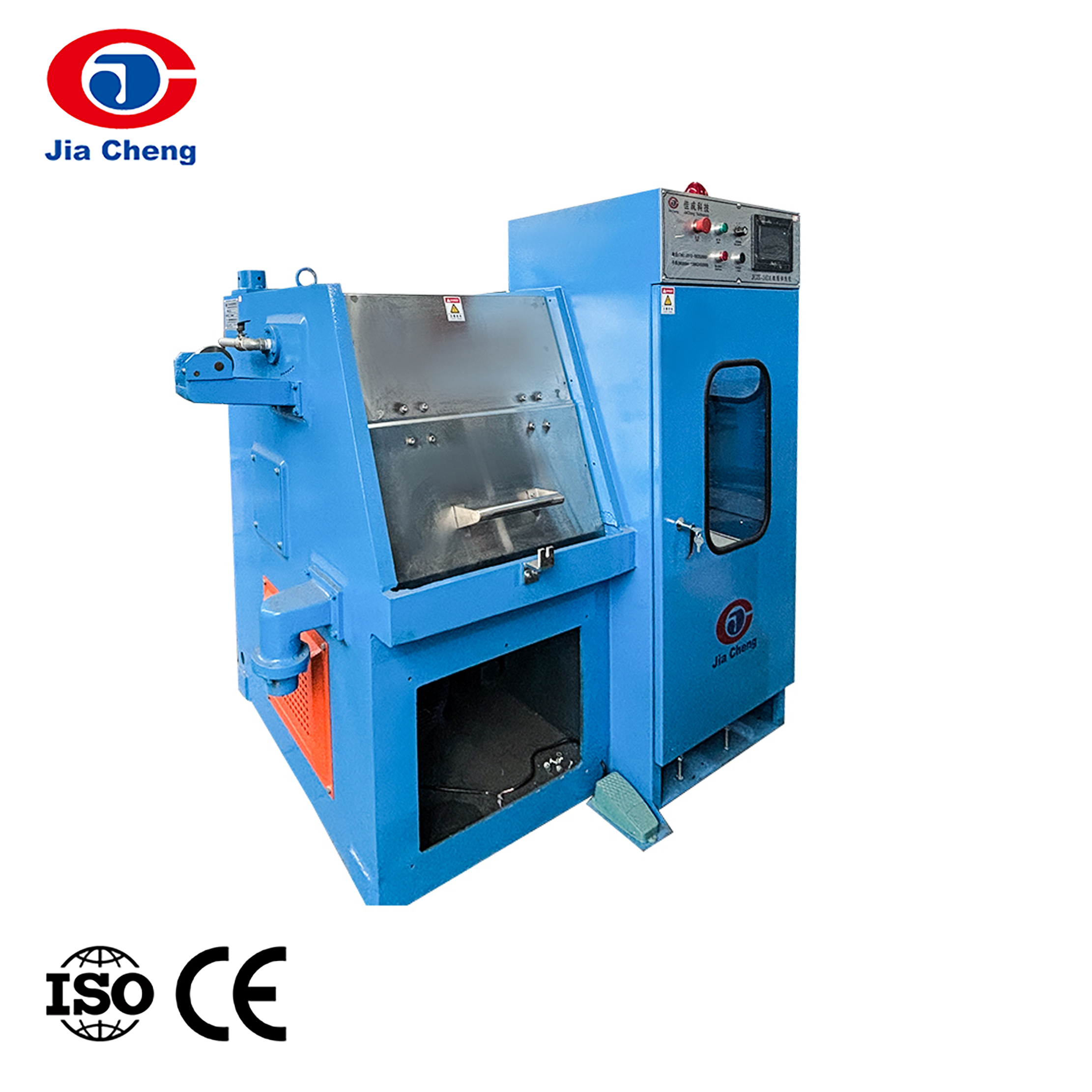
The short answer: there is no single "best" wire drawing machine — the right choice depends on your wire material, target diameter, production volume, and automation requirements. However, for most mid-to-large-scale copper wire manufacturers, a multi-die continuous wire drawing machine delivers the best balance of speed, consistency, and cost efficiency. For steel wire or specialty applications, a straight-line wire drawing machine is typically the superior choice.
This guide breaks down each major machine type, maps them to real production scenarios, and gives you a clear framework for making the right investment decision.
The Main Types of Wire Drawing Machines Explained
Wire drawing machines fall into several core categories, each engineered for distinct wire types and output goals. Understanding their mechanical differences is the first step toward a smart purchasing decision.
Bull Block (Single-Die) Wire Drawing Machine
This is the simplest form — wire passes through a single die and winds onto a large rotating drum called a bull block. It is best suited for heavy-gauge wire reduction, typically from 8mm rod down to 2–3mm wire.
- Typical speed: 1–5 m/s
- Reduction per pass: 15–25%
- Best for: steel wire rope, fencing wire, large-diameter copper rod breakdown
Multi-Die Continuous Wire Drawing Machine
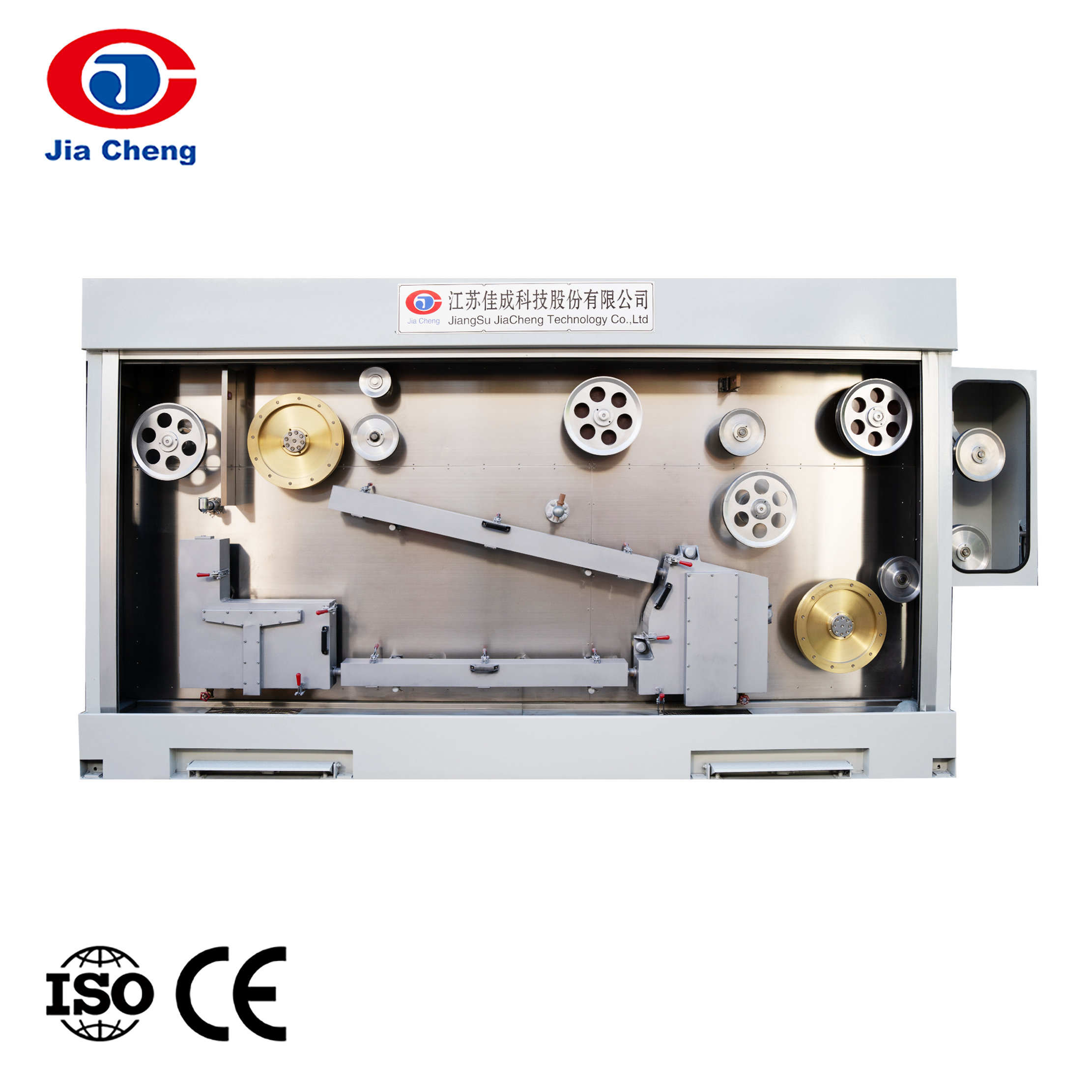
Wire passes through a series of dies (typically 7 to 25 dies) in sequence, progressively reducing the diameter in a single continuous pass. This is the workhorse of copper wire manufacturing.
- Typical speed: 10–30 m/s for fine copper wire
- Output diameter range: 0.1mm–3mm
- Best for: magnet wire, enameled wire, electrical conductor wire
Straight-Line Wire Drawing Machine
Unlike capstan-style machines, the wire travels in a straight path through each die without twisting. This is critical for high-carbon steel, spring wire, and stainless steel where torsional stress must be avoided.
- Typical speed: 2–8 m/s
- Number of dies: 5–13
- Best for: tire bead wire, PC wire, spring steel wire
Inverted (Upward) Wire Drawing Machine
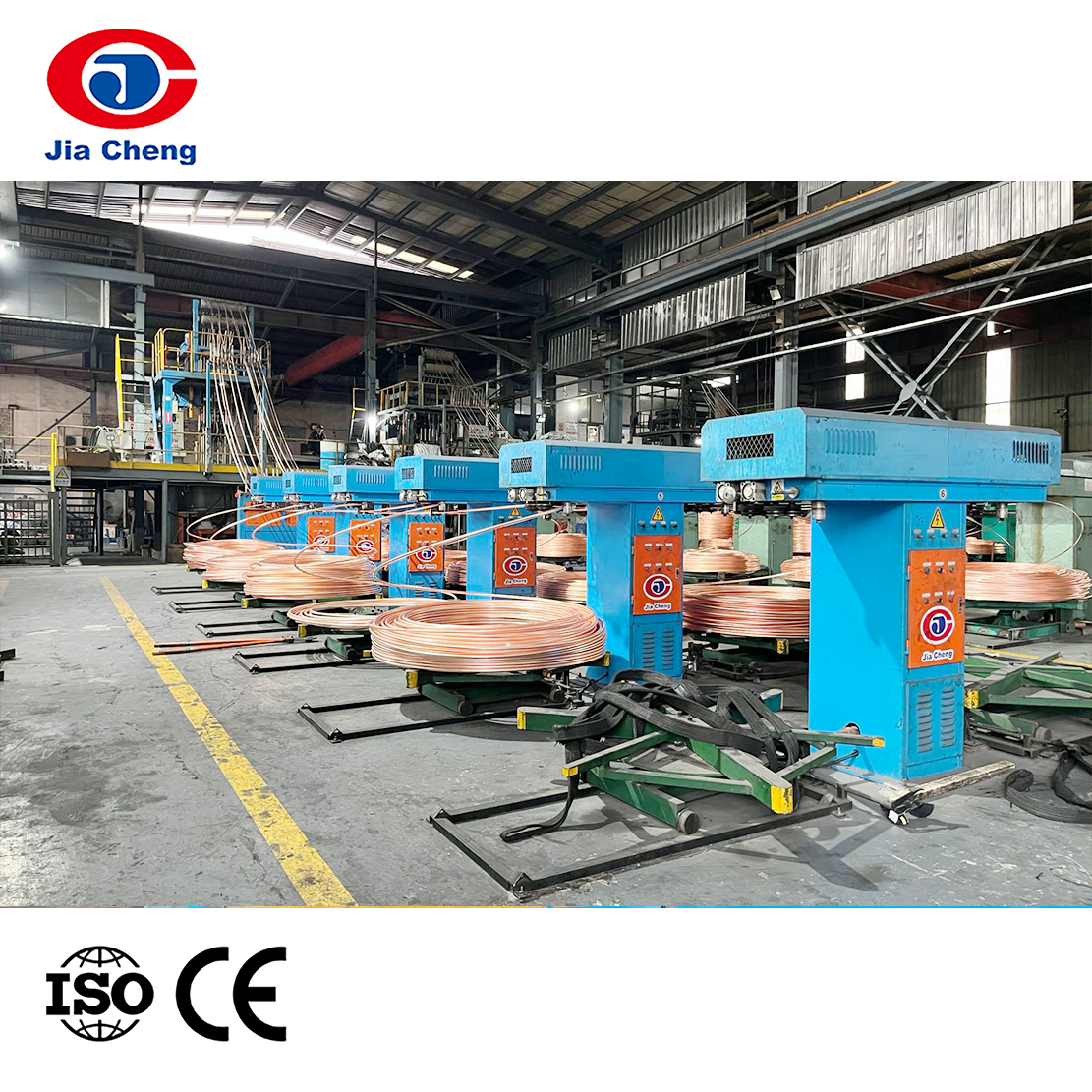
The wire is drawn upward and coiled into baskets or spools in a vertical layout. This design eliminates the need for a separate spooler and is favored in medium-speed aluminum and copper wire production.
- Output format: coil baskets (500–2000 kg per coil)
- Best for: downstream stranding lines that consume large coil inputs
Fine and Ultra-Fine Wire Drawing Machine
Engineered for precision micro-wire production, these machines operate at extremely tight tolerances using diamond dies and vibration-isolated frames.
- Output diameter: as fine as 0.01mm (10 microns)
- Applications: bonding wire for semiconductors, medical guidewires, audio cables
- Die material: natural or synthetic diamond (PCD)
Side-by-Side Comparison: Which Machine Fits Which Scenario
The table below summarizes the key performance parameters and ideal use cases for each machine type to help you quickly identify the best match for your production line.
| Machine Type | Best Material | Output Diameter | Speed Range | Typical Application |
|---|---|---|---|---|
| Bull Block | Steel, Copper | 2–6 mm | 1–5 m/s | Rod breakdown, fencing wire |
| Multi-Die Continuous | Copper, Aluminum | 0.1–3 mm | 10–30 m/s | Electrical wire, magnet wire |
| Straight-Line | High-Carbon Steel | 0.5–4 mm | 2–8 m/s | Spring wire, tire bead wire |
| Inverted / Upward | Copper, Aluminum | 1–5 mm | 5–15 m/s | Stranding line feed wire |
| Fine / Ultra-Fine | Copper, Gold, Platinum | 0.01–0.3 mm | 5–20 m/s | Semiconductor bonding wire, medical wire |
How to Match Machine Type to Your Production Requirements
Before evaluating any specific machine model, answer these four questions about your production line:
1. What is your wire material?
Material is the most decisive factor. Copper and aluminum are ductile and tolerate the high-speed capstan-style multi-die process well. High-carbon steel and stainless steel are less ductile and require straight-line machines to avoid torsion cracking. Precious metals and specialty alloys often demand ultra-fine machines with diamond dies and liquid nitrogen cooling.
2. What is your target wire diameter?
If your finished wire is above 2mm, a bull block or a short-die series machine is likely sufficient. For diameters between 0.3mm and 2mm, a standard multi-die continuous machine is ideal. For anything below 0.3mm, you need a dedicated fine wire drawing machine — attempting micro-wire on a general-purpose machine results in frequent wire breaks and die damage.
3. What is your daily output target?
A single 25-die copper wire drawing machine running at 25 m/s can produce approximately 800–1,200 kg of 0.5mm copper wire per shift. If your plant needs 5+ tons per day, multiple high-speed lines with automated spool changers are required. For low-volume, high-variety output (e.g., a job shop producing 50+ different gauges), a flexible single-die or short-series machine with quick die-change tooling is more practical.
4. How does this machine integrate with your downstream process?
If your drawing line feeds directly into a stranding machine or enameling line, output coil format and spool compatibility must align. Inverted machines producing large basket coils (up to 2,000 kg) suit high-volume stranding lines. Spool output machines suit enameling or spooling-to-customer formats.
Key Technical Specifications to Evaluate Before Buying
Once you have identified the machine type, compare vendors using these concrete technical benchmarks:
- Total reduction ratio: The ratio of input cross-section to output cross-section. A machine with a 96% total reduction ratio can take 8mm rod down to 0.5mm in one pass sequence.
- Motor power per die block: Insufficient power causes speed instability and wire diameter variation. For fine copper wire, expect 3–7.5 kW per capstan block.
- Cooling system capacity: Wire temperature must stay below 80°C during drawing to prevent annealing loss. Check coolant flow rate (typically 20–60 L/min) and die box cooling design.
- Tension control accuracy: Look for ±1% or better tension variation, especially for fine wire where breaks are costly.
- PLC and automation level: Modern machines with Siemens or Mitsubishi PLC controls allow remote monitoring, auto speed correction, and predictive die-wear alerts — reducing downtime by up to 30% compared to manual setups.
Real-World Scenario: Choosing the Right Machine for Three Common Production Lines
Scenario A: Copper Magnet Wire Plant, 0.2mm–1.0mm Output
Recommended machine: 17–21 die continuous copper wire drawing machine with inline annealer. A plant in this segment typically runs 3–6 such lines simultaneously, each consuming 8mm OFC (oxygen-free copper) rod and producing spools for a downstream enameling line. A well-tuned line at this scale can reach output speeds of 20–28 m/s with wire break rates below 1 break per 200 kg.
Scenario B: Steel Wire Rope Component Manufacturer, 1.5mm–4mm Output
Recommended machine: 9–13 die straight-line wire drawing machine with dry drawing or wet drawing depending on carbon content. High-carbon steel (0.72–0.82% C) requires controlled reduction per pass — typically 18–22% area reduction per die — to prevent internal stress cracking. Straight-line machines eliminate torsion and are the industry standard for this application.
Scenario C: Medical Device Wire Manufacturer, 0.05mm–0.15mm Output
Recommended machine: ultra-fine wire drawing machine with PCD (polycrystalline diamond) dies, vibration isolation platform, and cleanroom-compatible design. In this niche, dimensional tolerance is critical — finished wire must hold ±0.001mm diameter tolerance over the entire spool. Equipment cost is significantly higher (often $200,000–$600,000 per line), but the margin on finished product justifies the investment.
Total Cost of Ownership: Beyond the Purchase Price
The machine's sticker price is rarely the most important number. Over a 10-year operating life, the following costs often exceed the capital expenditure:
- Die consumption: Tungsten carbide dies for copper wire cost $10–$50 each and require replacement every 200–500 kg of wire drawn, depending on wire gauge and die quality.
- Energy cost: A 25-die machine running at full load draws 75–150 kW. At $0.10/kWh and 6,000 hours/year operation, that's $45,000–$90,000 per year in electricity alone.
- Coolant and lubricant: Drawing emulsion or dry lubricant (soap powder) is consumed continuously. Budget $5,000–$20,000/year depending on machine size.
- Maintenance and spare parts: Capstan blocks, bearings, and electrical components. Machines from reputable brands (Niehoff, Koch, Samp) typically have 20–30% lower maintenance costs over 10 years compared to no-name alternatives.
Final Recommendation: A Decision Framework
Use this simplified decision path to identify your machine type:
- Is your wire material high-carbon steel or stainless steel? → Straight-line machine
- Is your target diameter below 0.3mm? → Fine/ultra-fine wire drawing machine
- Is your material copper or aluminum and target diameter 0.3–3mm at high volume? → Multi-die continuous machine
- Do you need large basket coils for downstream stranding? → Inverted (upward) wire drawing machine
- Are you doing initial rod breakdown above 3mm? → Bull block machine
The best wire drawing machine is the one precisely matched to your wire spec, daily output target, and downstream process — not the most expensive or the most advanced. Align these three variables first, then evaluate vendors on service support, spare parts availability, and automation capability.