Language
 中文简体
中文简体 English
 عربى
عربى русский
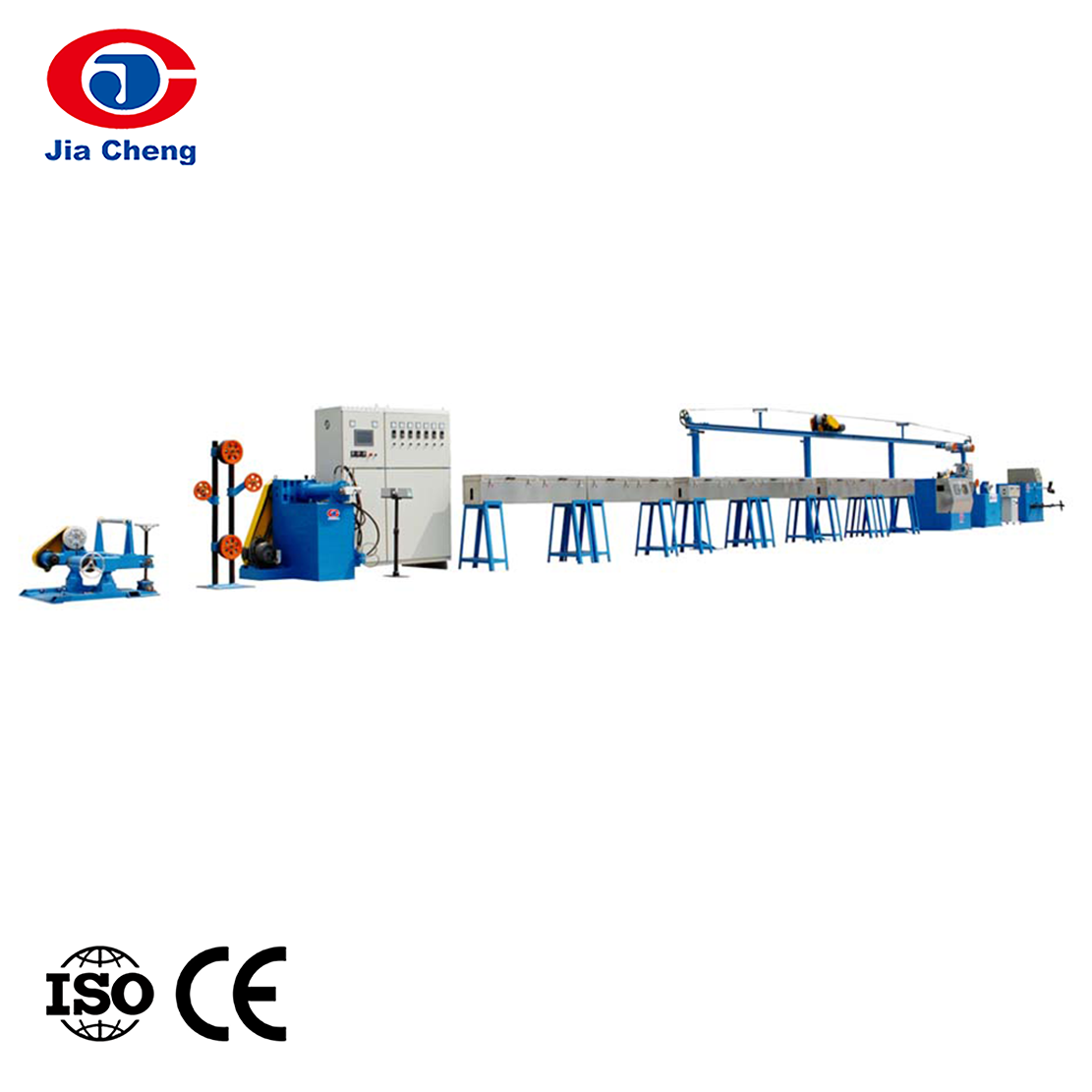
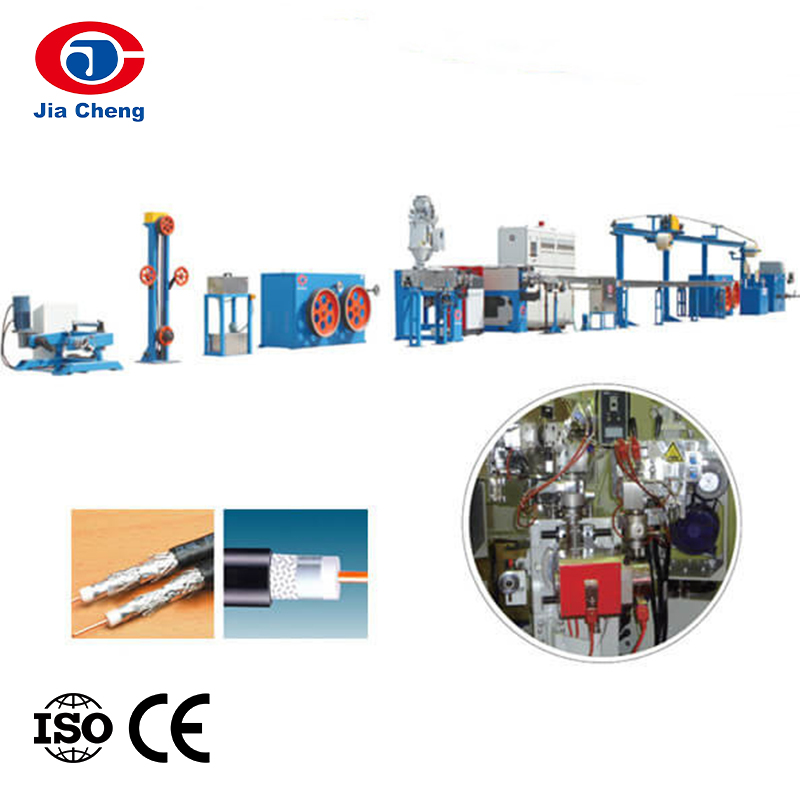
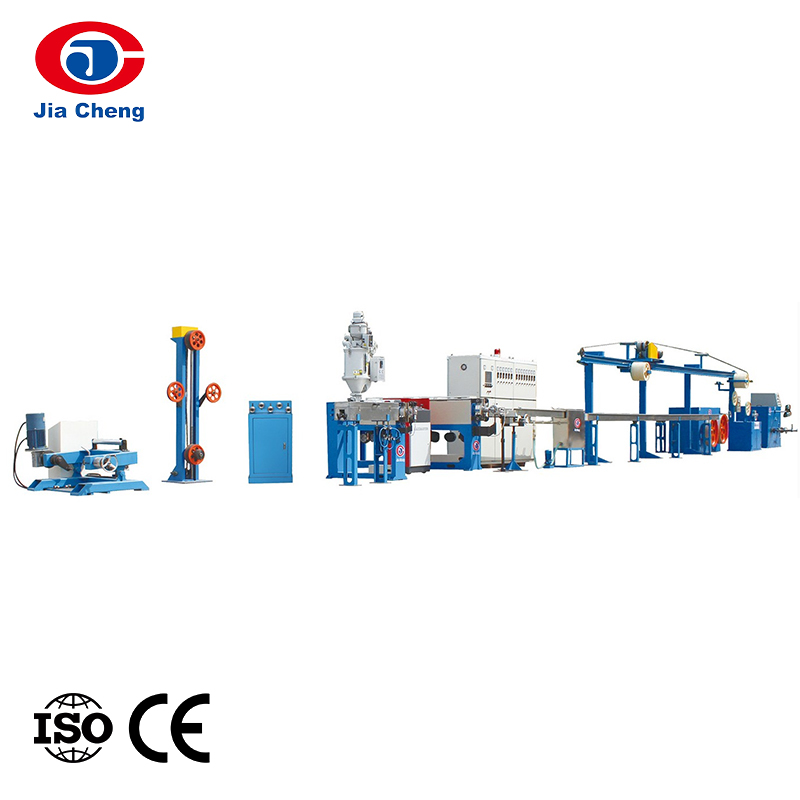
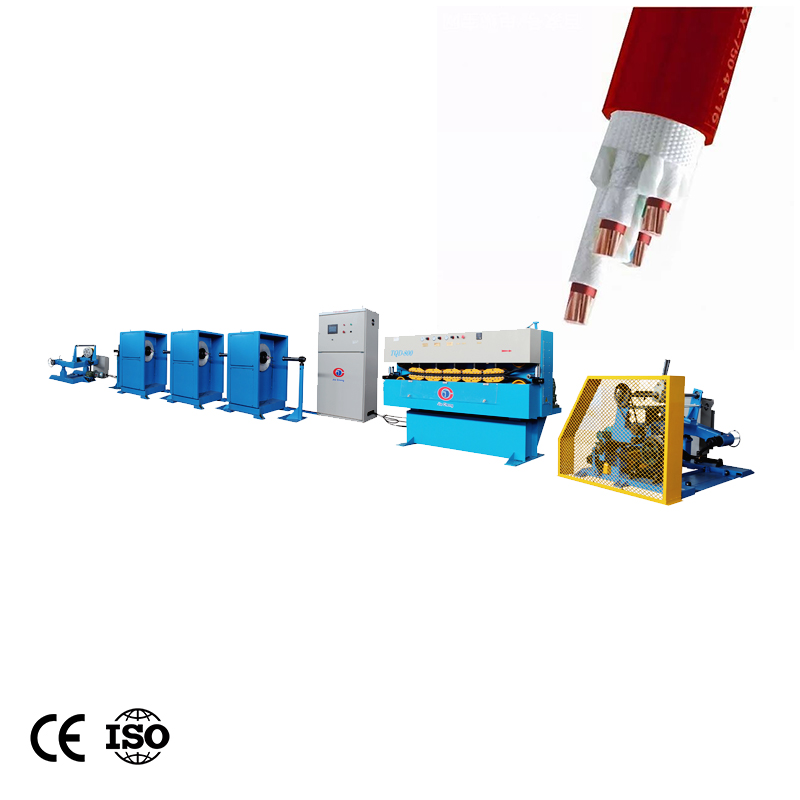
Typical Technical Parameters
Data and network cable equipment is specified around the twisted pair construction and dimensional precision needed to support your target network cable performance category, with higher-performance categories generally requiring tighter twist consistency and more precise pair-to-pair geometry control. The table below gives typical parameter ranges for the core equipment types.
| Machine Type | Typical Product Range | Max Line Speed | Drive & Control | Typical Motor Power |
| Fine Copper Wire Drawing & Annealing Line | 0.4mm - 0.6mm network-grade copper wire | up to 15-20 m/s | AC motor, precision tension control | 7.5-22 kW |
| Precision Insulation Extrusion Line | fine gauge, tight OD and concentricity tolerance | up to 400-800 m/min | PLC + HMI, precision diameter gauge control | 30-75 kW |
| 4-Pair Twisting/Cabling Machine | 4-pair Ethernet-type cable construction | up to 500-1000 twists/min per pair | PLC-controlled independent twist rate per pair | 15-45 kW |
| Jacketing Line | finished cable OD dependent | up to 200-400 m/min | PLC + HMI | 30-75 kW |
Higher-performance network cable categories generally require independently controlled twist rates for each pair to minimize crosstalk between them, which is a more demanding process control requirement than simpler telecom cable constructions. Share your target network cable category and we will confirm the appropriate twisting equipment precision and extrusion configuration needed.
We are glad to walk through how these parameter ranges compare to a related material, gauge range, or performance tier you may already be evaluating elsewhere on our site, since many buyers end up comparing more than one processing category before finalizing a production plan. If your target specification falls between two of the ranges shown here, or requires a combination not directly reflected in the table above, share the details and we will confirm a configuration matched specifically to your case rather than asking you to round up to the nearest standard option. We would also rather flag a genuine limitation in what Data & Network Cable Equipment equipment can reliably achieve early in the conversation than let a mismatched expectation carry through to a formal quotation and cause disappointment later.
Matching Equipment to Your Product Line
Data and network cable buyers typically target a specific performance category, since this determines the twist rate precision, pair separation requirements, and sometimes shielding needs of the finished cable. Higher-performance categories generally demand tighter process control and sometimes individually shielded pairs, while lower categories can be produced with more standard twisting and cabling equipment.
We start by understanding your target network cable category and construction (unshielded or shielded twisted pair), then confirm the drawing, extrusion, and twisting equipment configuration needed to consistently meet that category's typical performance benchmarks. For higher categories in particular, we discuss independent twist rate control per pair and, where relevant, individual pair shielding equipment, since these features become increasingly important as target bandwidth performance increases.
If you can share your target network cable category and construction type, we can propose an equipment configuration suited to that specification, and be direct about which categories our standard equipment reliably supports versus which would require additional precision features or a different equipment tier to achieve consistently.
This matching process usually takes a short back-and-forth rather than a single exchange, since buyers often refine their target specification once they see the trade-offs involved in different Data & Network Cable Equipment configurations. We treat this as a normal, expected part of specifying equipment correctly, and would rather spend extra time confirming the right match up front than have a buyer discover a mismatch only after equipment has already been ordered and shipped. If you already have a detailed specification document from your own customer, an internal engineering team, or an industry standard you need to meet, sending it to us directly is often the fastest way to get an accurate, well-matched proposal, since it removes ambiguity from the technical discussion and lets our engineers respond with specifics rather than general ranges.
Quality Control and Certification
Data and network cable quality is judged against defined performance categories that specify crosstalk, attenuation, and other transmission characteristics at specific frequency ranges, and these characteristics are directly affected by twist rate consistency, pair geometry, and insulation dimensional precision. Our quality process for this equipment category focuses on the process control precision needed to support these performance benchmarks.
Twisting and cabling equipment is tested for twist rate consistency and, for multi-pair constructions, pair-to-pair uniformity, since inconsistency between pairs is a common source of crosstalk performance issues. Insulation extrusion lines are tested for outer diameter and concentricity consistency, given how directly these affect the finished cable's electrical characteristics.
We use PLC and drive components from recognized international brands for precision twist and extrusion control. If your target network cable category has a specific transmission performance specification you need to meet, share that with us during quotation so we can confirm which of our equipment configurations is genuinely suited to supporting that performance level in consistent production, rather than assuming a standard configuration is adequate for every category.
We document every quality check performed during manufacturing and testing so the records travel with the Data & Network Cable Equipment you purchase, giving your own quality team a documented baseline to reference once the equipment is running in your facility. If your organization has an internal supplier qualification or quality audit process, we are glad to provide additional documentation or answer specific questions as part of that process, rather than only offering our standard test report. We would rather be transparent about exactly what has and has not been verified before shipment than leave you to assume a broader scope of testing than was actually performed, since that kind of misunderstanding tends to surface at the worst possible time, once the equipment is already installed and running.
Frequently Asked Questions
Q: What network cable categories can your equipment produce?
A: Our equipment can be configured for a range of common network cable categories; share your target category and we will confirm whether our standard configuration supports it or whether enhanced precision features are recommended.
Q: Do you supply shielded twisted pair (STP) equipment as well as unshielded (UTP)?
A: Yes, foil or braid shielding equipment for individual pairs or the overall cable can be included depending on your target construction and performance category.
Q: How is crosstalk performance controlled during production?
A: Primarily through independent twist rate control for each pair and consistent pair geometry, which our twisting equipment is designed to maintain; verification is typically done through transmission performance testing on sample cable.
Q: Can this equipment also produce standard telecom cable in addition to network cable?
A: In many cases yes, with appropriate configuration changes, since both categories share some underlying twisting and extrusion equipment principles.
Q: Is compliance testing included with the equipment?
A: Equipment testing verifies process performance rather than finished cable category compliance testing, which is typically arranged separately with an accredited testing laboratory; we can advise on this process if needed.
If your question about Data & Network Cable Equipment is not answered here, reach out directly with your specific situation rather than assuming a general answer applies to your case; because equipment specification depends so heavily on your exact target product, gauge range, and application, many of the most useful answers are specific to your project rather than universal. We would rather take the time to answer a specific question accurately, even if that means asking you a few clarifying questions first, than give a generic response that sounds complete but does not actually apply to what you are trying to build or the standard you need to meet.
Price Range and Quotation Process
Data and network cable equipment pricing depends heavily on your target performance category, since higher categories require more precise twisting equipment (often with independent per-pair twist control) and tighter extrusion tolerances than lower categories. Exact pricing also depends on whether shielded or unshielded construction is required and your target output volume.
To prepare a quotation, we typically need your target network cable category, construction type (shielded or unshielded), and your target output. With this information we can usually return a formal quotation, including proposed equipment configuration and lead time, within a few business days.
Because network cable performance categories are well-defined industry benchmarks, we would rather confirm your exact target category early and be direct about which of our equipment tiers genuinely supports it, than risk quoting equipment that cannot consistently meet your category's performance requirements in production.
We recognize that different buyers are at different stages of planning, from early budget research to a final purchasing decision, and we are happy to provide a general pricing indication for Data & Network Cable Equipment even before you have finalized every technical detail, so you can gauge whether this category of equipment fits your overall project budget before investing more time in a detailed specification. If your budget research is still at an early stage, say so directly and we will tailor the level of detail in our response accordingly, rather than pushing for a full technical exchange before you are ready to have that conversation.