Language
 中文简体
中文简体 English
 عربى
عربى русский

Typical Technical Parameters
Copper clad aluminum equipment is specified around two key variables in addition to standard gauge and speed parameters: the target cladding ratio (the copper layer's share of the conductor's cross-sectional area or weight, commonly expressed as a percentage) and the bonding method used to join the two metals before drawing. The table below gives typical ranges for the core equipment involved.
| Machine Type | Typical Product Range | Max Line Speed | Drive & Control | Typical Motor Power |
| Continuous Cladding/Bonding Line | rod-scale, feeding into drawing | process-speed dependent | PLC-controlled bonding parameters | 30-75 kW |
| CCA Rod Breakdown Machine | clad rod down to 1.0-2.6mm | up to 15-20 m/s | AC motor, PLC + touch screen | 37-90 kW |
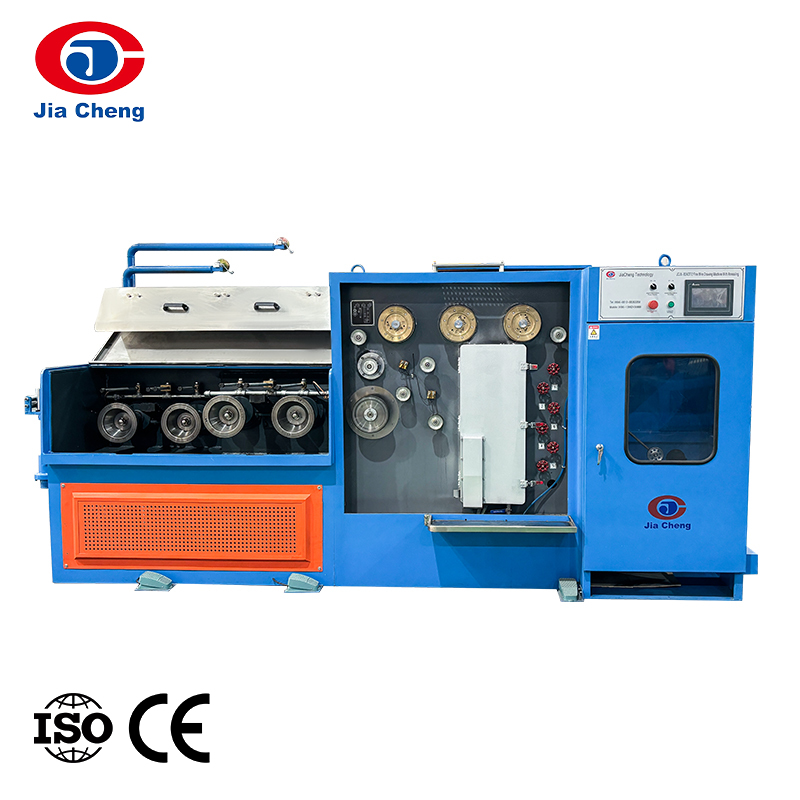
| CCA Fine Wire Drawing Machine | 2.6mm down to 0.10mm | up to 10-18 m/s | AC frequency control, precision tension control | 7.5-30 kW |
| Annealing Line (CCA) | fine to medium gauge CCA wire | process-speed dependent | PLC-controlled temperature profile | 15-45 kW |
Common cladding ratios range from roughly 10% to 40% copper by cross-sectional area depending on the target application and required conductivity, and the drawing sequence has to be designed to maintain that ratio consistently as the wire is reduced to its finished gauge. Share your target application and required cladding ratio, and we will confirm the appropriate bonding and drawing configuration.
We are glad to walk through how these parameter ranges compare to a related material or gauge range you may already be evaluating elsewhere on our site, since many buyers end up comparing more than one processing category before finalizing a production plan. If your target specification falls between two of the ranges shown here, or requires a combination not directly reflected in the table above, share the details and we will confirm a configuration matched specifically to your case rather than asking you to round up to the nearest standard option. We would also rather flag a genuine limitation early — for example a gauge range outside what Copper Clad Aluminum (CCA) Wire Machine equipment can reliably achieve — than let a mismatched expectation carry through to a formal quotation.
Matching Equipment to Your Product Line
CCA wire buyers typically know their target application already — coaxial cable center conductor or shielding, data cable conductor, or a cost-sensitive automotive or appliance wire application — and each of these applications calls for a somewhat different cladding ratio and finished wire specification. Coaxial cable applications, for example, often prioritize a specific surface conductivity for RF signal transmission, which is directly tied to the copper cladding thickness and its consistency along the wire's length.
We start by understanding your target application, required cladding ratio, and finished gauge, then confirm the bonding method and drawing sequence needed to hit that specification consistently. Because the bond between copper and aluminum has to survive significant drawing reduction without failure, we also discuss your target finished gauge relative to your incoming clad rod diameter, since a very large reduction ratio can be more demanding on bond integrity than a more modest one.
If you can share your target application, cladding ratio, and gauge range, we can propose a bonding and drawing equipment configuration suited to your specification, and flag any aspects of your target specification that might benefit from a modified process approach, such as an intermediate anneal to relieve stress on the bond during a large total reduction.
This matching process usually takes a short back-and-forth rather than a single exchange, since buyers often refine their target specification once they see the trade-offs involved in different Copper Clad Aluminum (CCA) Wire Machine configurations. We treat this as a normal, expected part of specifying equipment correctly, and would rather spend extra time confirming the right match up front than have a buyer discover a mismatch only after equipment has already been ordered and shipped. If you already have a detailed specification document from your own customer or an internal engineering team, sending it to us directly is often the fastest way to get an accurate proposal, since it removes ambiguity from the technical discussion.
Quality Control and Certification
The central quality concern for CCA wire is bond integrity between the copper cladding and the aluminum core, since a poor or inconsistent bond can lead to delamination during drawing, during later processing such as stranding or terminating, or even during the finished product's service life. Our quality process for this equipment category is built specifically around verifying bond consistency, in addition to the dimensional and cladding-ratio checks common to all conductor processing.
Cladding and bonding equipment is tested to confirm consistent bond formation along sample lengths, and drawing equipment is tested with representative CCA rod to confirm the drawing sequence does not compromise bond integrity at your target reduction ratio. We also check cladding ratio consistency along the sample wire's length, since a ratio that drifts during drawing can affect both the conductivity and the cost-performance balance the CCA construction is meant to deliver.
We use PLC and drive components from recognized international brands for process control on the bonding and drawing lines. If your target application requires CCA wire meeting a specific industry standard (for example a coaxial cable or telecommunications cable specification referencing minimum cladding thickness or conductivity), share that with us during quotation so we can confirm our equipment's process capability against your exact requirement.
We document every quality check performed during manufacturing and testing so the records travel with the Copper Clad Aluminum (CCA) Wire Machine you purchase, giving your own quality team a documented baseline to reference once the equipment is running in your facility. If your organization has an internal supplier qualification or quality audit process, we are glad to provide additional documentation or answer specific questions as part of that process, rather than only offering our standard test report. We would rather be transparent about exactly what has and has not been verified before shipment than leave you to assume a broader scope of testing than was actually performed.
Frequently Asked Questions
Q: What cladding ratio should I target for coaxial cable applications?
A: This depends on your target cable specification and frequency range; common coaxial CCA constructions use cladding ratios in a range your customer's specification will typically define. Share your target specification and we will confirm the appropriate ratio and equipment configuration.
Q: How is the copper layer bonded to the aluminum core?
A: Our equipment uses a continuous metallurgical bonding process rather than mechanical cladding or plating, which is generally more reliable for maintaining bond integrity through the drawing process.
Q: Can CCA wire be annealed the same way as solid copper wire?
A: The equipment principle is similar, but temperature profiles are adjusted to suit the bimetal construction and avoid stressing the bond between the two metals.
Q: What applications commonly use CCA wire besides coaxial cable?
A: Data and network cable, certain automotive wiring applications, and other cost-sensitive uses where full copper conductivity is not required but copper's surface properties (such as solderability) are still desired.
Q: Can I start with a smaller CCA line and scale up later?
A: In many cases yes; we can discuss a phased approach starting with your primary target application and adding capacity or additional cladding ratio capability as your production volume grows.
If your question about Copper Clad Aluminum (CCA) Wire Machine is not answered here, reach out directly with your specific situation rather than assuming a general answer applies to your case; because equipment specification depends so heavily on your exact target product, gauge range, and application, many of the most useful answers are specific to your project rather than universal. We would rather take the time to answer a specific question accurately than give a generic response that does not actually apply to what you are trying to build.
Price Range and Quotation Process
Copper clad aluminum equipment typically involves a higher initial investment than standard single-metal wire processing equipment, reflecting the specialized bonding technology required, though the finished CCA wire itself is generally less expensive to produce than solid copper wire of comparable electrical performance, which is the core cost advantage driving CCA's popularity in cost-sensitive applications.
To prepare a quotation, we typically need your target application (coaxial cable, data cable, automotive, or other), your target cladding ratio if known, your target finished gauge range, and your output requirement. With this information we can usually return a formal quotation, including proposed bonding and drawing configuration and lead time, within a few business days.
If you are new to CCA production and unsure what cladding ratio your target application requires, share your customer's cable specification or target application with us and we can help identify the appropriate ratio range based on common industry practice for that use case, before finalizing the equipment specification and quotation.
We recognize that different buyers are at different stages of planning, from early budget research to a final purchasing decision, and we are happy to provide a general pricing indication for Copper Clad Aluminum (CCA) Wire Machine even before you have finalized every technical detail, so you can gauge whether this category of equipment fits your overall project budget before investing more time in a detailed specification. If your budget research is still at an early stage, say so directly and we will tailor the level of detail in our response accordingly.