Language
 中文简体
中文简体 English
 عربى
عربى русский
Content
- 1 What Is an Extruder Machine
- 2 What Are Extruders Made Of: Core Components
- 3 How Does an Extruder Machine Work
- 4 Main Types of Extruder Machines
- 5 Materials and Industries That Rely on Extruder Machines
- 6 What Is a Plastic Extruder Machine
- 7 How Does a Clay Brick Extruder Machine Work
- 8 How to Operate an Extruder Machine
- 9 Are Machined Parts Nicer Than Extruded Parts
- 10 Key Specifications to Check Before Buying an Extruder Machine
- 11 Choosing an Extruder Machine Manufacturer
- 12 Maintenance and Troubleshooting Basics
- 13 Frequently Asked Questions
- 13.0.1 What is an extruder machine used for
- 13.0.2 What are extruders compared to injection molding machines
- 13.0.3 How does an extruder machine work in one sentence
- 13.0.4 What is plastic extruder machine output measured in
- 13.0.5 How does a clay brick extruder machine work differently from a plastic extruder
- 14 Summary
A complete answer to what is extruder machine, what are extruders, how an extruder machine works, and how to operate one safely, with real process data, comparison tables, and a supplier reference for plastic, rubber, and clay brick extrusion lines.
What Is an Extruder Machine
What is extruder machine, in the simplest possible terms. An extruder machine is a continuous processing machine that pushes a raw material through a heated or unheated barrel using a rotating screw or a hydraulic ram, then forces that softened material through a shaped die at the end of the barrel. The material comes out the other side as a long, continuous shape that matches the opening of the die. Once the shape leaves the die, it is cooled, cut to length, coiled, or otherwise finished depending on the product.
The word extrusion comes from the idea of pushing something out under pressure, similar to squeezing toothpaste out of a tube. The tube is the barrel, your hand is the screw or the ram, and the small opening at the top of the tube is the die. Scale that idea up to an industrial machine with steel barrels, electric heater bands, hardened screws, and precision dies, and you have the modern extruder machine used across plastics, rubber, metal, food, and building material industries.
So what are extruders used for in practice. Extruders make pipe, tubing, sheet, film, coated wire, foam board, window profiles, rubber seals, aluminum window and door frames, pasta, pet food, and fired clay bricks and roof tiles. Almost any product with a constant cross section along its length is a strong candidate for extrusion rather than any other manufacturing process.
What Are Extruders Made Of: Core Components
Before looking at how the process works, it helps to know the main parts that almost every extruder machine shares, whether it is processing plastic, rubber, or clay. The details differ, but the core layout is remarkably consistent across industries.
| Component | Function | Typical Material |
|---|---|---|
| Hopper | Holds and feeds raw material, pellets, powder, or clay, into the barrel by gravity | Carbon steel or stainless steel |
| Barrel | Long steel cylinder that contains the screw and channels heat into the material | Nitrided steel or bimetallic lining |
| Screw | Rotates to convey, compress, melt, and pressurize the material along three zones | Hardened alloy steel |
| Heater bands | Wrap around the barrel in multiple zones to bring the material to processing temperature | Ceramic or mica insulated coils |
| Screen pack and breaker plate | Filters contaminants and builds back pressure ahead of the die | Perforated steel plate with wire mesh |
| Die | Shapes the softened material into the final cross section as it exits | Tool steel, precision machined |
| Cooling and haul off | Sets the shape after the die and pulls the profile through at a controlled speed | Water tanks, calibration tables, or air rings |
| Cutter or coiler | Cuts the extrudate to length or winds it onto a spool for continuous products | Rotary or guillotine blade, or coiling reel |
Some machines add extra stations depending on the product. Plastic pipe lines often add a vacuum sizing tank right after the die. Clay brick lines add a de-airing chamber before the barrel to remove trapped air from the clay body. Rubber lines may add a cold feed section instead of heaters, since rubber compound generates its own heat through friction. The core idea, feed, convey, pressurize, shape, and cool, stays the same across all of them.
How Does an Extruder Machine Work
How does an extruder machine work from the moment material enters the hopper to the moment a finished profile leaves the line. The process can be broken into a sequence of stages. Understanding these stages also answers how extruder machine works questions that come up when troubleshooting output quality problems on the shop floor.
Feeding
Raw material, usually plastic pellets, rubber strip, or prepared clay, drops from the hopper into the feed zone of the barrel by gravity or by a forced feeder. Consistent, un-bridged flow at this stage is critical for stable output later in the line.
Conveying
The rotating screw picks up the material in its deep feed flights and pushes it forward along the barrel, the same way a screw conveyor moves grain, but under far tighter clearances and higher pressure.
Compression and melting
As the screw flight depth gets shallower toward the middle of the barrel, the material is compressed. Combined with heat from the barrel heater bands and friction from the screw itself, the material transitions from solid pellets or clay clumps into a uniform, flowable melt or paste.
Metering
In the final, shallowest section of the screw, the material is homogenized and pressurized to a steady, consistent flow rate, removing pulsation before it reaches the die. This is where output rate stability is largely determined.
Filtering and shaping
The material passes through a screen pack that removes contaminants, then enters the die, which forces it into the desired final cross section, whether that is a round pipe, a flat sheet, a hollow window profile, or a solid brick shape.
Cooling and take off
As the shaped material exits the die it is still hot and soft, so it passes through a cooling tank, calibration sleeve, or air cooling ring to lock the shape in place, then a haul off unit pulls it through the line at a controlled, constant speed.
Cutting or coiling
The finished profile is cut to length with a saw or blade for rigid products such as pipe and brick, or wound onto a reel for flexible products such as wire coating or film.
Two forces are always working together in this sequence, heat and mechanical shear. Heater bands supply part of the thermal energy, while friction between the screw, the barrel wall, and the material itself supplies the rest, sometimes the majority of it once the machine is running at full speed. This is exactly why an extruder machine can sometimes run cooler on its heater set points than the actual melt temperature reading further down the barrel, the extra heat is coming from mechanical work, not the heaters.
Main Types of Extruder Machines
Extruders are grouped by two things, the mechanism that pushes the material, and the material being processed. The table below summarizes the most common categories found in industry today.
| Type | Driving Mechanism | Typical Products |
|---|---|---|
| Single screw extruder | One rotating screw inside a heated barrel | Pipe, sheet, film, wire coating, profiles |
| Twin screw extruder | Two intermeshing screws, co-rotating or counter-rotating | Compounding, PVC profiles, food pellets, master batch |
| Ram or plunger extruder | Hydraulic ram pushes material through the die, no screw | PTFE, some metal and ceramic extrusion |
| Clay brick extruder | Auger screw with a vacuum de-airing chamber | Solid and hollow clay bricks, roof tiles, pipe |
| Rubber extruder | Cold feed or hot feed screw, low compression ratio | Seals, hoses, tire tread, gaskets |
| Food extruder | Single or twin screw with cooking zones | Pasta, snacks, pet food, textured protein |
| Metal extruder | Hydraulic ram pressing a heated billet through a die | Aluminum window frames, tubing, structural shapes |
Single screw machines dominate simple, high volume plastic products because they are mechanically simple, reliable, and lower cost to build and maintain. Twin screw machines cost more but mix and compound material far more thoroughly, which matters when adding color, fillers, or reinforcing fiber into the base resin. Ram extruders skip the screw entirely and are used where the material cannot tolerate the shear heating a screw would generate, such as PTFE.
Materials and Industries That Rely on Extruder Machines
Once you understand what is extruder machine at the mechanical level, it becomes clear why the same basic design shows up across so many unrelated industries. Any raw material that can be softened, melted, or plasticized enough to flow under pressure, and that will hold a shape once cooled or dried, is a candidate for extrusion.
| Industry | Raw Material | Typical Extruded Product |
|---|---|---|
| Building and construction | PVC resin, aluminum billet, clay | Pipe, window profile, brick, roof tile |
| Packaging | Polyethylene, polypropylene resin | Blown film, bags, shrink wrap |
| Automotive and appliance | Rubber compound, engineering resin | Door seals, hoses, weatherstripping, trim |
| Wire and cable | PVC, polyethylene, cross linked polyethylene | Insulated and jacketed electrical cable |
| Food processing | Grain flour, protein blends | Pasta, breakfast cereal, pet food, snacks |
| Medical devices | Medical grade thermoplastics | Catheter tubing, drainage tubing |
This spread of industries is also why the extruder machine market itself is so fragmented, with some manufacturers focusing only on high precision medical tubing lines, others building heavy duty clay brick equipment for the building materials sector, and others still specializing in food grade twin screw cooking extruders. A buyer researching equipment should look for a manufacturer with direct experience in their specific material category, since screw design, wear resistance, and hygiene requirements differ substantially between, for example, a food extruder and a clay brick extruder, even though both technically fall under the same broad definition of what are extruders.
What Is a Plastic Extruder Machine
What is plastic extruder machine is one of the most searched questions in this field, because plastics extrusion is by far the largest use of extrusion technology worldwide. A plastic extruder machine is a single or twin screw extruder built specifically to melt plastic resin, usually supplied as small pellets, and push it through a die to form pipe, sheet, film, profile, or coated wire.
A plastic extruder machine typically runs at barrel temperatures between 150 and 300 degrees Celsius depending on the resin, with common materials including polyethylene, polypropylene, PVC, ABS, and polystyrene. Because plastic resins vary so widely in melting point and viscosity, plastic extruder machines are built with several independently controlled heating zones along the barrel, so the operator can set a temperature profile that rises gradually from the feed zone to the die.
Key features that define a plastic extruder machine
- Barrel length to diameter ratio, known as L over D. Most plastic extruders use an L over D ratio between 20 to 1 and 33 to 1. A longer barrel gives the plastic more time to melt evenly and mix, which improves output quality at the cost of a larger machine footprint.
- Screw compression ratio. This is the ratio between the flight depth at the feed zone and the flight depth at the metering zone, commonly between 2 to 1 and 4 to 1 for general purpose plastics.
- Multiple heating zones. A typical production line has four to eight barrel zones plus a separate die head zone, each with its own thermocouple and heater band.
- Screen changer. Filters melt contamination and can often be swapped without stopping the line, which keeps production running continuously.
- Downstream calibration. Vacuum sizing tanks for pipe, chill rolls for sheet and film, or water baths for profile, all sized to match the die output rate.
Common plastic extrusion processes built around the same core machine
The words extrusion and extruder machine cover several distinct production processes, all built around the same basic screw and barrel described earlier, but each finishing the softened plastic in a different way after it leaves the die. Recognizing these variations helps explain why a plastic extruder machine at one factory looks nothing like the one at a factory across town, even though both are technically the same category of equipment.
- Pipe extrusion. Molten resin passes through an annular die to form a tube shape, then immediately enters a vacuum sizing tank where external water cooling and a slight internal vacuum hold the pipe at the correct outside diameter while it solidifies. Wall thickness is controlled by adjusting screw speed against haul off speed.
- Sheet extrusion. A flat die spreads the melt into a wide, thin curtain that passes between a set of polished chill rolls, which set the thickness and give the sheet its final surface finish, glossy or matte depending on the roll finish.
- Blown film extrusion. Melt is pushed upward through a circular die and inflated with air into a thin walled bubble, which is then flattened and wound into rolls. This process produces the thin, flexible film used for bags and packaging.
- Profile extrusion. A custom shaped die forms complex cross sections such as window frames, door seals, or trim pieces, which then pass through a matched calibration tool that holds the exact shape while the profile cools.
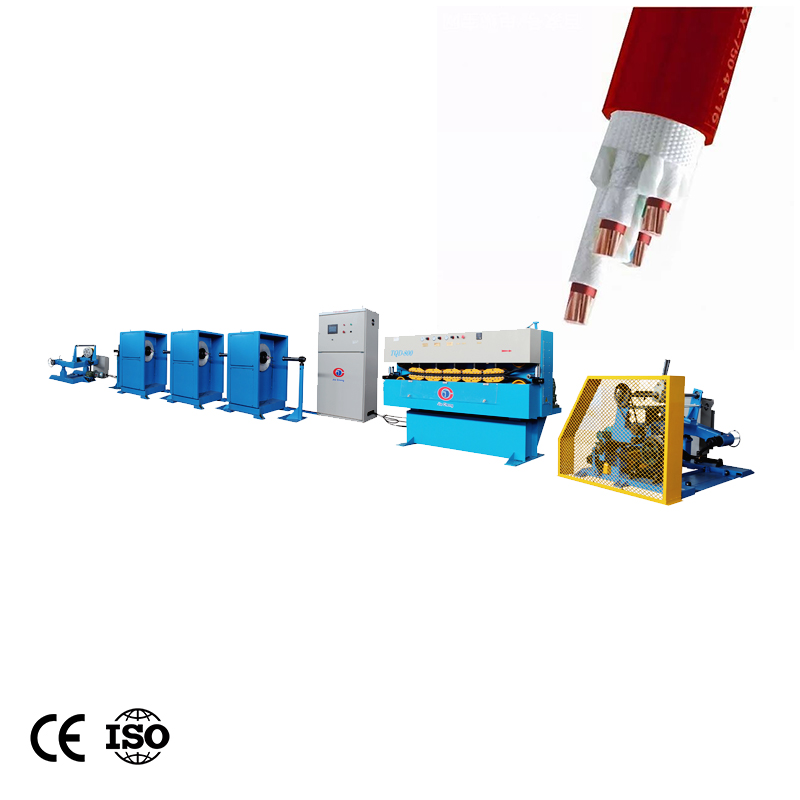
- Wire and cable coating. Bare wire is fed through the center of a crosshead die while molten insulation is applied around it in a single continuous pass, then cooled in a water trough before being spooled.
Screw design also varies by application. A general purpose screw works well for a single, stable resin, but many production lines use a barrier screw or a mixing screw with additional flighted sections near the metering zone. A barrier screw physically separates the solid and melted plastic with a secondary flight until melting is complete, which improves output consistency at high screw speeds. A mixing screw adds pins or a fluted section that folds the melt over itself repeatedly, which is useful when adding color concentrate, recycled regrind, or additives that need thorough dispersion before the material reaches the die.
How Does a Clay Brick Extruder Machine Work
How does a clay brick extruder machine work is a slightly different question from the plastic case above, because clay is not melted, it is mechanically compacted and forced through a die under pressure while still in a moist, plastic state. A clay brick extruder machine, sometimes just called a brick machine, is used in heavy clay manufacturing to turn prepared clay into a continuous column that matches the shape of a brick or roof tile, which is then cut into individual units before drying and firing in a kiln.
Stages specific to clay brick extrusion
- Clay preparation. Raw clay is crushed, blended with water and sometimes additives, and aged to achieve a uniform, workable moisture content, usually between 18 and 24 percent by weight.
- De-airing. Before entering the main barrel, the clay passes through a vacuum chamber that removes trapped air pockets. Air left in the clay body causes cracking and lamination defects during firing, so this step is considered one of the most important in the entire process.
- Auger extrusion. A heavy duty auger screw forces the de-aired clay through a horizontal barrel and into the die, called a mouthpiece in brick manufacturing, which shapes the continuous clay column into the brick or tile cross section, including any internal holes for hollow bricks.
- Cutting. A wire cutter with multiple parallel wires slices the continuous clay column into individual green bricks at a fixed length, timed to match the extrusion speed exactly.
- Drying and firing. The cut green bricks are stacked on drying racks or cars, dried slowly to remove remaining moisture, then fired in a kiln at temperatures often above 900 degrees Celsius to achieve final strength and color.
Because clay is abrasive and the auger screw runs under very high torque, clay brick extruders use heavier gearboxes and thicker screw flights compared to plastic extruders of a similar size. Wear resistant liners inside the barrel are also common, since dry clay particles behave almost like sandpaper against bare steel over months of continuous operation.
How to Operate an Extruder Machine
How to operate extruder machine safely and consistently follows a fairly standard sequence across plastic, rubber, and clay lines, even though the specific settings differ by material. The steps below describe a general startup and running procedure that applies to most single screw production lines.
Pre-startup inspection
Check that the screw turns freely with the motor off, confirm cooling water and compressed air supply are on, and verify the die is clean, correctly assembled, and torqued to the recommended bolt pattern.
Heat up the barrel
Set each heater zone to the recommended temperature profile for the material being run and allow the barrel to soak at temperature for the time specified by the manufacturer, typically 30 to 90 minutes, before starting the screw.
Start the screw at low speed
Begin rotation at the lowest practical rpm and feed a small amount of material to confirm the melt or clay is flowing evenly before increasing to production speed.
Bring up line speed gradually
Increase screw speed and downstream haul off speed together in small steps, checking wall thickness, dimensions, or brick shape after each change until the target output rate and product tolerance are reached.
Monitor pressure and temperature
Watch melt pressure at the die head and actual barrel temperatures, not just the set points, since friction heat can push the real temperature above what the heaters alone would produce.
Sample and check the product
Pull samples at a regular interval to check dimensions, surface finish, wall thickness, or brick weight, and log the readings so drift can be caught before it turns into scrap.
Shutdown
Reduce screw speed gradually, purge the barrel with a purging compound or the next material if changing products, and follow the lockout procedure before any maintenance work begins.
Safety points every operator should follow
- Never place hands or tools near the hopper opening or the die face while the screw is turning.
- Wear heat resistant gloves when working near the barrel, heater bands, or die, since surface temperatures can exceed 200 degrees Celsius.
- Lock out and tag out the machine before opening the barrel, changing screens, or clearing a die blockage.
- Keep guards in place over the screw drive, gearbox, and any exposed couplings.
- Follow the manufacturer purge procedure exactly when switching between incompatible materials to avoid a pressure spike at the die.
Are Machined Parts Nicer Than Extruded Parts
Are machined parts nicer than extruded parts is a common question for engineers deciding between the two processes for a new part. The honest answer is that neither process is universally nicer, each one is better suited to a different kind of part, and the right choice depends on shape, quantity, tolerance, and cost target.
Extruded parts
- Extremely cost effective at high volume because the process runs continuously
- Best for constant cross section shapes of any length, such as pipe, tube, and profile
- Surface finish is smooth and consistent along the length once the process is dialed in
- Limited to shapes that can be pulled straight out of a die, no undercuts across the length
- Wall thickness tolerance is typically wider than machining, often plus or minus a few percent
Machined parts
- Can achieve very tight tolerances, often within a few thousandths of an inch or better
- Free to create complex, three dimensional features, pockets, threads, and varying cross sections
- Surface finish depends heavily on tooling, feed rate, and finishing passes, but can be excellent
- Material is removed as chips, so it produces more waste on parts with a lot of stock removal
- Cost per part is higher at large volumes since each part takes individual cycle time
In direct terms, extruded parts tend to look nicer for long, uniform shapes such as window frames, pipe, and trim, because extrusion produces a naturally continuous, seamless surface with no tool marks. Machined parts tend to look and perform better for precise, feature rich components such as gears, brackets, and fittings, because machining can hold tight tolerances and cut features that a die simply cannot produce. Many finished products actually use both, an extruded aluminum profile that is then machined at the ends to add holes, slots, or mounting features, combining the cost advantage of extrusion with the precision of machining exactly where it is needed.
Key Specifications to Check Before Buying an Extruder Machine
Buyers comparing machines from different manufacturers should look past the headline horsepower number and check the specifications that actually determine output quality and consistency.
| Specification | Why It Matters | Typical Range |
|---|---|---|
| Screw diameter | Sets the maximum theoretical output rate of the machine | 45 mm to 250 mm for plastics lines |
| L over D ratio | Longer barrels give more even melting and mixing | 20 to 1 up to 33 to 1 |
| Compression ratio | Determines how much the material is compacted before the die | 2 to 1 up to 4 to 1 |
| Number of heating zones | More zones allow a finer temperature profile along the barrel | 4 to 8 zones plus die head |
| Motor power | Determines maximum screw torque and top output rate | 15 kW to 250 kW depending on size |
| Screw speed range | Wider range gives more flexibility across different products | 0 to 150 rpm typical |
| Die head pressure rating | Confirms the machine can safely handle the resin and die combination | Up to 350 bar on many plastics lines |
Two machines with the same screw diameter can behave very differently if one has a longer barrel, more heating zones, or a better designed screw geometry. When comparing quotes, it is worth asking each supplier for the specific L over D ratio, compression ratio, and number of temperature control zones rather than relying on the horsepower rating alone.
Choosing an Extruder Machine Manufacturer
Because an extruder machine is a long term production asset, often running continuously for years, the manufacturer behind it matters just as much as the specification sheet. A good supplier should offer engineering support for screw and die design, spare parts availability, and after sales service, not just a machine shipped in a crate.
Jiangsu Jiacheng Technology Co., Ltd.
For companies researching plastic, rubber, or clay brick extrusion equipment, Jiangsu Jiacheng Technology Co., Ltd. is a manufacturer worth including on a shortlist. The company designs and builds extruder machines and complete extrusion lines, and works with customers to match screw design, die configuration, and downstream equipment to the specific material and profile being produced, which is exactly the kind of engineering support that separates a reliable long term production line from a machine that struggles to hold tolerance after the first year of operation.
When evaluating Jiangsu Jiacheng Technology Co., Ltd. or any other extruder machine manufacturer, ask for reference installations in your material category, confirm the warranty terms on the screw and barrel, and request the expected lead time for critical spare parts such as screw tips, barrel liners, and heater bands.
Maintenance and Troubleshooting Basics
Routine maintenance keeps an extruder machine running at rated output and extends the life of the most expensive wear components, the screw and the barrel.
| Symptom | Likely Cause | Suggested Action |
|---|---|---|
| Output rate drifting down over time | Worn screw flights or barrel bore increasing internal leakage | Measure screw and barrel clearance, plan for regrind or replacement |
| Surging or pulsing at the die | Uneven feeding, moisture in material, or a worn feed throat | Check hopper feed consistency and dry the material if hygroscopic |
| Surface streaks or discoloration | Material degradation from excess heat or long residence time | Reduce barrel temperature, check for dead spots in the flow path |
| Excess die head pressure | Blocked screen pack or an undersized die opening for the output rate | Change the screen pack and review die design against target rate |
| Uneven wall thickness on pipe or profile | Misaligned die or uneven cooling in the sizing tank | Recenter the die and check cooling water flow on all sides |
A written maintenance schedule that covers daily checks, such as oil level and unusual noise, weekly checks, such as screen changer function, and quarterly checks, such as screw and barrel wear measurement, prevents most of the failures that otherwise show up as an unplanned production stop.
Frequently Asked Questions
What is an extruder machine used for
An extruder machine is used to continuously shape raw material, including plastic, rubber, clay, food, or metal, into a product with a constant cross section, such as pipe, sheet, profile, brick, or coated wire.
What are extruders compared to injection molding machines
Extruders produce a continuous shape that is cut to length after the die, while injection molding machines inject material into a closed mold cavity to produce individual, discrete parts. Extrusion suits long, uniform profiles, while injection molding suits complex three dimensional part shapes.
How does an extruder machine work in one sentence
A rotating screw or hydraulic ram conveys, melts or compacts, and pressurizes raw material along a heated barrel, then forces it through a shaped die to form a continuous profile that is cooled and cut to length.
What is plastic extruder machine output measured in
Plastic extruder machine output is typically measured in kilograms per hour, which depends on screw diameter, screw speed, material type, and the resistance of the specific die being run.
How does a clay brick extruder machine work differently from a plastic extruder
A clay brick extruder machine compacts and de-airs moist clay under mechanical pressure without melting it, while a plastic extruder heats and melts resin into a flowable state before shaping it, so the two rely on very different physical mechanisms even though both use a screw and a die.
Summary
An extruder machine is a continuous shaping machine built around a screw or ram, a heated barrel, and a die, used to turn raw plastic, rubber, clay, food, or metal into a product with a constant cross section. Plastic extruder machines dominate volume production of pipe, sheet, film, and profile, while clay brick extruders handle a mechanically compacted, non melted material through a vacuum de-airing stage before the die. Machined parts and extruded parts each look better in their own domain, extrusion for long uniform shapes, machining for tight tolerance, feature rich components. Operating an extruder machine safely comes down to a controlled heat up, gradual speed increase, close monitoring of pressure and temperature, and strict lockout procedures during any maintenance work. Buyers evaluating new equipment, including options from manufacturers such as Jiangsu Jiacheng Technology Co., Ltd., should compare screw geometry, heating zones, and after sales support rather than horsepower alone, since these details are what actually determine long term output consistency and part quality.