Language
 中文简体
中文简体 English
 عربى
عربى русский
Content
- 1 01 What Is a Wire Extruder Machine and How Does It Work
- 2 02 Main Types of Wire Extruder Machines
- 3 03 Wire Extruder Machine vs Wire Drawing Machine in a Full Plant
- 4 04 Copper Wire Extrusion Machine and Copper Wire Manufacturing
- 5 05 What Is CCA Wire and Why It Matters for Extrusion
- 6 06 Annealing Machine, In Line Wire Annealing, and Annealing Tin
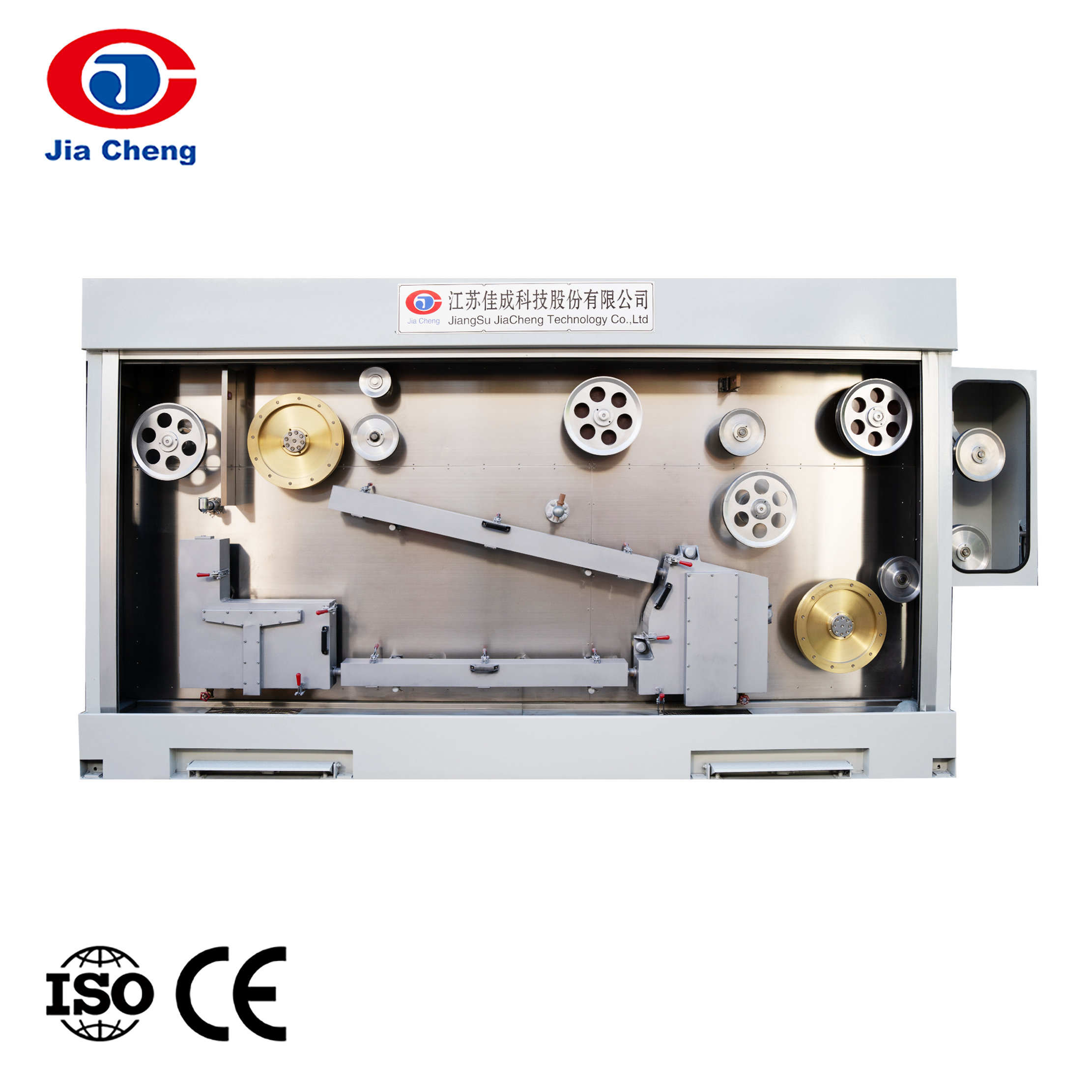
- 7 07 SS Wire Drawing Machine and Setting Up a Wire Drawing Plant
- 8 08 Copper Rod Making Machine, From Rod to Wire
- 9 09 Automatic Cable Coiling Machine and Wire Twisting Machine in the Finishing Line
- 10 10 Building a High Speed Assembly Line
- 11 11 Reading an Extrusion Machine Drawing
- 12 12 How to Choose the Right Wire Extruder Machine
- 13 13 Key Specification Comparison Table
- 14 14 Common Problems and Troubleshooting
- 15 15 Leading Manufacturers Including Jiacheng
- 16 16 Cost and Return on Investment
- 17 17 Safety and Preventive Maintenance
- 18 18 Frequently Asked Questions
- 18.0.1 What is the difference between a wire extruder machine and an injection molding machine
- 18.0.2 What is CCA wire used for most often
- 18.0.3 How often does a wire extruder machine need maintenance
- 18.0.4 Can one wire drawing plant handle both copper and stainless steel
- 18.0.5 What causes wire to need annealing tin treatment specifically
- 18.0.6 Is a higher line speed always better when choosing a wire extruder machine
- 19 19 Final Takeaway
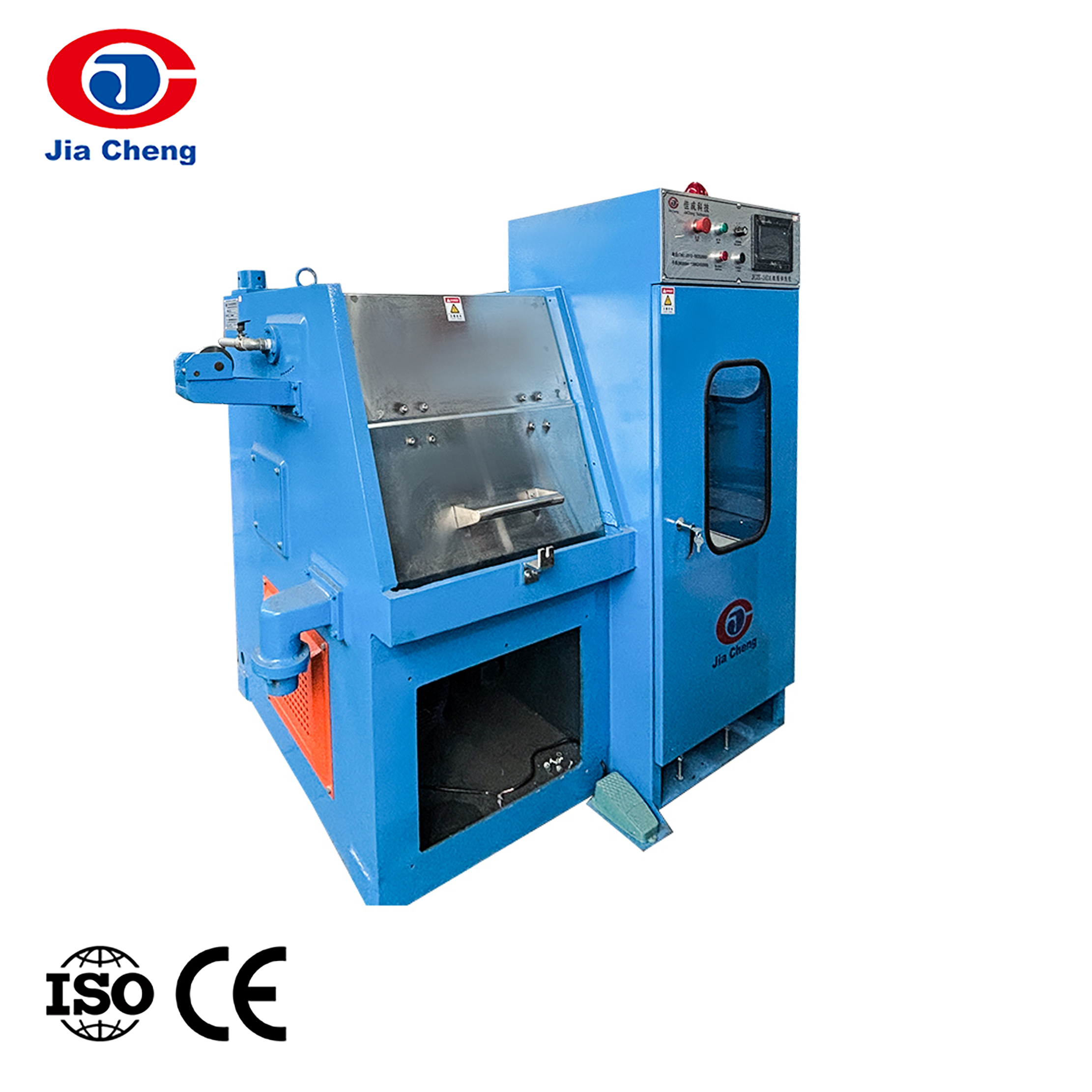
A wire extruder machine is a piece of industrial equipment that melts plastic or rubber compound and forces it through a die around a metal conductor, wrapping the wire in a continuous, even layer of insulation. It is one core machine inside a larger wire drawing plant, working alongside a wire drawing machine, an annealing machine, and finishing equipment such as an automatic cable coiling machine. If you are building or upgrading a copper wire manufacturing line, you need to match the extruder screw diameter, line speed, and die design to your target wire size, output target, and insulation material, not just buy the biggest machine available.
01 What Is a Wire Extruder Machine and How Does It Work
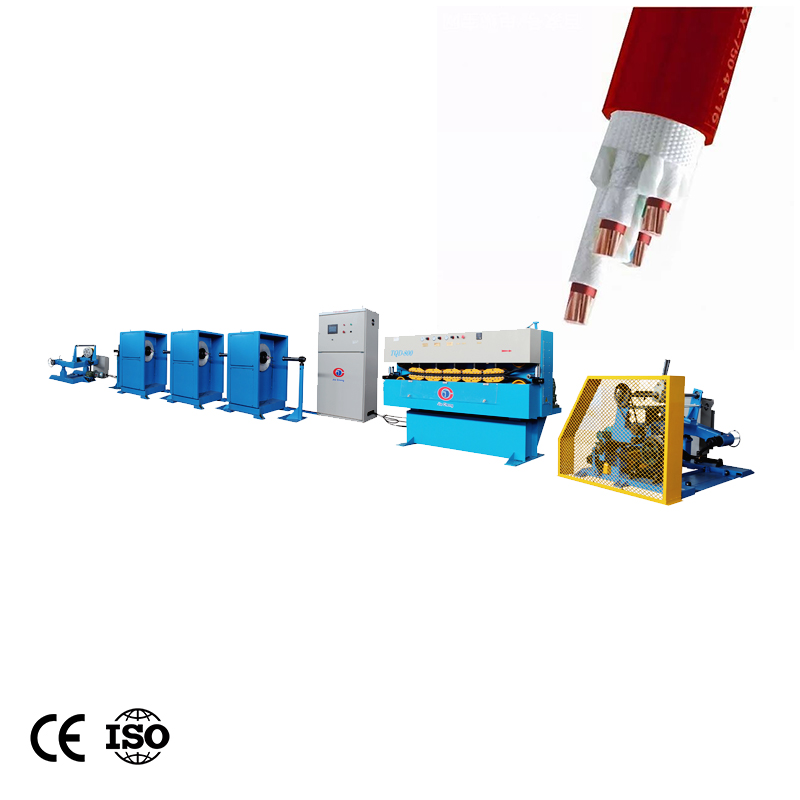
A wire extruder machine, sometimes labeled a cable extrusion line, takes solid plastic pellets such as PVC, PE, XLPE, or nylon, heats them through a series of controlled temperature zones, and pushes the molten material through a crosshead die that surrounds a moving bare wire. The result is a continuous insulated wire or cable core coming off the line at a steady, controlled speed.
The process sounds simple on paper, but the machine is doing several jobs at once. It has to melt the plastic evenly, keep the melt at a stable temperature so it does not degrade, maintain exact pressure so the wall thickness of the insulation stays consistent, and synchronize the wire feed speed with the extrusion output so the coating does not become too thick, too thin, or uneven around the circumference.
The core components of a wire extruder machine
- Hopper and feeding system: Loads plastic pellets or compound into the barrel, sometimes with a vacuum feeder for moisture sensitive materials.
- Barrel and screw: The heart of the machine. The screw rotates inside a heated barrel, shearing and melting the plastic as it moves it forward. Screw length to diameter ratio, commonly written as L/D, typically ranges from 20:1 to 30:1 for wire coating applications.
- Heating and cooling zones: Usually 3 to 6 zones along the barrel, each with independent temperature control, plus a die head zone.
- Crosshead and die: Where the molten plastic meets the bare wire and forms the insulation layer around it.
- Cooling trough: A long water tank that solidifies the coating immediately after the die.
- Capstan and take up: Pulls the finished wire through the line at a controlled, constant speed and winds it onto a spool.
Why insulation thickness control is the hardest part
Most first time buyers assume the hardest part of running a wire extruder machine is getting the plastic to melt evenly. In practice, the harder problem is holding wall thickness within tolerance over long production runs. Insulation thickness is usually checked with a laser micrometer mounted right after the cooling trough, feeding a live reading back to the extruder screw speed control. If the reading drifts outside tolerance, the control system automatically nudges screw rpm up or down to compensate, without stopping the line.
National and international cable standards typically define a minimum average wall thickness and a minimum point thickness anywhere around the circumference, so a machine that produces a good average reading but has thin spots on one side will still fail inspection. This is why die centering and melt uniformity across the crosshead matter just as much as the average output rate.
Vacuum sizing and dimension control
For larger diameter cable, many wire extruder machine lines add a vacuum sizing tank right after the die, which uses negative pressure to pull the still soft insulation against a calibrated sizing sleeve before it reaches the main cooling trough. This keeps the outer diameter round and consistent, which matters for downstream connector fit and jacket application. Fine wire lines usually skip this step since surface tension alone is enough to keep thin coatings round at high speed.
02 Main Types of Wire Extruder Machines
Not every wire extruder machine is built the same way. The right type depends on the wire diameter, the insulation material, and the output speed you need.
Single screw extruder
The most common configuration for wire and cable insulation. Good for PVC, PE, and general purpose compounds. Simple to maintain and widely available.
Twin screw extruder
Used for compounds that need stronger mixing, such as filled or flame retardant materials. Higher throughput but higher cost and more complex maintenance.
Tandem extrusion line
Two extruders feeding one crosshead, often used for foam skin cable insulation such as coaxial cable, where a foamed core needs a solid outer skin.
Vertical extruder
Positioned to feed the die from above or below, useful for very fine wire where gravity assisted centering improves concentricity.
Sizing by screw diameter
Wire extruder machines are usually named by their screw diameter in millimeters, for example a 45 mm extruder or a 65 mm extruder. As a general guide, smaller screw diameters suit fine wire and instrument cable, while larger diameters are for power cable and heavier building wire.
| Screw diameter | Typical wire range | Typical output | Common use case |
| 35 to 45 mm | 0.1 to 1.5 mm conductor | 15 to 40 kg per hour | Fine wire, hookup wire, sensor cable |
| 50 to 65 mm | 1.0 to 4.0 mm conductor | 40 to 100 kg per hour | Building wire, automotive cable |
| 70 to 90 mm | 3.0 to 10 mm conductor | 100 to 250 kg per hour | Power cable, control cable |
| 100 mm and above | Above 8 mm or multicore | 250 kg per hour and up | Heavy power cable, jacketing lines |
These figures vary by material, screw design, and line speed, so they should be treated as a starting reference rather than a fixed rule. A supplier quoting an extrusion machine drawing for your project should confirm the actual output based on your specific compound and target wire size.
Matching extruder type to insulation material
Beyond screw configuration, the extruder type should also match the chemistry of the compound being processed, since different materials behave very differently once they reach melt temperature.
- PVC compounds: Relatively forgiving, moderate melt temperature, well suited to standard single screw machines with a general purpose screw.
- Polyethylene and cross linked polyethylene: Requires tighter temperature control and, for XLPE, a downstream curing tube or vulcanization section if chemical or peroxide cross linking is used.
- Rubber and EPR compounds: Often processed on cold feed rubber extruders with a shorter L over D ratio, since rubber compounds are pre mixed and should not be overheated in the barrel before reaching the die.
- Nylon and other engineering plastics: Needs precise moisture control before extrusion, since these materials absorb ambient humidity and will bubble or degrade if not dried first.
Choosing the wrong extruder type for a given compound is one of the most common and expensive mistakes in new plant setups, since retrofitting a screw or barrel after installation is far more costly than specifying the correct configuration during the original extrusion machine drawing review.
03 Wire Extruder Machine vs Wire Drawing Machine in a Full Plant
People new to the industry often mix up a wire extruder machine and a wire drawing machine. They are two different steps, and understanding the difference is the fastest way to plan a working wire drawing plant.
- Wire drawing machine: Reduces the diameter of a metal rod or wire by pulling it through a series of dies, each one slightly smaller than the last. This is a cold forming, mechanical process with no melting involved.
- Wire extruder machine: Applies a plastic or rubber coating around the already drawn wire. This is a thermal, chemical process where the plastic is melted and reshaped, not the metal.
In other words, drawing shapes the metal, extrusion coats the metal. A complete wire drawing plant typically runs both processes in sequence, sometimes on the same continuous line and sometimes as separate stations connected by intermediate storage.
Typical flow of a wire drawing plant
- Raw rod feeding, usually 8 mm copper rod or aluminum rod from a rod mill.
- Wire drawing through multiple dies to reach the target diameter.
- In line wire annealing to soften the drawn wire and restore conductivity.
- Extrusion coating on a wire extruder machine to apply insulation.
- Cooling and drying in a water trough and air wipe.
- Twisting or stranding on a wire twisting machine if multiple strands are needed.
- Coiling and packing on an automatic cable coiling machine.
Some smaller workshops only run one stage, buying pre-drawn wire and only operating the extrusion step, while larger integrated factories run the entire chain from copper rod making machine output through to finished, packed cable reels.
Staffing and floor space for each stage
Planning a wire drawing plant is not only a machinery decision, it is also a staffing and space decision. Drawing machines generally need the least floor space per unit of output but benefit from an experienced operator who can judge die wear by sound and feel. Extrusion lines take up the most floor space because of the cooling trough length, often 15 to 30 meters, and usually need one operator per line plus a shared quality inspector checking dimensions and print quality across several lines. Finishing equipment such as coilers and twisting machines can often run with lighter supervision once set up correctly, since most modern units are largely automatic once threaded and started.
A rough starting point many small to mid sized plants use is one operator for every one to two drawing machines, one operator per extrusion line, and one shared operator covering two to three finishing machines, adjusted up or down based on shift length and automation level.
04 Copper Wire Extrusion Machine and Copper Wire Manufacturing
Copper remains the dominant conductor material for wire and cable because of its conductivity and ductility. A copper wire extrusion machine is simply a wire extruder machine configured and tuned specifically for coating copper conductors, which behave differently from aluminum or steel because of their heat conductivity and surface characteristics.
When copper wire passes through the crosshead die, its temperature and surface condition directly affect how well the plastic bonds to it. A copper wire manufacturing machine setup usually pays close attention to three things.
Preheating
Copper conductors are often preheated before entering the die so the plastic does not cool too fast and lose adhesion, especially on thicker conductors.
Surface cleanliness
Any drawing lubricant residue left on the copper surface can cause poor bonding or visible defects in the insulation layer.
Line speed matching
The capstan speed has to be perfectly synchronized with the extruder output so the coating thickness stays within tolerance along the entire length.
A well configured copper wire manufacturing machine line commonly runs speeds between 200 and 1200 meters per minute for fine wire, while heavier power cable lines run slower, often between 20 and 150 meters per minute, because the extruder needs more time to lay down a thicker wall of insulation.
Testing adhesion and eccentricity
Two quality checks are used on almost every copper wire extrusion machine line to confirm the coating is done correctly. The first is an adhesion test, where a section of insulation is stripped back and the force needed to peel it from the copper is measured, or in a simpler shop floor version, checked by hand to confirm the plastic does not slide loosely along the conductor. The second is an eccentricity check, using a cross section cut sample viewed under magnification to confirm the insulation wall is the same thickness all the way around the conductor, not thicker on one side. A well tuned copper wire manufacturing machine should hold eccentricity within about 10 percent variation around the circumference for most general purpose wire grades.
Die and tip selection for copper
The die and tip pair inside the crosshead controls both the final outer diameter and how well the plastic centers around the copper conductor. A common setup uses a slightly larger tip to guide bare conductor tension while the die opening sets the final outer profile, with the gap between tip and die calibrated for the specific draw down ratio of the compound being used. Getting this draw down ratio wrong is one of the more frequent causes of inconsistent output on a copper wire extrusion machine, since too aggressive a draw down thins and weakens the coating while too little draw down leaves the surface dull and poorly bonded.
05 What Is CCA Wire and Why It Matters for Extrusion
A common question from buyers is what is CCA wire, and whether it changes how the extrusion line should be set up. CCA stands for copper clad aluminum. It is a conductor made from an aluminum core with a thin layer of copper bonded around the outside, usually through a continuous casting and rolling process before drawing.
The purpose of CCA wire is cost and weight reduction. Aluminum is lighter and cheaper than copper, while the copper cladding gives the conductor a copper like surface for soldering, connector compatibility, and reasonable conductivity, though CCA conductivity is lower than solid copper, typically in the range of 20 to 40 percent IACS compared to solid copper's near 100 percent.
Why CCA changes your extrusion settings
- CCA wire is softer and more prone to stretching or breaking under high line tension, so capstan tension needs to be reduced compared to solid copper lines.
- The aluminum core has different thermal expansion behavior, so preheat temperature before the die often needs adjustment to avoid delamination between the copper skin and aluminum core.
- CCA is widely used in coaxial cable, patch cords, speaker wire, and lower cost data cable, where weight and cost savings matter more than maximum conductivity.
How CCA wire is actually made
Understanding what is CCA wire also means understanding how the copper cladding is applied before drawing even begins. Most CCA rod is produced by placing an aluminum billet inside a copper tube, then using a combination of heat and pressure, sometimes with an electroplating step instead, to metallurgically bond the two metals together into a solid composite rod. That composite rod is then drawn down through the same type of wire drawing machine used for solid copper, with the copper to aluminum ratio staying roughly constant as the overall diameter shrinks, since both layers are drawn down together at the same rate.
Typical commercial CCA wire carries a copper layer representing about 10 to 40 percent of the total conductor weight, with 10 to 15 percent being the most common range for cost sensitive data and coaxial cable applications. Buyers sourcing CCA wire for extrusion should always confirm this ratio, since a thinner copper layer lowers cost further but also reduces conductivity and solderability more noticeably.
06 Annealing Machine, In Line Wire Annealing, and Annealing Tin
After a wire is drawn down through multiple dies, it becomes hard and brittle because cold working strains the metal grain structure. An annealing machine heats the wire again, without melting it, to relax that internal stress and restore softness and conductivity before the wire moves on to extrusion or stranding.
In line wire annealing versus batch annealing
There are two common approaches used in a modern wire drawing plant.
| Method | How it works | Best for |
| In line wire annealing | The wire passes through an electrical resistance annealer directly after drawing, heated in seconds as it moves continuously through the machine. | High speed continuous lines, fine and medium wire, less floor space |
| Batch annealing | Finished coils or spools are loaded into a furnace or oven and heated for a set time, then allowed to cool. | Larger diameter wire, rod, or when a slower, more even soak is required |
Annealing tin coated wire
Annealing tin refers to the process of annealing wire that already has, or will receive, a tin coating, or in some plants it refers to combined tin plating and annealing lines used to produce tinned copper wire. Tin coating improves corrosion resistance and solderability, and is common in marine cable, automotive wiring, and appliance cord applications. When annealing tin coated wire, temperature control is critical, because too high a temperature can affect the tin layer's appearance and bonding, while too low a temperature will not fully soften the copper underneath.
Steam annealing versus electrical resistance annealing
Two common annealing machine designs are found in most wire drawing plants. Electrical resistance annealers pass current directly through the moving wire between contact pulleys or a mercury or water contact bath, generating heat internally within the metal itself, which is fast and energy efficient for in line wire annealing at high speed. Steam or gas fired batch annealers instead surround coiled wire with heat in an enclosed chamber, which is slower but produces very even, low stress results across the entire coil, often preferred for larger diameter wire or rod where a gentler soak is needed.
Energy consumption is a real factor in choosing between the two. In line electrical resistance annealing on a well tuned copper wire manufacturing machine typically consumes noticeably less energy per ton of wire processed compared to running a full batch furnace cycle, since there is no need to heat the surrounding air or furnace mass, only the wire itself.
Annealing tin coated wire in practice
On a production floor running annealing tin processes, the wire commonly passes through a flux bath, then a molten tin bath, then immediately into a cooling and wiping station before winding, sometimes with the annealing step positioned just before the tinning bath so the copper is fully softened and clean right before it meets the molten tin. Line speed on combined annealing tin lines is usually slower than plain bare copper annealing, since the tin bath dwell time becomes the limiting factor rather than the annealing step itself.
07 SS Wire Drawing Machine and Setting Up a Wire Drawing Plant
While copper and aluminum dominate general wire and cable, stainless steel wire has its own dedicated process. An ss wire drawing machine, meaning a stainless steel wire drawing machine, is built to handle much higher tensile forces and harder dies than a copper wire drawing machine, because stainless steel work hardens quickly and resists deformation more than nonferrous metals.
Key differences in an ss wire drawing machine
- Higher motor power: Stainless steel requires significantly more pulling force per pass compared to copper of the same diameter.
- Tungsten carbide or diamond dies: Standard dies wear out too quickly on stainless steel, so harder die materials are standard.
- More frequent intermediate annealing: Stainless steel work hardens faster, so more annealing steps are needed between drawing passes compared to copper.
- Specialized lubrication: Dry soap lubricants or specific wet lubricants formulated for stainless steel reduce die wear and surface defects.
Planning a wire drawing plant layout
Whether the plant handles copper, aluminum, or stainless steel, the physical layout usually follows the same logic, moving material in one direction from raw rod to finished, packaged product, to avoid backtracking and reduce handling damage.
- Rod storage and pay off area near the entrance for easy forklift access.
- Drawing machines positioned in a row, often multiple wire drawing machine units running in parallel for different wire sizes.
- Annealing machine positioned directly after drawing, either in line or as a separate station.
- Extrusion machines positioned centrally, since they are usually the tallest and heaviest equipment.
- Finishing equipment, including wire twisting machine and automatic cable coiling machine, positioned near the packing and shipping area.
08 Copper Rod Making Machine, From Rod to Wire
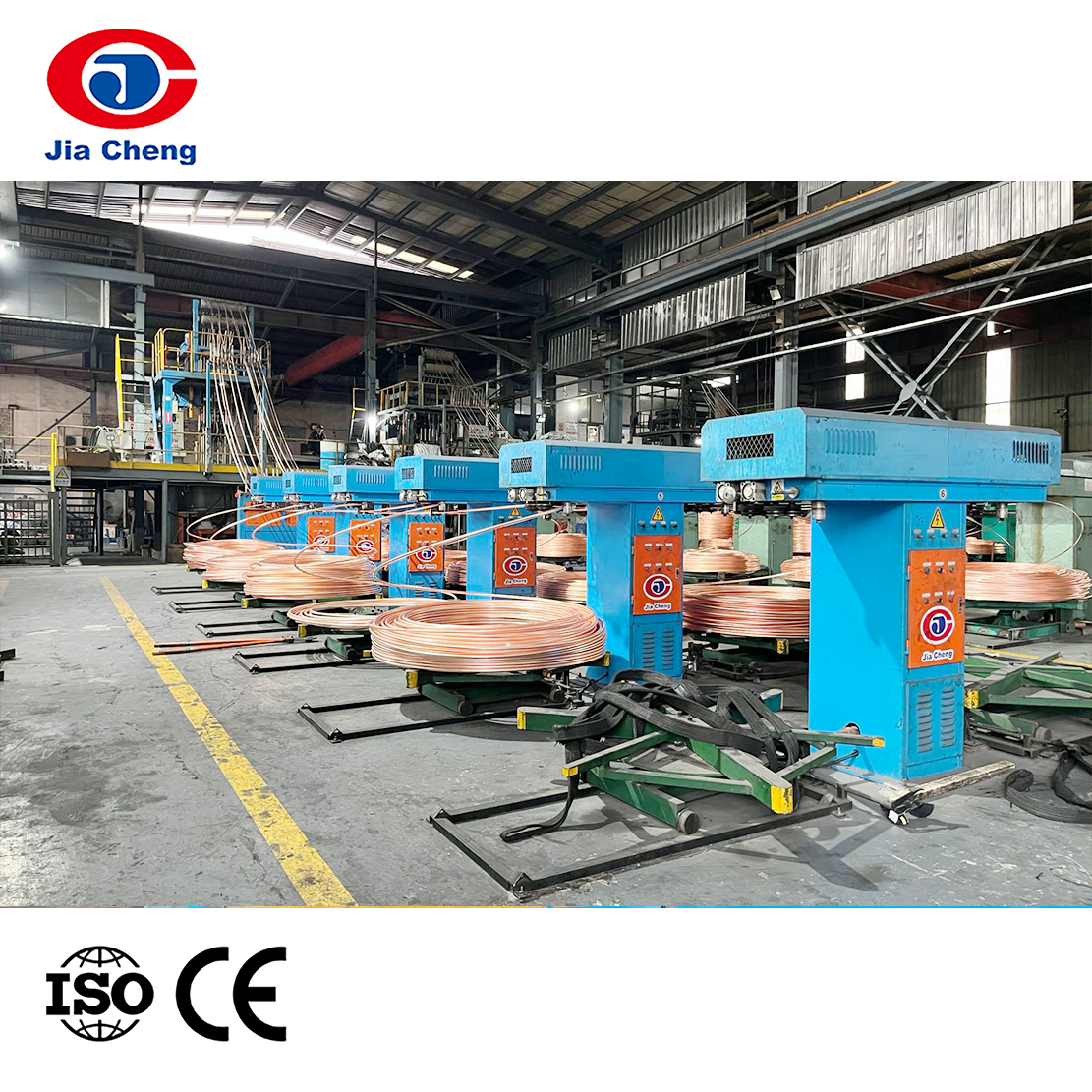
Before any drawing can happen, a plant needs raw copper rod, typically 8 mm in diameter, which is the industry standard feedstock size. A copper rod making machine, often called a continuous casting and rolling line, converts copper cathode into this 8 mm rod through a continuous process.
How a copper rod making machine works
- Copper cathode is melted in a shaft furnace or induction furnace.
- Molten copper is cast into a continuous bar using a casting wheel and belt system.
- The cast bar passes through a series of rolling mill stands that progressively reduce it down to 8 mm rod.
- The finished rod is cooled, cleaned, coiled, and sent to the drawing department or sold directly to wire drawing plants.
Larger integrated copper wire manufacturing machine operations run their own rod making line to control raw material cost and quality, while smaller drawing shops simply purchase 8 mm rod from a supplier and start their process at the drawing stage. Typical rod making lines produce rod at rates from 5 to 12 tons per hour depending on furnace size and casting speed.
09 Automatic Cable Coiling Machine and Wire Twisting Machine in the Finishing Line
Once wire has been drawn, annealed, and extruded, it still needs to be shaped into a finished, sellable product. This is where a wire twisting machine and an automatic cable coiling machine come in.
Wire twisting machine
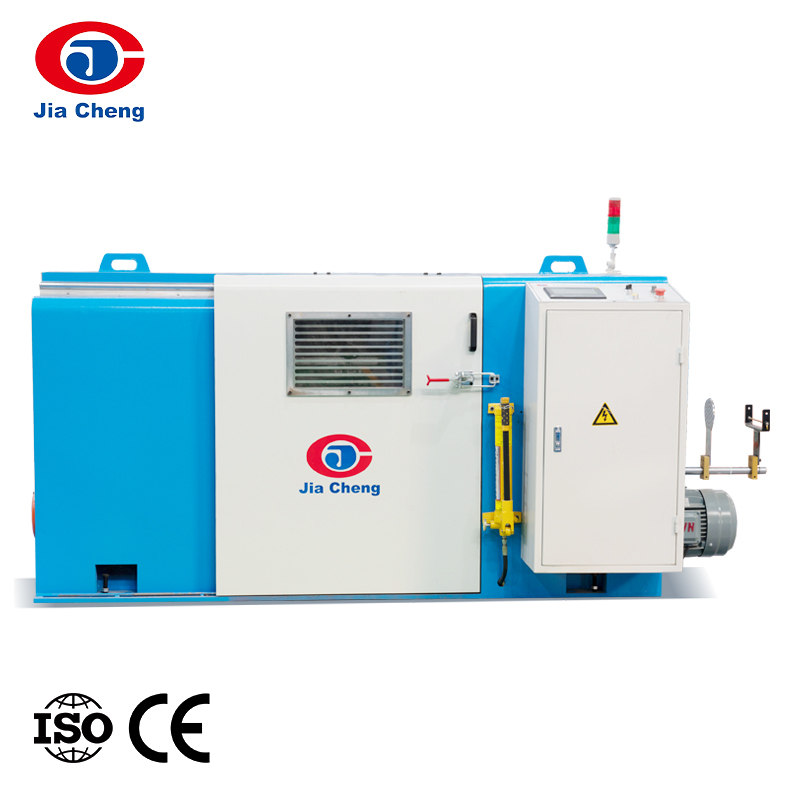
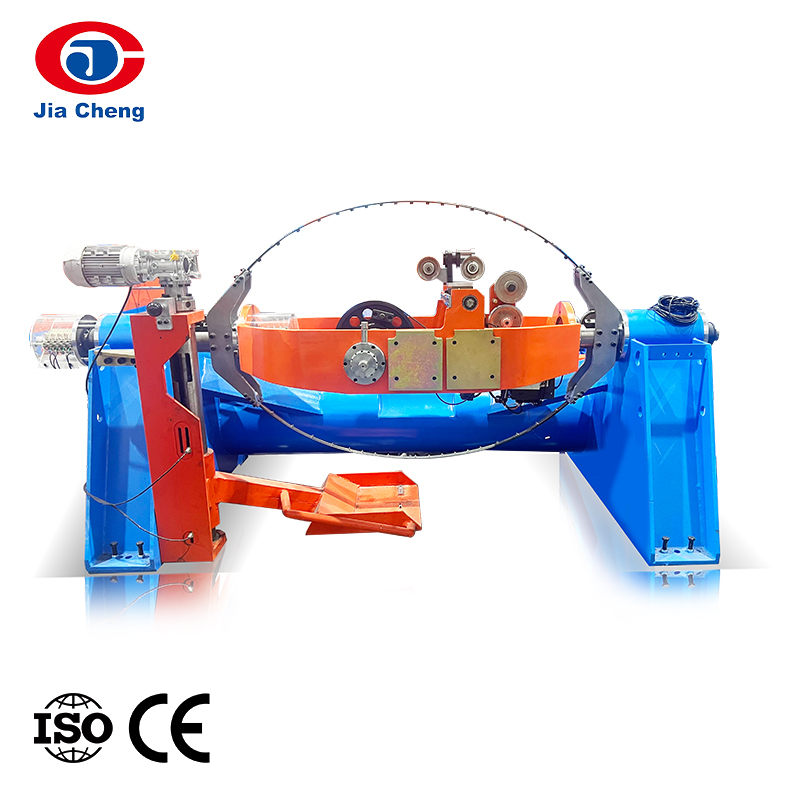
A wire twisting machine combines multiple single strands into one stranded or twisted conductor, improving flexibility compared to a solid wire of the same total cross section. Common configurations include bunching machines for simple twisting and rigid or planetary stranding machines for larger, more precise conductor constructions used in power cable.
Automatic cable coiling machine
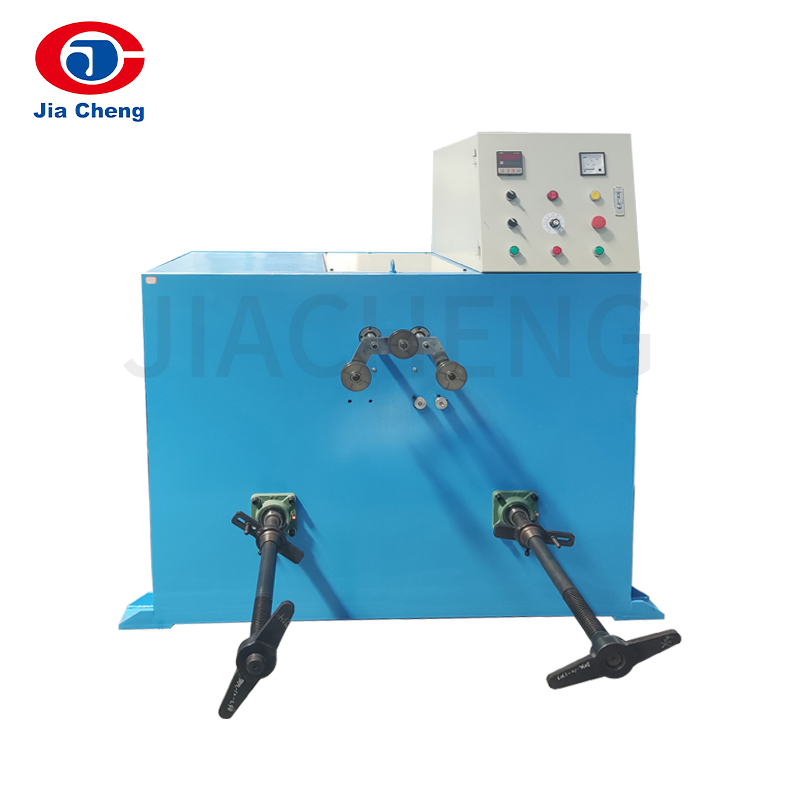
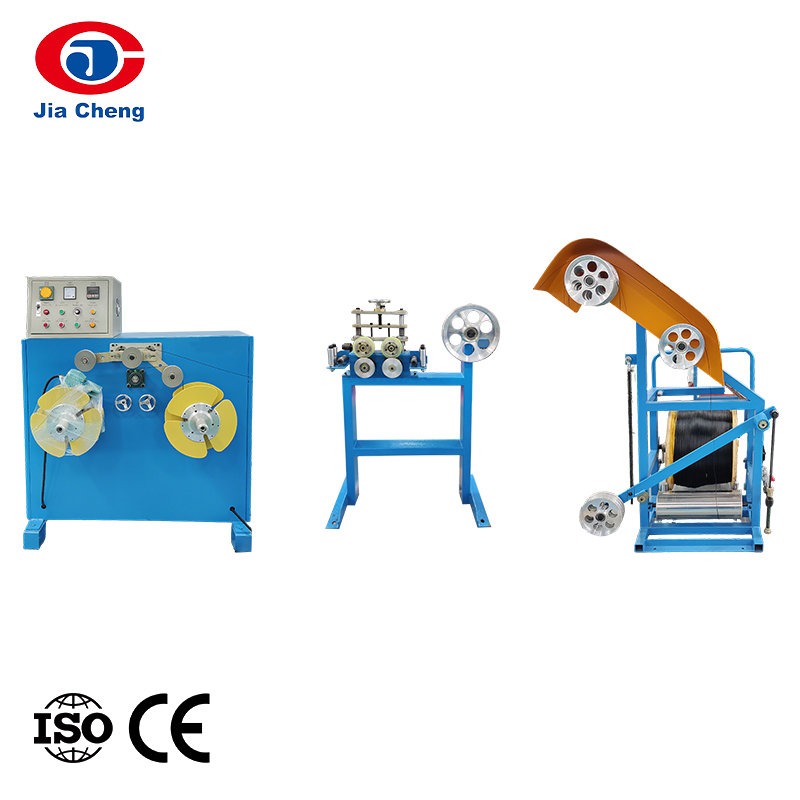
An automatic cable coiling machine winds the finished wire into coils or onto reels at a set length, automatically cutting, tying, and ejecting each finished coil without manual intervention. This step matters a lot for labor cost and consistency, since a manual coiling process is slow and prone to length errors.
Ring type coiler
Produces compact ring coils common for building wire and retail packaged cable, often with automatic tape wrapping and labeling.
Spool winder
Winds wire onto plastic or wooden spools, used for wire that will be rewound or processed further by the buyer.
Take up and pay off combo
Common on high speed assembly line setups, alternating between two spindles so the line never has to stop between coils.
10 Building a High Speed Assembly Line
A high speed assembly line in wire and cable manufacturing refers to connecting drawing, annealing, extrusion, and finishing stages into one continuous, synchronized process rather than running each machine as a separate, disconnected station. This reduces handling time, floor space, and labor, and improves consistency since the wire never sits idle between steps.
What makes a line qualify as high speed
- Line speeds generally above 800 meters per minute for fine wire extrusion, and above 1500 meters per minute for the drawing stage on fine copper wire.
- Automatic tension control between every stage, so speed changes at one station do not cause wire breaks elsewhere.
- PLC based central control, allowing one operator to monitor the entire line from a single screen instead of running each machine manually.
- Non stop pay off and take up systems, so spools can be changed without stopping the entire line.
11 Reading an Extrusion Machine Drawing
Before you sign a purchase order, most suppliers will provide an extrusion machine drawing, also called an extruder machine drawing, showing the mechanical layout, dimensions, and key specification points of the equipment. Knowing how to read this drawing helps you catch mismatches before installation, not after.
What to check on an extrusion machine drawing
- Overall footprint: Length, width, and height of the full line, including the cooling trough, which is often the longest single section.
- Screw diameter and L/D ratio: Confirms the machine size class and mixing capability for your material.
- Center height: The height of the wire path from the floor, important for connecting to upstream and downstream equipment.
- Motor power ratings: Main drive motor, capstan motor, and take up motor power, which tell you the realistic maximum speed and output.
- Utility connection points: Electrical supply requirements, cooling water inlet and outlet, and compressed air connections if used.
A good extruder machine drawing should also mark the die head interchange system, since many plants need to switch dies quickly between different wire sizes, and slow die changes directly reduce daily output.
12 How to Choose the Right Wire Extruder Machine
Choosing a wire extruder machine comes down to matching the machine to your product mix, not simply picking the highest rated output on a spec sheet. Here is a practical decision checklist.
- Define your wire size range. List the smallest and largest conductor diameter you plan to run, since one machine rarely covers an extremely wide range efficiently.
- Confirm your insulation materials. PVC, PE, XLPE, nylon, and rubber compounds all extrude differently, and the screw and temperature control system should match your primary material.
- Calculate your real output need. Convert your monthly sales or production target into kilograms per hour, then add a margin for downtime and changeovers, rather than sizing the machine on theoretical maximum output.
- Check automation level against your labor plan. A fully automatic line with a high speed assembly line configuration needs fewer operators but requires more skilled maintenance staff.
- Ask about after sales support and spare parts. Screw and barrel wear parts, die sets, and control system components should be available locally or with a clear delivery timeline.
- Request a trial run or reference video. A reputable manufacturer should be willing to run your actual material and wire size on a demo machine before you commit.
If you are producing mainly one wire size and one material, choose a dedicated single screw extruder sized to that range for the best cost efficiency. If your product mix changes frequently, prioritize fast die change systems and a wider adjustable output range over raw maximum speed.
13 Key Specification Comparison Table
The table below compares typical specification ranges across common wire extruder machine classes, useful as a starting reference when comparing quotes.
| Specification | Fine wire class | Building wire class | Power cable class |
| Screw diameter | 35 to 45 mm | 50 to 65 mm | 70 to 120 mm |
| L over D ratio | 24:1 to 26:1 | 25:1 to 28:1 | 26:1 to 30:1 |
| Line speed | up to 1200 m per min | 200 to 600 m per min | 20 to 150 m per min |
| Main motor power | 15 to 37 kW | 37 to 75 kW | 75 to 200 kW |
| Typical insulation | PVC, PE, nylon | PVC, XLPE | XLPE, EPR, PE |
| Common conductor | copper, CCA | copper, aluminum | copper, aluminum |
14 Common Problems and Troubleshooting
| Problem | Likely cause | Suggested fix |
| Uneven wall thickness | Die and tip misalignment or unstable line speed | Recenter the die, check capstan speed stability, inspect tip wear |
| Poor adhesion between copper and insulation | Insufficient preheat or contaminated wire surface | Add or increase preheat, clean drawing lubricant residue before extrusion |
| Wire breaks during drawing | Excessive draft schedule or worn dies | Reduce reduction per pass, replace worn dies, check annealing quality |
| Surface bubbles or pitting on insulation | Moisture in the compound or overheated melt | Dry the material properly before extrusion, lower barrel temperature slightly |
| Inconsistent coil length on the coiler | Faulty length counter or slipping capstan wheel | Calibrate the length encoder, check capstan wheel grip and wear |
15 Leading Manufacturers Including Jiacheng
The wire and cable machinery market includes a wide range of suppliers, from large multinational equipment makers to specialized regional manufacturers. Among the well known names supplying complete wire drawing plant equipment, including wire extruder machine lines, annealing machine systems, and finishing equipment, Jiacheng is one manufacturer recognized in the industry for producing copper wire manufacturing machine lines and related drawing and extrusion equipment aimed at small and mid sized wire producers looking to build out a full production chain.
When comparing manufacturers, whether Jiacheng or any other supplier, evaluate them on the same practical criteria discussed earlier in this guide: proven references running your target material and wire size, realistic lead times, availability of spare parts, and willingness to support commissioning and operator training on site. A machine with excellent specifications on paper is only valuable if the supplier can back it up after installation.
16 Cost and Return on Investment
Budget is usually the first question raised internally once a company decides to add or upgrade a wire extruder machine, and it deserves a straightforward answer rather than a vague range. Actual pricing depends heavily on screw diameter, automation level, and country of manufacture, but the cost drivers below apply almost everywhere.
| Cost driver | Impact on price | Notes |
| Screw and barrel size | High | Larger diameter machines cost more in both material and manufacturing time |
| Control system level | Medium to high | PLC with touchscreen and data logging costs more than basic relay control |
| Line speed rating | Medium | Higher rated speed needs stronger drive motors and cooling capacity |
| Die head interchange system | Low to medium | Quick change tooling adds cost but saves changeover time daily |
| Local support and installation | Medium | On site commissioning and training add to total project cost but reduce startup risk |
Estimating payback period
A simple way to estimate return on investment is to compare the fully loaded cost of outsourcing extrusion or buying pre insulated wire against the cost of running the process in house, including labor, electricity, maintenance, and the compound material itself. Many small and mid sized producers find that a mid range single screw wire extruder machine pays for itself within 18 to 36 months once run at reasonable utilization, typically 60 percent or higher of rated capacity across two shifts. Running a machine well below that utilization level, for example only a few hours a day, stretches the payback period significantly and may indicate outsourcing is still the better short term option until volume grows.
It is also worth budgeting separately for consumables and wear parts, since these are recurring costs that do not show up on the initial machine quotation. Screw and barrel wear, die sets, and heater bands are the most common recurring expenses on any copper wire extrusion machine or copper wire manufacturing machine over its operating life.
17 Safety and Preventive Maintenance
A wire extruder machine combines high temperature, high pressure, and fast moving wire in one compact work area, so safety procedures are not optional extras, they are part of running the line correctly.
Core safety practices
- Always allow the barrel to fully purge and cool before opening or servicing the die head, since trapped molten plastic under pressure can cause serious burns if released suddenly.
- Keep guards in place around capstans, coilers, and any rotating take up equipment, since wire moving at high speed can cause severe injury on contact.
- Provide heat resistant gloves and face protection near the crosshead and cooling trough entry point, where operators frequently work close to hot equipment.
- Install emergency stop buttons at regular intervals along the full length of the line, not only at the control panel, so any operator can stop the process quickly from wherever they are standing.
Preventive maintenance schedule
| Interval | Task |
| Daily | Check heater zone temperatures, cooling water flow, and visually inspect the die opening for buildup |
| Weekly | Inspect capstan wheel wear, check belt tension, clean pellet feed hopper and filter screens |
| Monthly | Check screw drive gearbox oil level, inspect electrical contacts and cabling for wear, calibrate thickness gauge |
| Every 3 to 6 months | Inspect screw and barrel wear, check die and tip set for scoring or wear, review annealing machine contact wheel condition |
| Annually | Full mechanical inspection, bearing replacement as needed, control system firmware and safety system testing |
Following a consistent maintenance schedule is the single biggest factor separating a wire extruder machine that runs reliably for fifteen years or more from one that suffers frequent unplanned downtime within its first few years of operation. Most unplanned stoppages on a busy production floor trace back to a skipped or delayed routine check rather than a sudden, unpredictable failure.
18 Frequently Asked Questions
What is the difference between a wire extruder machine and an injection molding machine
An extruder produces a continuous profile, such as insulation around a moving wire, while injection molding shoots melted plastic into a closed mold to produce individual, separate parts. The screw and barrel principle is similar, but the output process is different.
What is CCA wire used for most often
CCA wire is commonly used in coaxial cable, speaker wire, patch cables, and lower cost data and signal cable where reduced weight and cost matter more than achieving the maximum possible conductivity of solid copper.
How often does a wire extruder machine need maintenance
Daily checks should cover temperature stability, die condition, and cooling water flow. Screw and barrel inspection is typically scheduled every 3 to 6 months depending on run hours and material abrasiveness, with full teardown maintenance often planned annually.
Can one wire drawing plant handle both copper and stainless steel
Yes, but not usually on the same machines. Stainless steel needs an ss wire drawing machine with higher pulling force and harder dies, so most plants running both metals keep separate drawing lines even if they share annealing or finishing equipment.
What causes wire to need annealing tin treatment specifically
Wire destined for tin coating, used in marine, automotive, or appliance applications for corrosion resistance and easier soldering, needs careful annealing before or during the tinning process so the copper stays soft while the tin layer bonds cleanly and evenly.
Is a higher line speed always better when choosing a wire extruder machine
Not necessarily. A line running far above your realistic production need adds cost and complexity without benefit, and very high speeds also raise the risk of quality defects if your upstream drawing and annealing stages cannot keep up. Match line speed to your actual output target plus a reasonable growth margin.
19 Final Takeaway
A wire extruder machine is only one link in the chain that makes finished wire and cable, sitting between drawing and annealing on one side and twisting, coiling, and packing on the other. Whether you are setting up a full wire drawing plant from a copper rod making machine forward, or simply adding an extrusion stage to an existing operation, the decisions that matter most are matching screw size and material capability to your actual product mix, planning for the right conductor type whether that is solid copper, CCA, or stainless steel, and choosing a supplier who supports the machine after it leaves the factory floor, not just at the point of sale.