Language
 中文简体
中文简体 English
 عربى
عربى русский
Content
- 1 The Direct Answer: Why a 4-Head Configuration Is a Complete Production Solution
- 2 What Is a 4-Head Fine Copper Wire Drawing and Annealing Machine?
- 3 Machine Structure: Key Components and Their Functions
- 4 Performance Specifications: What Numbers to Expect and Demand
- 5 The Annealing Process in Detail: Why It Makes the Machine "Complete"
- 6 Raw Material Requirements: Copper Rod Selection for Fine Wire Drawing
- 7 Downstream Integration: What Comes After the 4-Head Drawing Machine
- 8 How to Evaluate and Select a Manufacturer
- 9 Operating Cost and ROI Analysis for a 4-Head Fine Wire Machine
- 10 Summary: Is a 4-Head Fine Copper Wire Drawing and Annealing Machine the Right Choice?
The Direct Answer: Why a 4-Head Configuration Is a Complete Production Solution
A 4-head fine copper wire drawing and annealing machine is considered a complete solution because it integrates four simultaneous drawing lines with in-line electrical annealing into a single, synchronized production system. One machine replaces what would otherwise require separate drawing machines, standalone annealers, and multiple take-up units — reducing floor space requirements by up to 40%, cutting labor headcount by 2–3 operators per shift, and improving wire consistency by eliminating inter-process handling.
The "complete" designation refers not just to the machine's physical scope, but to its ability to deliver finished, annealed fine copper wire — ready for stranding, insulation, or packaging — directly off a single production line. For manufacturers producing fine copper wire in the 0.05 mm to 0.5 mm diameter range, this integrated 4-head architecture is one of the most cost-effective and operationally efficient configurations available today.
This article examines every dimension of what makes this machine a complete solution: its mechanical structure, annealing technology, output performance, die configuration, quality control integration, and how to evaluate manufacturers — including established wire drawing machine manufacturer in delhi suppliers and international alternatives.
What Is a 4-Head Fine Copper Wire Drawing and Annealing Machine?
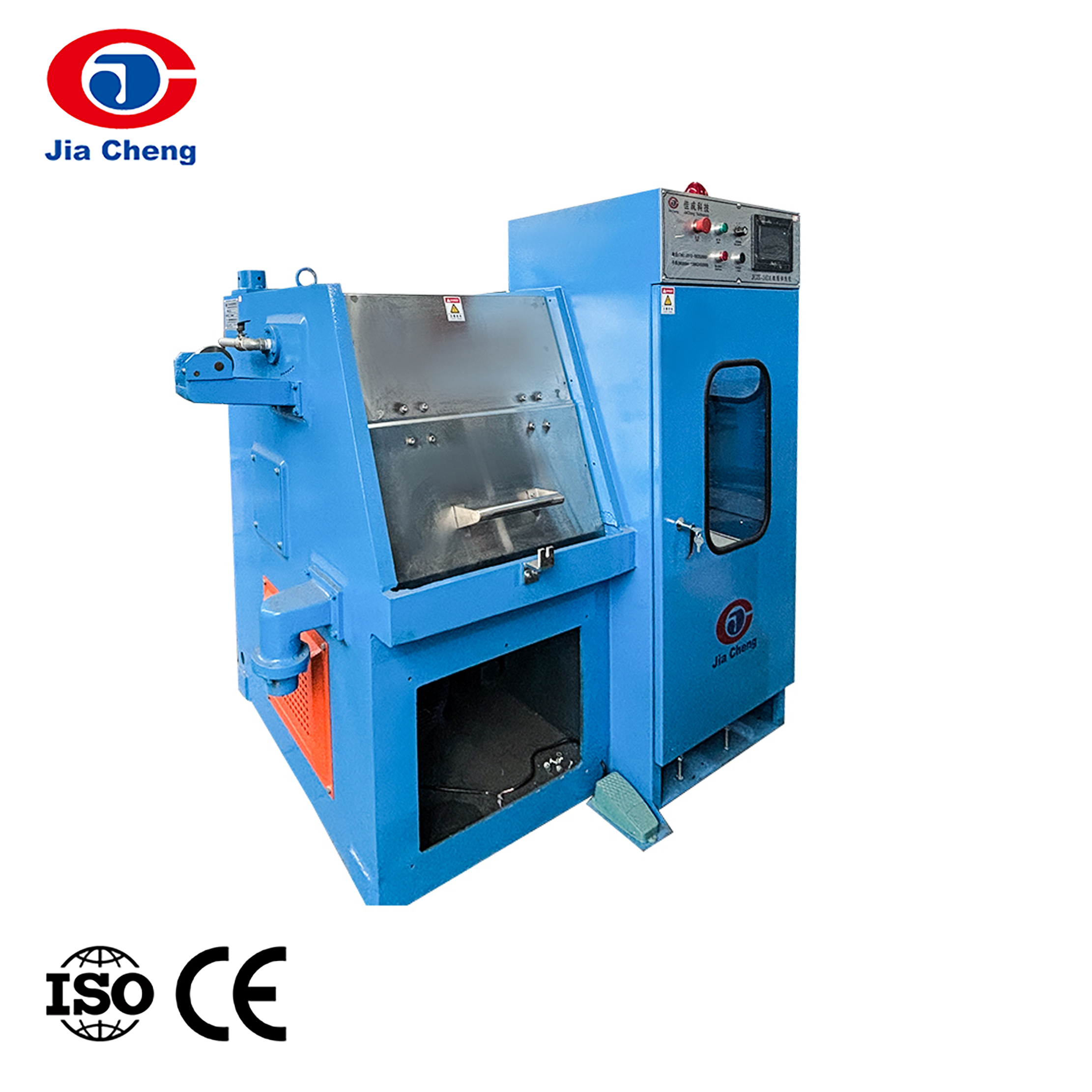
A 4-head fine copper wire drawing and annealing machine is a multi-line wet drawing machine equipped with four independent drawing heads — each consisting of a multi-block capstan assembly and die box train — feeding into a shared or individual in-line annealing and take-up system. Each head operates as a standalone drawing line capable of reducing copper wire from an input diameter of approximately 0.8–1.2 mm down to a final diameter as fine as 0.05–0.10 mm, depending on the number of drawing passes and the die reduction schedule configured.
The four heads typically share a common machine frame, lubrication and coolant circulation system, and electrical control cabinet — reducing both manufacturing cost and maintenance complexity compared to running four separate machines. Despite the shared infrastructure, each head maintains independent speed and tension control, allowing different wire diameters or reduction schedules to run simultaneously on the same machine.
How It Differs From Single-Head Machines
Single-head fine wire drawing machines are straightforward to operate and well-suited for very specialized or small-volume production. However, for manufacturers serving the telecommunications, automotive wiring harness, or enameled wire markets, a single-head machine's output of 10–25 kg/hr per line is insufficient for commercially viable production volumes. The 4-head configuration multiplies output to effectively 40–100 kg/hr from a single equipment footprint, without proportionally multiplying capital, floor space, or utility consumption.
Understanding the characteristics of copper wire — particularly its work-hardening behavior during cold drawing, high thermal conductivity, and the sensitivity of its electrical properties to annealing temperature — explains why the drawing and annealing stages must be precisely coordinated. A 4-head machine with integrated annealing achieves this coordination through synchronized PLC control of drawing speed and annealing current, a synchronization that is far harder to achieve when the two processes run on separate machines.
Machine Structure: Key Components and Their Functions
Understanding the mechanical structure of a 4-head fine wire drawing and annealing machine allows buyers to evaluate build quality, compare specifications meaningfully, and anticipate maintenance requirements. The machine consists of six major subsystems.
1. Pay-Off System
Each of the four heads is fed by an independent pay-off spool, typically holding 5–20 kg of input wire on a standard PN400 or PN630 spool core. The pay-off unit incorporates a tension dancer arm that maintains constant back-tension on the wire entering the first drawing block. Inconsistent pay-off tension is one of the top causes of wire breaks in fine wire drawing — look for machines with motorized pay-off units rather than passive brake-only systems for diameters below 0.3 mm.
2. Drawing Block Assembly (Multi-Capstan)
Each drawing head contains a series of capstan blocks — typically 12 to 22 blocks depending on the overall reduction ratio required. Each capstan is driven by an individual AC inverter motor, allowing the speed ratio between consecutive blocks to be precisely adjusted to match the theoretical reduction schedule. Capstan diameter for fine wire machines is typically 80–160 mm, with surface hardening (chrome plating or tungsten carbide coating) to minimize groove wear.
The die boxes are positioned between each pair of capstan blocks. For fine wire applications, natural diamond dies or polycrystalline diamond (PCD) dies are strongly preferred over tungsten carbide. Diamond dies in fine wire applications last 10–30× longer than carbide under comparable conditions, and their superior surface finish translates directly to lower annealing temperatures required and improved finished wire conductivity.
3. Lubrication and Coolant System
Fine wire drawing machines are universally wet-drawing systems. The lubricant — typically an aqueous drawing emulsion at 3–8% concentration — serves three functions simultaneously: die lubrication, wire cooling, and die cooling. The 4-head configuration shares a central coolant tank (typically 300–600 L), pump, filtration system, and chiller unit. Coolant temperature must be maintained below 35°C for stable fine wire drawing; a refrigerated chiller unit is standard equipment on quality machines, not an optional upgrade.
Filtration quality directly determines die life. Look for multi-stage filtration — typically a coarse magnetic separator followed by a 10–25 micron cartridge filter — to remove copper fines that would otherwise recirculate and abrade die surfaces. On a well-maintained system, this can extend die life by 40–60% compared to unfiltered systems.
4. In-Line Electrical Annealing System
The in-line annealing section is what transforms this from a drawing machine into a complete annealing coating line-style production system. After the final drawing block, each wire head passes the drawn wire through an electrical resistance annealing unit — sometimes called a "steam annealer" due to the steam-sealing atmosphere used to prevent surface oxidation during annealing.
The annealing process works by passing a precisely controlled electrical current through the wire as it travels between two contact pulleys. The resistance heating raises the wire temperature to 300–500°C depending on target temper and drawing speed, recrystallizing the work-hardened copper grain structure and restoring ductility. The wire then immediately enters a steam or water cooling chamber to quench and seal the surface.
Key annealing performance parameters to specify:
- Annealing current range: should cover the full range of wire diameters the machine is designed to process
- Annealing voltage: typically 12–48V AC for fine wire; low voltage is a safety requirement
- Contact pulley material: silver alloy or graphite — must not contaminate or scratch the wire surface
- Steam seal design: nitrogen or steam atmosphere prevents copper oxidation; verify the sealing method and steam consumption rate
- Annealing length: longer annealing path = more uniform temperature distribution across wire cross-section
5. Take-Up and Spooling System
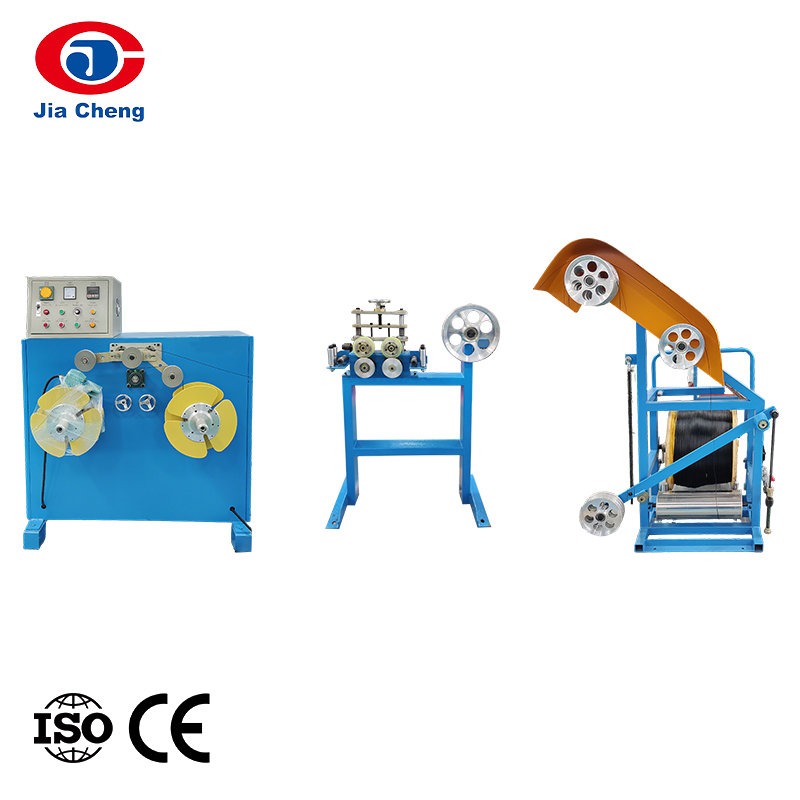
After annealing and cooling, each wire line feeds into an independent take-up unit. Take-up spool sizes for fine wire are typically PN160 to PN400, holding 0.5–5 kg of finished wire depending on diameter. Modern machines offer automatic traverse winding with programmable pitch control to ensure even layer-by-layer spool build — critical for downstream stranding operations where uneven spools cause tension variations and wire breaks.
Some 4-head machines are configured with double take-up stations per head (8 spools total), allowing one spool to be changed while the other is filling — dramatically reducing downtime on high-speed lines. On a 35 m/s line drawing 0.1 mm wire, a 1 kg spool fills in approximately 12–15 minutes, making fast changeover essential for efficiency.
6. Control System
A quality 4-head fine wire drawing machine will feature a PLC-based control system with a color touchscreen HMI that provides individual speed control for all capstan blocks across all four heads, annealing current control with automatic speed-tracking (current adjusts proportionally as drawing speed changes), fault alarm logging with timestamp and head identification, production data recording (meters drawn, wire breaks per shift, running speed), and remote diagnostic capability via Ethernet connection.
Machines from established cable production machinery manufacturers will use internationally recognized PLC brands (Siemens, Allen-Bradley, Mitsubishi) for long-term parts availability. Be cautious of machines using proprietary control systems with no documentation in your language — these become support nightmares within 3–5 years.
Performance Specifications: What Numbers to Expect and Demand
Performance claims from machine manufacturers vary widely and are sometimes overstated. Here is a realistic reference table for a well-engineered 4-head fine copper wire drawing and annealing machine across common wire diameter ranges.
| Output Diameter | Input Diameter | Drawing Blocks | Max Speed (per head) | Output per Head (kg/hr) | Total 4-Head Output |
|---|---|---|---|---|---|
| 0.40 mm | 1.20 mm | 12 | 18–22 m/s | 18–25 kg/hr | 72–100 kg/hr |
| 0.20 mm | 0.90 mm | 16 | 25–32 m/s | 8–12 kg/hr | 32–48 kg/hr |
| 0.10 mm | 0.80 mm | 20 | 35–45 m/s | 2–4 kg/hr | 8–16 kg/hr |
| 0.05 mm | 0.50 mm | 22 | 45–60 m/s | 0.5–1.2 kg/hr | 2–4.8 kg/hr |
Note that output per head drops sharply as wire diameter decreases — this is a physical reality of the process, not a machine deficiency. Any manufacturer claiming sustained output above these ranges should be asked to demonstrate on a running machine with your wire specification, not just quote peak theoretical speeds from a datasheet.
Die Reduction Schedule and Its Impact on Wire Quality
The die reduction schedule — the sequence of die angles and area reduction ratios across all drawing blocks — is one of the most technically important aspects of fine wire drawing and is rarely discussed in commercial brochures. A well-designed reduction schedule for fine copper wire will use:
- Die semi-angle of 6–9° for fine wire (smaller than for coarse wire) to minimize redundant work and die wear
- Area reduction per pass of 15–22% — higher reductions increase work hardening and risk of wire breakage; lower reductions require more passes and increase equipment cost
- Progressive die angle reduction toward the final die, where surface finish requirements are highest
Ask the machine manufacturer to provide their standard reduction schedule for your target diameter. A reputable wire drawing company or machine builder will share this data readily — it is evidence of engineering competence and transparency.
The Annealing Process in Detail: Why It Makes the Machine "Complete"
The inclusion of in-line annealing is precisely what elevates a 4-head drawing machine from a semi-finished wire producer to a complete solution. Without annealing, drawn copper wire is in a hard-temper state — high tensile strength (350–450 MPa) but very low elongation (2–5%), making it unsuitable for flexible cable, stranding, or enameling applications. In-line annealing restores elongation to 25–35% or more while maintaining dimensional accuracy, without any additional handling or second-process batch annealing.
Electrical Resistance Annealing vs. Batch Annealing
| Parameter | In-Line Electrical Annealing | Batch Bell Furnace Annealing |
|---|---|---|
| Process time | Milliseconds (continuous) | 4–12 hours per batch |
| Temperature uniformity | Excellent (each wire treated uniformly) | Variable (coil interior vs exterior) |
| Surface oxidation risk | Minimal (steam/water seal) | High without protective atmosphere |
| Energy consumption | Low (direct resistance heating) | High (heating entire furnace mass) |
| WIP inventory required | Zero (continuous process) | High (batch queuing and handling) |
| Diameter range suitability | Optimal for fine wire <0.5 mm | Better for coarser wire >0.5 mm |
| Integration with drawing | Fully integrated, speed-synchronized | Separate process, manual handling |
For fine copper wire production, in-line electrical annealing is the clear technical winner in almost every metric. The only scenario where batch annealing might be preferred is for very large-diameter wire (above 1 mm) where in-line annealing current requirements become impractically large, or for specialty alloys with non-standard annealing temperature requirements.
Annealing Quality Verification
Finished annealed wire should be tested to verify the annealing process is achieving target properties. Standard tests include elongation at break (minimum 25% for IEC 60228 Class 1 soft copper), resistivity measurement (maximum 1.7241 µΩ·cm at 20°C for EC-grade copper), and tensile strength (typically 200–280 MPa for soft-drawn fine wire). A machine capable of consistently hitting these numbers across all four heads simultaneously is the hallmark of a truly complete solution.
Raw Material Requirements: Copper Rod Selection for Fine Wire Drawing
The quality of fine wire output is directly constrained by the quality of the input copper rod. Fine wire drawing amplifies defects — a surface inclusion that is inconsequential at 8 mm rod diameter becomes a wire break risk at 0.1 mm, because the same defect volume now represents a much larger proportion of the wire's cross-section.
Copper Rod Specifications for Fine Wire
When you buy copper rod for fine wire drawing applications, specify the following as minimum requirements:
- Grade: ETP (Electrolytic Tough Pitch) copper, CW004A / C11000, minimum 99.90% Cu+Ag purity
- Conductivity: ≥100% IACS (International Annealed Copper Standard)
- Oxygen content: 200–400 ppm for ETP; ≤5 ppm for OFC (oxygen-free copper)
- Surface condition: no seams, laps, cracks, slivers, or scale; oxide layer ≤5 µm
- Diameter tolerance: 8.0 mm ±0.05 mm for standard CCR (Continuous Cast Rod)
- Coil weight: 3,000–5,000 kg for continuous production; ensure weld-free coils where possible
For operations drawing below 0.1 mm, oxygen-free copper (Cu-OF or Cu-OFE) is strongly recommended over ETP. The absence of cuprous oxide inclusions at grain boundaries dramatically reduces wire breakage rates at ultra-fine diameters, where even submicron inclusions can initiate fatigue cracks under the cyclic stress of high-speed drawing.
Smaller manufacturers or those trialing new wire specifications may prefer to buy copper rod online from certified metal distributors in smaller quantities (500–1,000 kg). When purchasing online, always request a mill test certificate (MTC) with each shipment and spot-check incoming rod with a handheld conductivity meter to verify compliance.
What About CCA Wire Production?
Some manufacturers ask whether a 4-head fine wire drawing machine can process CCA wire (copper-clad aluminum). The answer is: with specific modifications, yes — but a standard fine copper wire machine is not optimized for CCA. CCA wire requires lower per-pass reduction ratios (≤15% vs. 20–22% for pure copper), more gradual die angles, and slower overall drawing speeds to prevent delamination of the copper cladding from the aluminum core.
If CCA production is in your plan, specify this explicitly when ordering. The machine builder will adjust the die schedule, capstan speed ratios, and lubrication parameters accordingly. Do not attempt to run CCA wire through a machine configured solely for pure copper — cladding failure will result in scrapped wire and potential die damage.
Downstream Integration: What Comes After the 4-Head Drawing Machine
A 4-head fine copper wire drawing and annealing machine produces finished, annealed, spooled fine wire — the starting point for a wide range of downstream processes. Planning for downstream integration from the outset avoids costly retrofits and compatibility problems later.
Stranding and Conductor Assembly
The most common downstream use for fine drawn wire is stranding — twisting multiple fine wires together to form a flexible conductor. For fine wire stranding, a planetary machine is the preferred equipment. The planetary stranding machine rotates both the bobbin carrier and the take-up simultaneously, eliminating wire torsion that would otherwise cause residual stress and uneven lay. For conductors made from wire below 0.2 mm diameter, a planetary machine is not merely preferred — it is essentially required to achieve IEC 60228 Class 5 or Class 6 flexible conductor specifications.
Where the conductor specification calls for layered concentric construction — a central core with successive concentric layers of wires — a concentric machine is used. Concentric twisting achieves precise lay lengths per layer and alternating lay directions, producing the round, stable conductor geometry required for power cables, control cables, and data cables. Spool dimensions from the 4-head drawing machine output must be compatible with the concentric machine's bobbin cradle dimensions — confirm this during the equipment specification phase.
Insulation and Coating
After stranding, the conductor is typically insulated. The insulation process depends on the application:
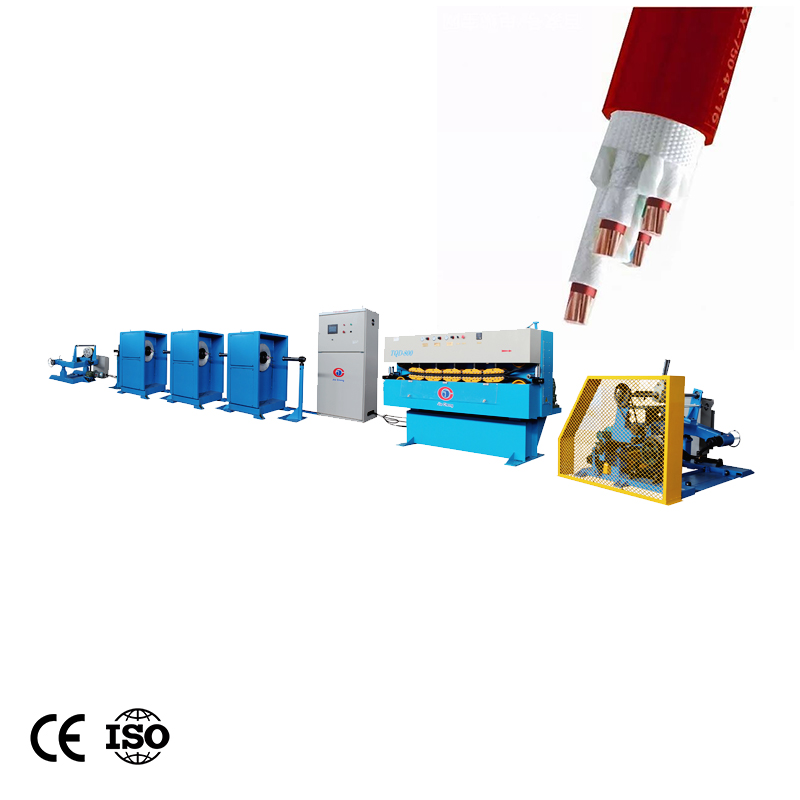
- PVC or XLPE extrusion: The most common route for power and control cable. The annealing coating line concept — combining drawing, annealing, and coating in sequence — reduces handling and improves surface compatibility.
- Teflon production (PTFE extrusion): For high-temperature, chemical-resistant, or RF applications. Teflon production requires exceptionally clean wire surface — the electrolytic cleaning section sometimes integrated into the drawing machine line is highly valuable here. PTFE-insulated fine wire is used extensively in aerospace MIL-spec wiring, medical device cables, and microwave coax.
- Enameling: Fine copper wire drawn on a 4-head machine is frequently fed directly into an enameling line (wire enamel coating furnace) to produce magnet wire (winding wire) for motors, transformers, and inductors. Wire surface quality from the drawing machine is critical — any pitting or surface roughness causes enamel pinholes and electrical failures.
- Flat extrusion: Where flat conductors are required for ribbon cable or flexible flat cable (FFC) applications, flat extrusion tooling is added to the insulation line. The round drawn wire is first flattened through rolling dies, then insulated.
Cable Assembly and Packaging
Multi-conductor cable assembly uses a cable laying machine to combine individual insulated cores, fillers, screens, and armor into the finished cable construction. A wire laying machine at this stage controls the pitch, tension, and alignment of each component. At the end of the production line, a cable coiling machine winds the finished cable into coils of specified diameter and weight for packaging and distribution.
When planning the full line, map the spool core and flange dimensions at every handoff point — drawing machine output spool → stranding machine input bobbin → insulation line pay-off → cable layer pay-off → coiling machine take-up. Dimension mismatches at any handoff point force the use of adapters, which introduce tension variations and increase wire break risk.
How to Evaluate and Select a Manufacturer
The quality of a 4-head fine wire drawing and annealing machine is inseparable from the quality and reliability of the manufacturer. Below is a structured evaluation framework.
Manufacturer Landscape for Fine Wire Drawing Machines
- European manufacturers (Italy, Germany): Highest engineering precision, most sophisticated control systems, longest track record for ultra-fine wire. Brands like Niehoff (Germany) and Samp (Italy) are the global benchmark. Price: USD 300,000–800,000+ for a 4-head fine wire configuration.
- Chinese manufacturers: Very wide range from basic to surprisingly capable. Price: USD 40,000–180,000 for comparable configurations. Conduct in-person factory audits; ask for running demonstrations with your target wire specification. Quality of electrical components (drives, PLC) varies widely — specify internationally recognized brands by name in the contract.
- Indian manufacturers (including wire drawing machine manufacturer in Delhi): A wire drawing machine manufacturer in Delhi or in industrial centers like Pune or Ahmedabad can offer competitive mid-range machines with good local service support. Well-suited for domestic Indian buyers and for export to African and Southeast Asian markets. Price range: USD 25,000–90,000 for 4-head configurations.
- Taiwanese manufacturers: Strong in medium fine wire (0.1–0.5 mm range). Good quality-to-price ratio and typically better documentation and service than comparable Chinese machines. Price: USD 80,000–200,000.
Technical Due Diligence Checklist
- Request the die reduction schedule for your exact wire specification — not a generic schedule
- Ask for the brand and model of: PLC, HMI, inverter drives, annealing transformer, and cooling pump — these determine long-term spare parts availability
- Request a list of five reference customers running the same output diameter range — contact at least two directly
- Arrange a factory acceptance test (FAT) with your own copper rod samples before shipment
- Confirm spare parts stocking policy: what is kept in inventory vs. made to order? What is the lead time for critical components?
- Verify CE marking (for European destinations) or equivalent certification for your target market
- Clarify commissioning terms: who pays for travel, how many days on-site, what is the acceptance criterion?
Contract Terms to Negotiate
- Performance guarantee: specify minimum sustained drawing speed, wire break rate (e.g., ≤2 breaks per 100 kg at target diameter), and annealed wire elongation minimum as contractual deliverables, not aspirational targets
- Warranty period and scope: 12–24 months is standard; clarify what is covered (parts only vs. parts and labor) and the process for warranty claims
- Training: minimum 5 days on-site operator and maintenance training should be included in the base contract
- Documentation: full electrical schematics, mechanical drawings, PLC source code (or at minimum ladder logic printout), and spare parts list in your language
Operating Cost and ROI Analysis for a 4-Head Fine Wire Machine
Beyond the purchase price, understanding the operating economics of a 4-head fine wire drawing and annealing machine is essential for building a credible business case. The following analysis is based on a mid-range machine drawing 0.2 mm copper wire on a two-shift, 16-hour/day operation.
| Cost Category | Annual Estimate (USD) | Basis |
|---|---|---|
| Diamond dies (PCD) | 8,000–15,000 | ~20 dies per head × 4 heads; partial annual replacement |
| Drawing lubricant (emulsion) | 3,000–6,000 | ~USD 1.50/kg wire drawn; ~40 kg/hr × 5,000 hr/yr |
| Electrical energy | 12,000–20,000 | ~40 kW avg draw × 5,000 hr × USD 0.08/kWh |
| Maintenance and spares | 5,000–12,000 | Bearings, contact pulleys, drive components |
| Labor (machine operators) | 20,000–40,000 | 1–1.5 operators per shift × 2 shifts |
| Total annual operating cost | 48,000–93,000 | Excluding raw copper rod material cost |
Annual output at 40 kg/hr × 5,000 operating hours = approximately 200 metric tons of finished 0.2 mm annealed copper wire. At a typical market price of USD 8–12/kg for fine annealed copper wire, gross revenue potential from one machine is USD 1.6–2.4 million per year. Payback period on a USD 150,000 machine investment is typically 3–6 months at normal copper wire market conditions — making this one of the faster-returning capital equipment investments in the cable manufacturing sector.
Summary: Is a 4-Head Fine Copper Wire Drawing and Annealing Machine the Right Choice?
A 4-head fine copper wire drawing and annealing machine is the right choice when all of the following apply:
- Your target wire diameter is in the 0.05–0.5 mm range
- You need soft-temper (annealed) wire for stranding, enameling, or flexible cable applications
- Your production volume justifies running multiple simultaneous drawing lines (typically above 50 kg/day output)
- You want to minimize floor space, labor, and inter-process handling compared to running separate drawing and annealing equipment
- Your downstream process — whether stranding via planetary machine, concentric machine, teflon production, flat extrusion, or enameling — requires consistent, high-quality input wire
It is not the right choice if you are drawing wire coarser than 0.5 mm (where a rod breakdown or medium wire machine is more appropriate), processing hard-temper wire intentionally for spring or contact applications, or running at volumes below approximately 20 kg/day where a simpler single-head machine is more economical.
The "complete solution" designation is earned — not marketed. When properly specified, installed, and operated, a 4-head fine copper wire drawing and annealing machine delivers finished wire in a single continuous pass from input rod to annealed spool, with quality, consistency, and economics that no combination of separate machines can match at this scale. Define your wire specification precisely, choose your manufacturer rigorously, and plan your full production line from the outset — and this machine will be the productive core of your operation for 15–20 years.