Language
 中文简体
中文简体 English
 عربى
عربى русский
Content
- 1 What a Wire Annealing Machine Actually Does
- 2 How the Annealing Process Works: Step by Step
- 3 Types of Wire Annealing Machines and Their Applications
- 4 Industries and Applications Where Wire Annealing Is Essential
- 5 Key Technical Specifications to Evaluate
- 6 Inline vs. Standalone Annealing: Which Configuration Suits Your Line?
- 7 How Wire Annealing Fits Into the Complete Wire Production Flow
- 8 Common Problems in Wire Annealing and How to Avoid Them
- 9 Choosing the Right Supplier: What to Ask Before You Buy
- 10 Energy Consumption and Cost Considerations
- 11 Final Checklist Before Purchasing a Wire Annealing Machine
- 12 Conclusion
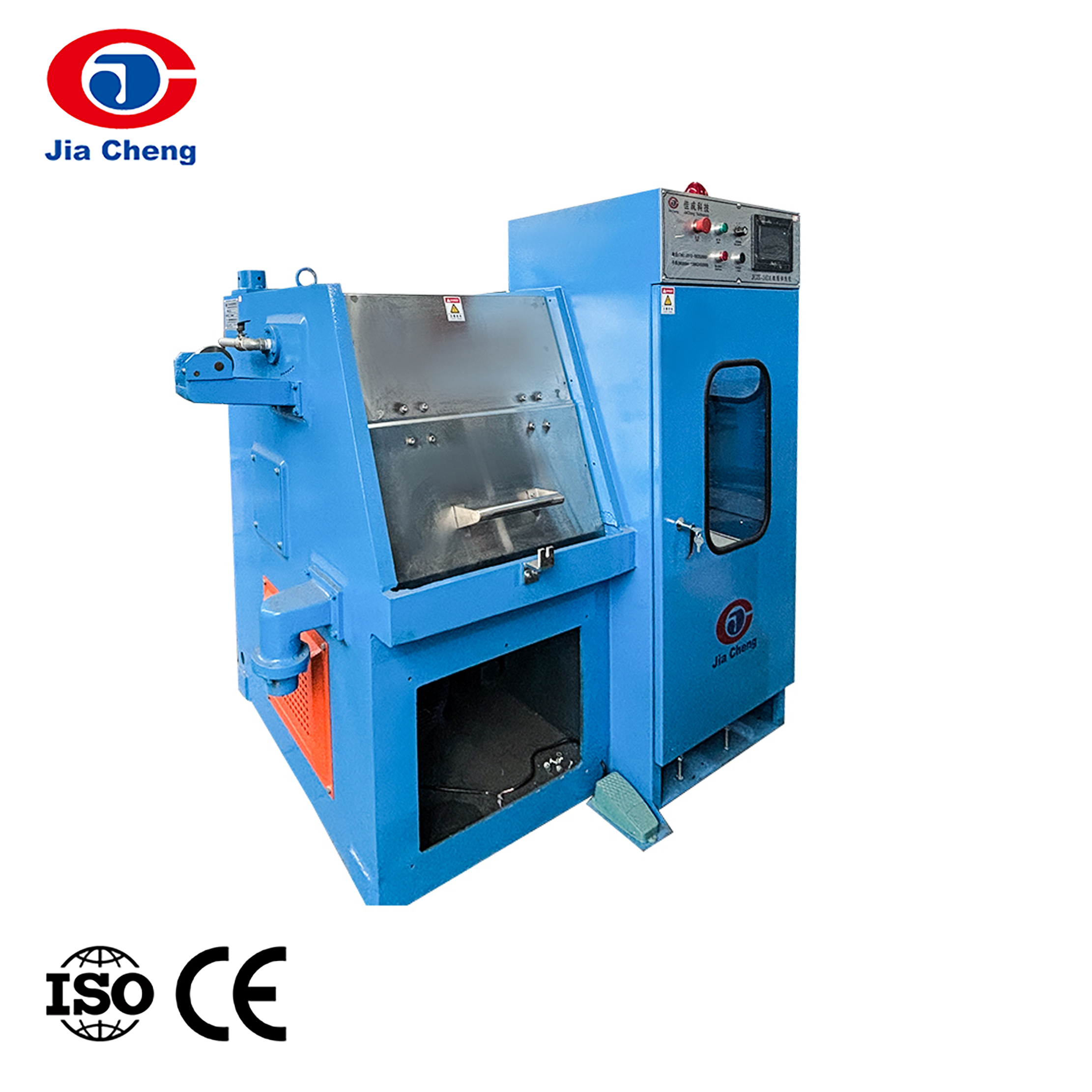
A wire annealing machine restores the ductility and conductivity of metal wire after it has been hardened through cold-working processes such as drawing or stranding. If your production line involves copper, aluminum, brass, or stainless steel wire, annealing is not optional — it is a critical step that determines the final mechanical and electrical performance of your product. This guide covers exactly how these machines work, what types exist, which industries use them, and how to make the right purchasing decision.
What a Wire Annealing Machine Actually Does
When metal wire is pulled through a copper wire drawing machine or a brass drawing machine, its crystal structure deforms under tensile stress. The wire becomes harder, more brittle, and less conductive — a condition known as work hardening. A wire annealing machine reverses this by heating the wire to a precise temperature range (typically 200°C–700°C depending on the alloy), holding it briefly, then cooling it in a controlled environment.
The result is a wire with:
- Recovered grain structure and internal stress relief
- Improved elongation (up to 25–35% for annealed copper vs. 2–5% for hard-drawn)
- Higher electrical conductivity — annealed copper wire typically achieves 100% IACS (International Annealed Copper Standard)
- Better flexibility for downstream processes like cabling, stranding, or winding
In modern wire production, annealing is often integrated inline — meaning the wire passes through an annealing unit immediately after exiting the drawing die, before reaching the spooler or automatic coiling machine. This eliminates a separate processing step and maintains tight tension control throughout the line.
How the Annealing Process Works: Step by Step
Understanding the process helps you evaluate whether a machine meets your production requirements.
Continuous Inline Annealing
This is the most common configuration for high-volume wire production. The wire travels through an annealing tube or tank at speeds of 100–3,000 m/min. Inside, it is exposed to resistive heating (electrical current passes through the wire itself) or external radiant heat. The tube is filled with steam or an inert gas (nitrogen or nitrogen-hydrogen mix) to prevent oxidation. The wire exits into a cooling tank before being spooled.
This method is standard on most multiwire drawing machine setups, where 8–24 wires are drawn and annealed simultaneously to maximize output.
Batch Annealing (Bell or Pit Furnace)
Coils or spools are placed inside a furnace and heated in cycles — typically 4–12 hours at temperature, followed by a slow controlled cool. Batch annealing is preferred for special alloys, large coil weights, or production volumes too low to justify a continuous line. It is also widely used for super fine wire (below 0.1 mm diameter) where inline annealing tension control becomes technically difficult.
Induction Annealing
An electromagnetic coil heats the wire inductively as it passes through. Induction annealing offers very fast heating rates and compact machine footprints. It is increasingly used for small-diameter wires and specialty alloys where precise temperature targeting is critical.
Types of Wire Annealing Machines and Their Applications
Not every machine suits every wire type or production scale. The table below summarizes the main categories:
| Type | Heating Method | Wire Diameter Range | Throughput | Best For |
|---|---|---|---|---|
| Continuous Resistive | Electrical resistance | 0.05 – 6 mm | Very High | Copper, aluminum, inline drawing |
| Bell / Batch Furnace | Radiant / convection | 0.05 – 20 mm | Low–Medium | Special alloys, large coil weights |
| Induction Annealer | Electromagnetic induction | 0.1 – 8 mm | Medium–High | Precise temp control, compact lines |
| Strand / Multi-wire Annealer | Resistive / induction | 0.05 – 3 mm | Very High | Multiwire drawing, fine wire output |
| Pit / Roller Hearth Furnace | Gas / electric radiant | 1 – 30 mm | Medium | Rod, heavy-gauge wire, rod breakdown |
Industries and Applications Where Wire Annealing Is Essential
Wire annealing machines sit at the center of virtually every cable and wire production flow. Here is where they matter most:
Copper and Electrical Wire Manufacturing
Annealing is mandatory for bare copper conductors used in power cables, automotive wiring, and data cables. After a copper rod passes through a rod breakdown machine to reduce its diameter from 8 mm to 2–3 mm, it undergoes intermediate and final annealing before being fed into a wire cable stranding machine or stranding machine. Without proper annealing, stranded conductors are brittle and prone to breakage during assembly.
Brass and Specialty Alloy Wire
Brass wire (used in zipper teeth, springs, and braiding) is annealed after each drawing pass using a brass drawing machine because brass work-hardens faster than copper. Annealing temperatures for brass typically range from 425°C to 650°C. Skipping an intermediate anneal increases die wear by up to 40% and raises the risk of wire breakage.
Super Fine Wire Production
Magnet wire, medical guidewires, and bonding wire for semiconductors require diameters below 0.1 mm — sometimes as fine as 10–20 microns. At these scales, producing super fine wire demands multiple annealing cycles between drawing passes to maintain enough ductility to continue drawing without breakage. Temperature uniformity within ±2°C becomes critical at this level.
Cable Assembly and Downstream Processing
After annealing, wire feeds into downstream equipment. Common next steps include:
- Double twist wire production via a double twist machine — where two conductors are twisted together at high speed for data or signal cables
- Insulation application on a silicone extrusion machine or silicone extrusion line for high-temperature cables, medical-grade wires, and aerospace conductors
- Jacket application on a cable extrusion line for finished cable production
- Cable tape wrapping machine application for shielding or insulation tape layers
- Spooling or bundling via an automatic coiling machine
The quality of the anneal directly affects how well the wire performs in each of these downstream stages. Poorly annealed wire causes insulation eccentricity on extrusion lines and increases breakage rates on twisting machines manufacturers' equipment by 15–30%.
Key Technical Specifications to Evaluate
When comparing machines from different wire drawing machine suppliers, focus on these parameters rather than price alone:
| Parameter | What to Look For | Why It Matters |
|---|---|---|
| Temperature range | 200°C – 900°C adjustable | Covers copper, brass, aluminum, and steel |
| Temperature uniformity | ±2°C or better | Consistent mechanical properties across entire coil |
| Wire speed (inline) | Match your drawing machine speed | Avoids bottlenecks; typical range 200–3,000 m/min |
| Atmosphere control | Steam, N₂, or N₂/H₂ mix | Prevents oxidation / surface discoloration |
| Number of wire paths | 1 to 24+ (multiwire) | Matches multiwire drawing machine configuration |
| Cooling section length | Sufficient for target wire temp at line speed | Prevents oxidation after annealing |
| Control system | PLC with touch HMI; data logging | Repeatability, traceability, Industry 4.0 readiness |
| Energy efficiency | Regenerative power or high-efficiency transformers | Annealing is energy-intensive; savings compound fast |
Inline vs. Standalone Annealing: Which Configuration Suits Your Line?
This is one of the most practical decisions when building or upgrading a wire production facility.
Choose Inline Annealing When:
- You run continuous, high-volume production (more than 500 kg/shift per wire)
- Your product mix is stable and does not change frequently
- You want to eliminate inter-process handling and reduce oxidation risk
- You are running copper, aluminum, or standard brass alloys
- Your drawing machine already operates at speeds compatible with inline annealing (typically above 400 m/min)
Choose Standalone / Batch Annealing When:
- You produce a wide variety of alloys with different annealing requirements
- Your production volumes are low to medium and scheduling is flexible
- You work with specialty wire that requires very long soak times (e.g., stainless steel, titanium)
- You need to anneal already-spooled wire purchased from external wire drawing machine suppliers
- Investment cost is a constraint and you cannot justify a full continuous line
How Wire Annealing Fits Into the Complete Wire Production Flow
A wire annealing machine does not work in isolation. Understanding its position in the full production flow helps you configure your line correctly and avoid mismatches between machine speeds and capacities.
A typical copper conductor production line flows as follows:
- Rod breakdown machine — reduces 8 mm copper rod to 1.2–2.5 mm intermediate wire
- Intermediate annealing (optional, batch or inline) — restores ductility for further drawing
- Fine wire drawing via single-wire or multiwire drawing machine — reduces to final conductor diameter
- Final inline annealing — full softening to achieve target elongation and conductivity
- Stranding via wire cable stranding machine or stranding machine — twisting multiple conductors together
- Double twist via double twist machine — for pairs used in data cables or telephone wire
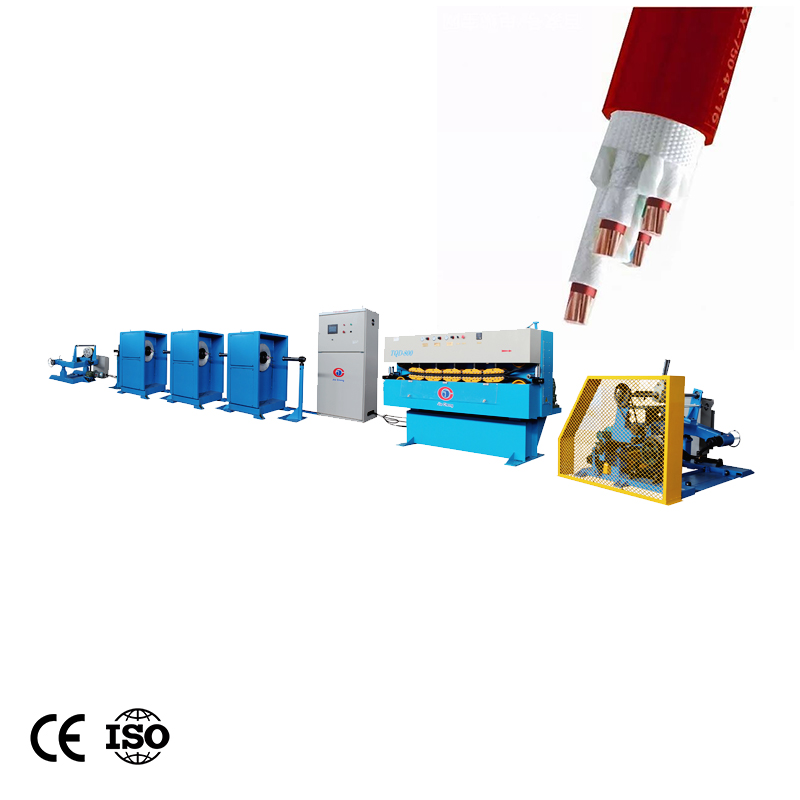
- Insulation extrusion — PVC, XLPE, LSZH, or silicone on a cable extrusion line or silicone extrusion line
- Tape layer application via cable tape wrapping machine — for shielding or fireproof tapes
- Jacketing and finishing — outer sheath applied on extruder
- Spooling and coiling via automatic coiling machine — finished product wound and packaged
A silicone extrusion line, in particular, demands properly annealed conductor input. Silicone compounds are more sensitive to surface irregularities and wire tension variation than PVC. An annealed wire with smooth, oxide-free surface ensures consistent adhesion and wall thickness on the silicone layer. A silicone extrusion machine running at 20–60 m/min will expose any inconsistency in wire temper almost immediately through surface defects or eccentricity.
Common Problems in Wire Annealing and How to Avoid Them
Even a correctly specified machine can produce poor results if the process is not well controlled. These are the most frequent failure modes:
| Problem | Likely Cause | Corrective Action |
|---|---|---|
| Surface oxidation / discoloration | Insufficient steam or inert gas; cooling section too short | Check sealing, increase protective atmosphere flow |
| Wire too hard after annealing | Temperature too low or dwell time too short | Increase annealing current or reduce line speed |
| Wire over-annealed / low tensile | Temperature too high for alloy and diameter | Recalibrate temperature profile; check pyrometer calibration |
| Inconsistent properties along the coil | Speed fluctuations during production; poor tension control | Upgrade tension regulation; check capstan synchronization |
| Frequent wire breaks at annealer | Over-annealing reducing tensile strength below minimum | Reduce temperature; check contact wheel condition |
Choosing the Right Supplier: What to Ask Before You Buy
The wire annealing machine market includes manufacturers from Europe (Germany, Italy), Asia (China, Taiwan, India), and North America. Quality and support levels vary significantly. When evaluating wire drawing machine suppliers who also offer annealing systems, or dedicated annealing machine makers, ask the following:
- Can the machine handle your current and future wire range? If you plan to move into super fine wire or add a silicone extrusion machine, ensure the annealer can accommodate finer diameters and the required surface quality.
- What is the temperature control resolution? For fine wire below 0.3 mm, ask for ±1–2°C stability data, not just the claimed range.
- Does the supplier offer integration support? If you are buying a complete line — drawing machine, annealer, stranding machine, and automatic coiling machine — confirm the supplier can commission these as a system, not just individual pieces.
- What spare parts lead times look like? Contact wheels, sealing rings, and heating elements are wear items. A supplier who cannot guarantee spare parts within 2–3 weeks creates production risk.
- Is there a reference customer you can visit? Seeing the machine running in a similar production environment is far more informative than a spec sheet.
- What Industry 4.0 or data connectivity features are available? Modern lines increasingly require data logging of annealing parameters for quality traceability, especially for automotive and aerospace cable customers.
Also pay attention to which twisting machines manufacturers recommend as compatible annealing partners. If a leading double twist machine supplier consistently specifies a particular annealer brand, that relationship usually reflects real process compatibility, not just a commercial arrangement.
Energy Consumption and Cost Considerations
Annealing is one of the most energy-intensive steps in wire production. For a continuous resistive annealing unit on a 16-wire drawing machine producing 0.2 mm copper wire, typical power consumption is 30–80 kW depending on line speed and wire weight per hour. Over a three-shift operation, this adds up to significant operating cost.
Strategies to control energy cost include:
- Selecting machines with high-efficiency silicon-controlled rectifiers (SCRs) and power factor correction
- Running the annealer at the minimum current needed to achieve the target temper — avoid over-annealing
- Investing in insulated annealing tubes that reduce heat loss
- For batch annealers, using programmable ramp-and-soak profiles to minimize cycle time and gas consumption
Some modern machines recover heat from the cooling section and use it to preheat the protective gas, reducing overall consumption by 10–20%.
Final Checklist Before Purchasing a Wire Annealing Machine
Use this checklist to organize your evaluation before committing to a machine:
- Define your wire types, diameter range, and alloys clearly
- Determine whether inline or batch annealing suits your production model
- Match the annealer speed to your drawing machine or multiwire drawing machine output
- Confirm the protective atmosphere system is appropriate for your alloy (steam for copper; nitrogen for brass or aluminum)
- Verify temperature uniformity specification with third-party test data if possible
- Check that the annealer output meets the temper requirements for downstream equipment (stranding machine, double twist machine, silicone extrusion line, cable tape wrapping machine)
- Get a clear spare parts and service commitment from the supplier
- Calculate total cost of ownership, not just purchase price — include energy, consumables, and downtime risk
- Ask for references from customers running a similar wire range
- Evaluate PLC control system compatibility with your factory's existing automation platform
Conclusion
A wire annealing machine is not a commodity purchase — it is a process-critical investment that directly controls the quality and consistency of everything your production line makes downstream. Whether you are running a high-speed continuous copper fine wire operation feeding into a silicone extrusion machine, producing double twist wire for data cables, or working with brass wire for industrial applications, the annealing step defines your wire's performance ceiling.
The right machine choice starts with your wire range and production volume, narrows down through process type (inline vs. batch), and finalizes on supplier reliability, technical support, and total operating cost. A well-specified annealing machine will pay back its cost through reduced scrap, better downstream productivity, and consistent product quality — measurable in weeks or months on a well-run production line.