Language
 中文简体
 English
 عربى
 русский
Content
- 1 What 16 Gauge Wire Measures in Millimetres
- 2 AWG to mm Conversion Table: 16 Gauge and Its Neighbours
- 3 16 AWG vs 1.0 mm², 1.5 mm² and 2.5 mm²
- 4 What 16 Gauge Wire Is Used For
- 5 How 16 Gauge Wire Is Produced, From Rod to Insulated Cable
- 6 Choosing Between 16 AWG and a Metric Size
- 7 FAQ: 16 Gauge Wire in mm
Search for "16 gauge wire in mm" and you will usually find two different answers floating around: one in millimetres of diameter, and one in square millimetres of cross-section. Both are correct. Knowing which one your drawing, datasheet or purchase order is actually asking for saves a surprising amount of confusion on the shop floor.
Put simply, 16 AWG wire is 1.291 mm across a solid copper conductor, with a nominal cross-sectional area of 1.309 mm². That second number is what metric markets really sell by, which is why a 16 gauge conductor is normally quoted as a 1.5 mm² equivalent rather than an exact match.
What 16 Gauge Wire Measures in Millimetres
AWG, the American Wire Gauge, is a stepped logarithmic scale that runs opposite to intuition: the larger the number, the thinner the conductor. Every gauge step multiplies the diameter by roughly 1.123, which produces two handy shortcuts. Reduce the gauge number by six and you double the diameter; reduce it by three and you double the cross-sectional area.
Those ratios come from a fixed geometric progression, and they give a clean conversion you can apply to any size:
- Diameter: d (mm) = 0.127 × 92 raised to the power of ((36 − AWG) ÷ 39)
- Area: A (mm²) = π × d² ÷ 4
For 16 AWG, the arithmetic lands on 0.0508 inch, 1.291 mm of diameter and 1.309 mm² of copper. A stranded 16 gauge conductor carries exactly the same nominal area, but because round strands cannot fill a circle perfectly, the finished overall diameter is slightly larger. Depending on the stranding pattern, expect something in the 1.32 mm to 1.50 mm range.
Diameter and area are not interchangeable
This is the most common source of error we see. A 1.5 mm² cable does not have a 1.5 mm diameter conductor; its diameter is about 1.38 mm. Anyone who reads those two numbers as the same thing will end up specifying the wrong drawing die, the wrong terminal, or the wrong insulation wall thickness, and the mistake usually only becomes obvious at the extrusion line.
AWG to mm Conversion Table: 16 Gauge and Its Neighbours
Sizes either side of 16 AWG matter just as much, because insulation wall thickness, terminal fit and ampacity are all chosen relative to the conductor. The table below lists solid annealed copper conductors.
| AWG | Diameter (mm) | Diameter (in) | Cross-section (mm²) | Closest metric size |
|---|---|---|---|---|
| 10 | 2.588 | 0.1019 | 5.261 | 6 mm² |
| 12 | 2.053 | 0.0808 | 3.309 | 4 mm² |
| 14 | 1.628 | 0.0641 | 2.081 | 2.5 mm² |
| 16 | 1.291 | 0.0508 | 1.309 | 1.5 mm² |
| 18 | 1.024 | 0.0403 | 0.823 | 0.75 mm² |
| 20 | 0.812 | 0.0320 | 0.518 | 0.5 mm² |
| 22 | 0.643 | 0.0253 | 0.326 | 0.35 mm² |
Notice how the area changes far faster than the diameter. Moving from 18 AWG to 16 AWG adds only about 0.27 mm of diameter, yet it adds nearly 60 percent more copper. That is why an 18 gauge conductor can never be substituted for a 16 gauge one on current-carrying duty, even though the two look almost identical in your hand.
16 AWG vs 1.0 mm², 1.5 mm² and 2.5 mm²
When a European or Asian customer asks for the metric equivalent of 16 gauge, the honest answer is that no metric size matches it exactly. The three sizes below are the ones that come up most often in real enquiries.
| Metric size | Diameter (mm) | Area (mm²) | Compared with 16 AWG |
|---|---|---|---|
| 1.0 mm² | 1.128 | 1.00 | About 24% less copper |
| 1.5 mm² | 1.382 | 1.50 | About 15% more copper |
| 2.5 mm² | 1.784 | 2.50 | About 91% more copper |
| 16 AWG | 1.291 | 1.31 | Reference size |
In low-current signal, control and instrumentation work, 16 AWG and 1.5 mm² are frequently treated as interchangeable. In power work they are not, because the small area difference becomes a real current difference once derating factors are applied.
What 16 Gauge Wire Is Used For
16 AWG sits in a practical middle zone. It is thin enough to be flexible and easy to route, yet thick enough to carry meaningful current over short distances. Typical applications include automotive harness circuits, control panel wiring, low-voltage lighting, appliance and power cords, speaker and audio cable, security and access-control systems, HVAC control wiring and marine DC circuits.
Current capacity is where the questions get serious, so it is worth being precise. The rating of a 16 gauge conductor depends on the insulation temperature rating, the number of conductors bundled together, the ambient temperature and the installation standard that applies.
| Application context | Typical rating | Notes |
|---|---|---|
| Flexible cord and appliance leads | About 13 A | Two to three conductors in a flexible cord |
| Single conductor in free air | Up to 22 A | Unrestricted air movement, short runs |
| Bundled or enclosed wiring | About 4 A to 10 A | Conservative figures for grouped conductors |
If your design sits anywhere near those limits, size up. The cost difference between 16 AWG and 14 AWG is small compared with the cost of a failed inspection or a warm joint inside a sealed enclosure.
How 16 Gauge Wire Is Produced, From Rod to Insulated Cable
For a cable maker, 16 AWG is not a catalogue number, it is a target diameter that the drawing line has to hit consistently. A typical process starts with an 8 mm copper rod, which a rod breakdown machine reduces to roughly 2.5 mm to 3.5 mm. Intermediate drawing then brings the wire down to around 1.6 mm to 1.8 mm, and fine drawing with in-line annealing finishes the job at 1.29 mm and below.
Die selection, slip ratio and lubricant condition all matter here. Because area changes non-linearly with diameter, a die that lets the wire run a few hundredths of a millimetre over size will quietly push the conductor out of the tolerance band that a 1.5 mm² specification allows. This is the part of the process where our fine wire processing equipment earns its keep, by holding diameter and elongation stable across long production runs.
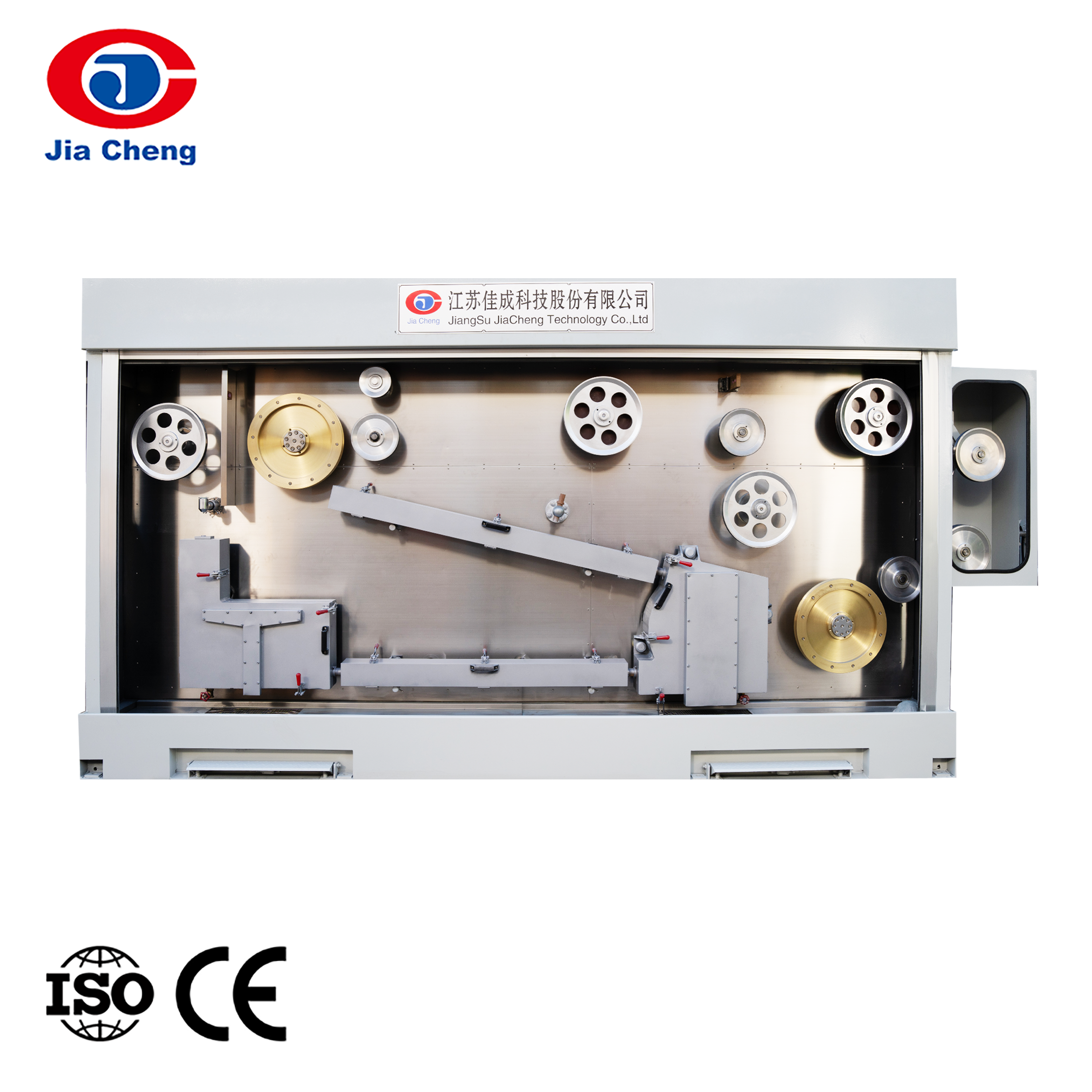
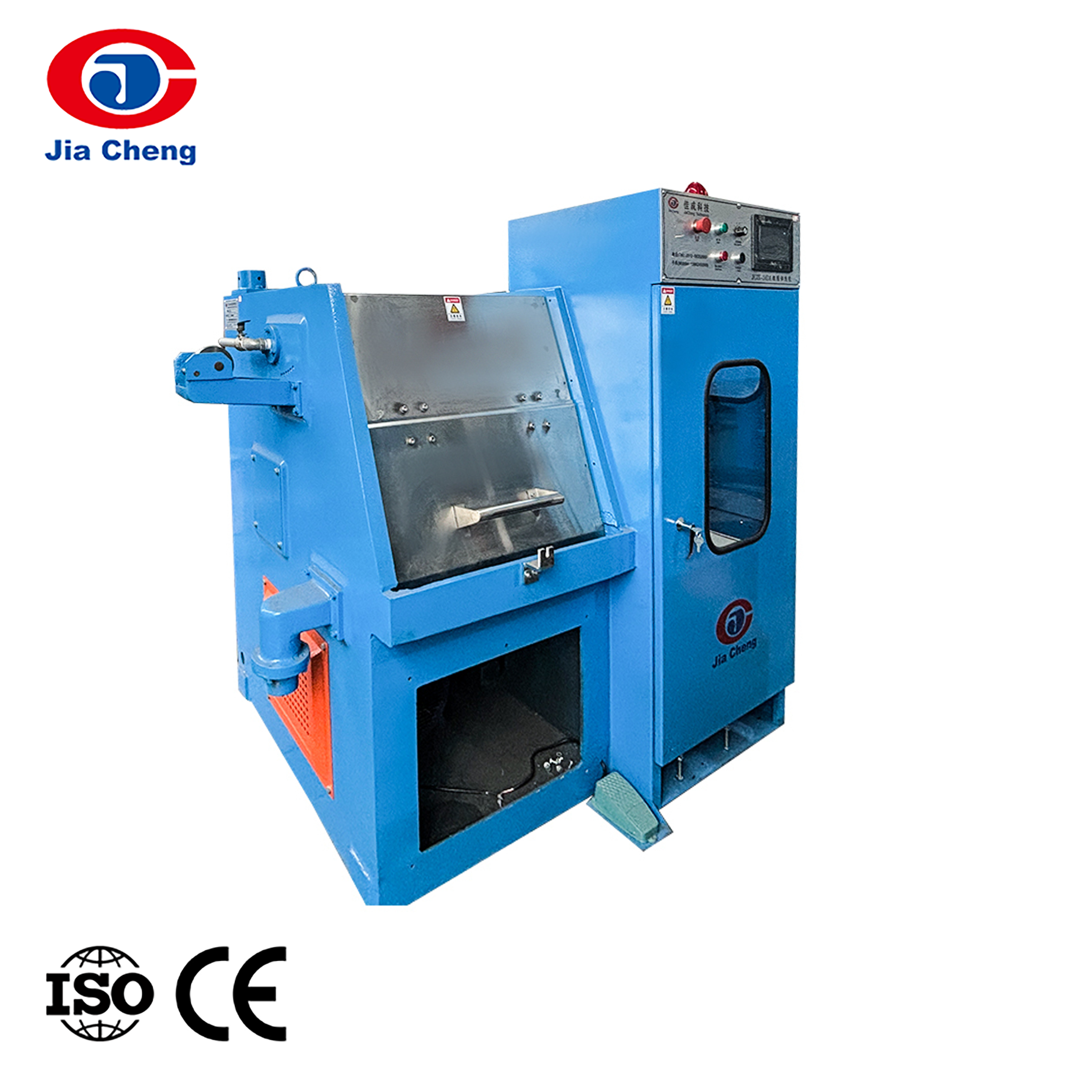
 Fine Wire Drawing Machine with Inline Annealer for CopperCombined copper wire drawing and inline annealing machine that supports two wires and helps hold diameter and elongation stable.View Product →
Annealing is the second half of the story. Drawn copper is hard and brittle, and a conductor that snaps during stranding or flexes badly in service is unusable no matter how accurate its diameter is. In-line annealing restores elongation, typically to the 25 to 30 percent range, so the wire can be twisted, bunched and bent without cracking. Holding the annealer temperature steady is what keeps resistance and elongation from drifting between spools.
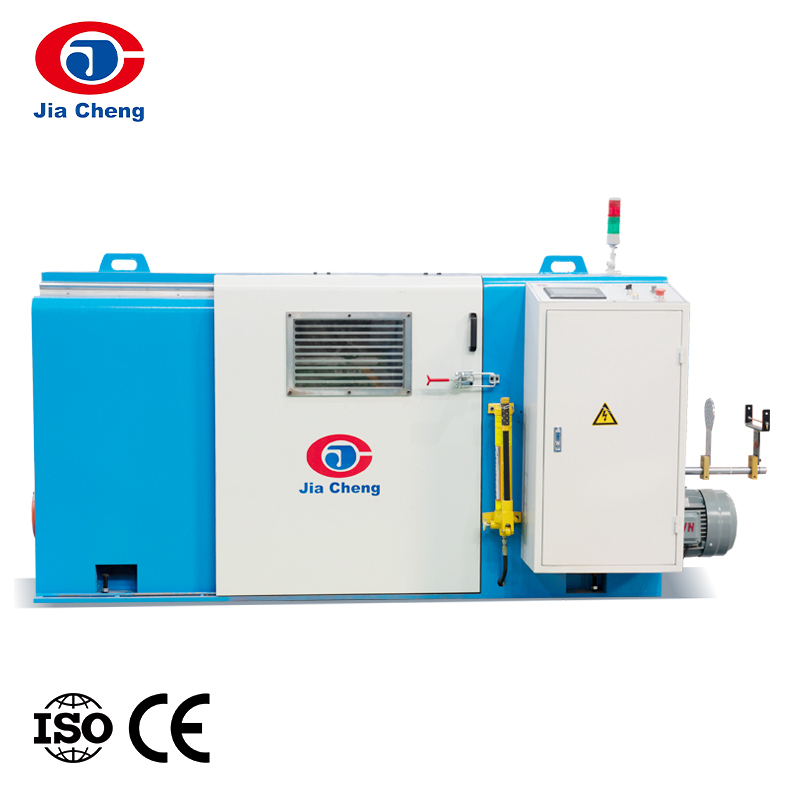
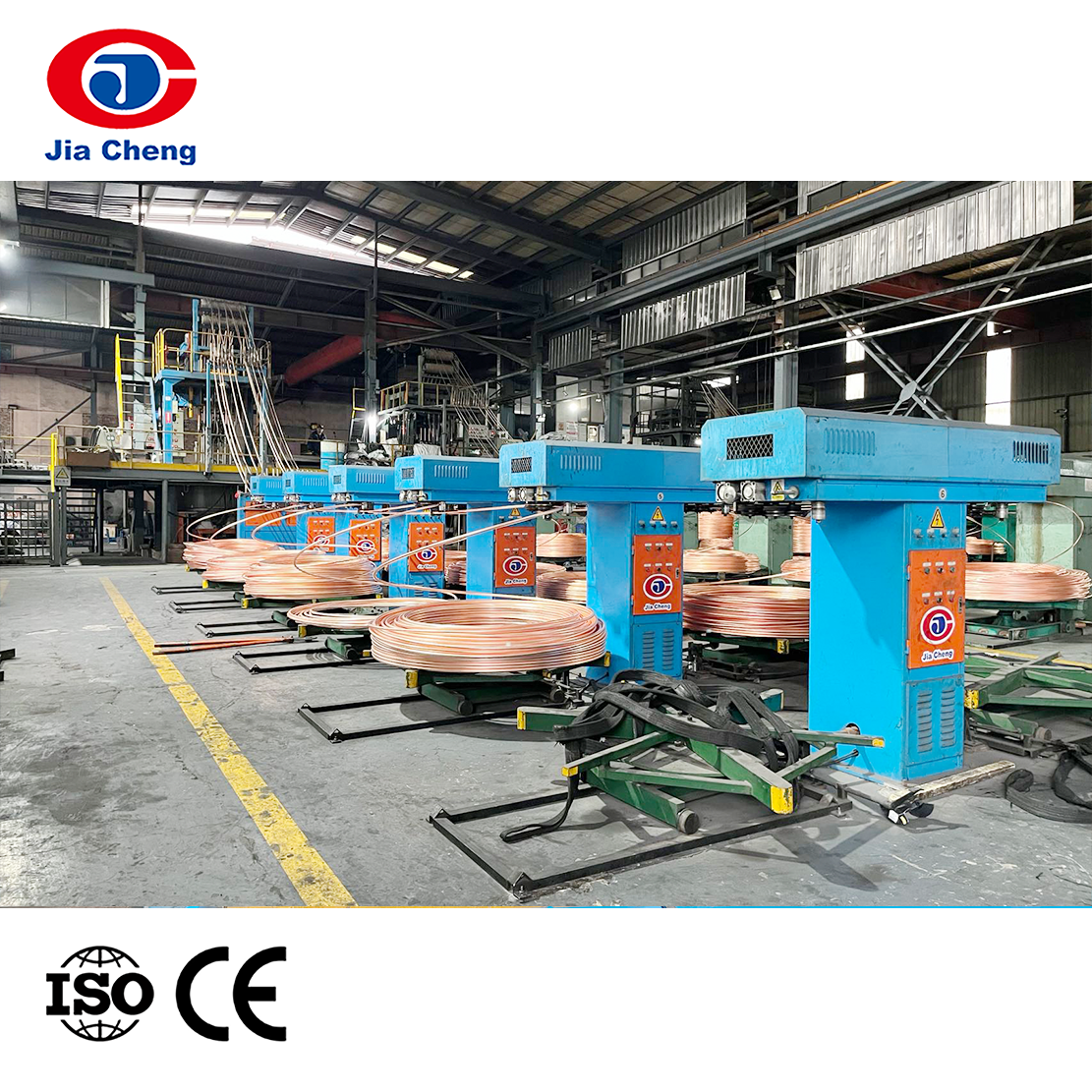
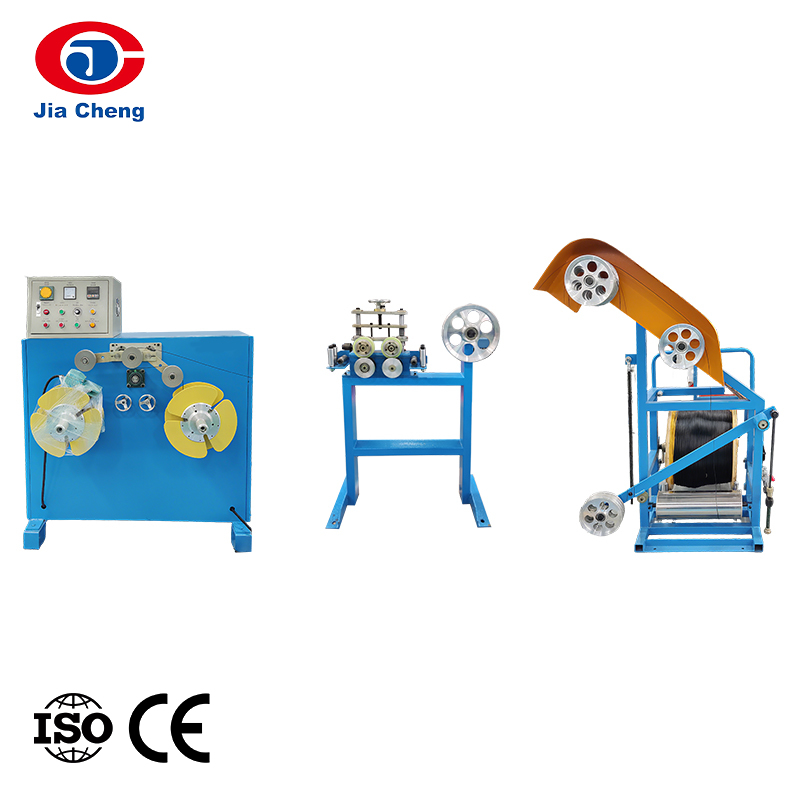
 Intermediate Wire Drawing Machine with Annealing for Metal WireCombines drawing and annealing for medium-sized metal wire, with optional continuous annealing and coiler for wire, cable, and component production.View Product →
From there, most 16 AWG conductors are stranded rather than solid, usually in 7, 19 or 26 strand constructions, on double-twist bunching machines that hold lay length and tension to tight limits. The conductor then moves to insulation, where a 16 AWG core normally carries a wall thickness of roughly 0.4 mm to 0.8 mm depending on the standard, giving a finished overall diameter in the 2.0 mm to 3.3 mm range. Extruding that wall without eccentricity is what protects the cable's voltage rating and its ability to pass a spark test at the end of the line.
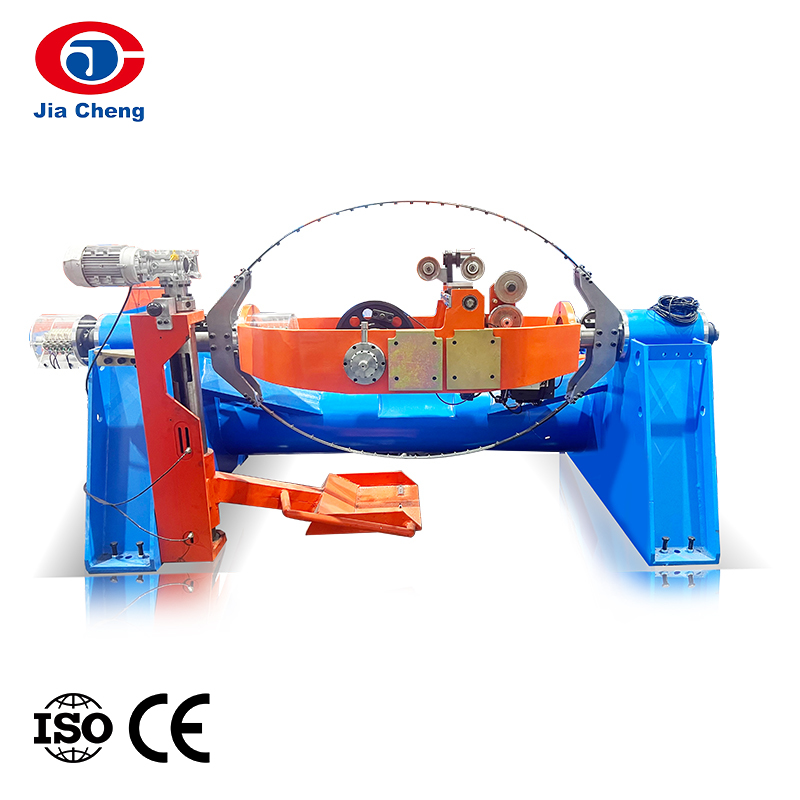
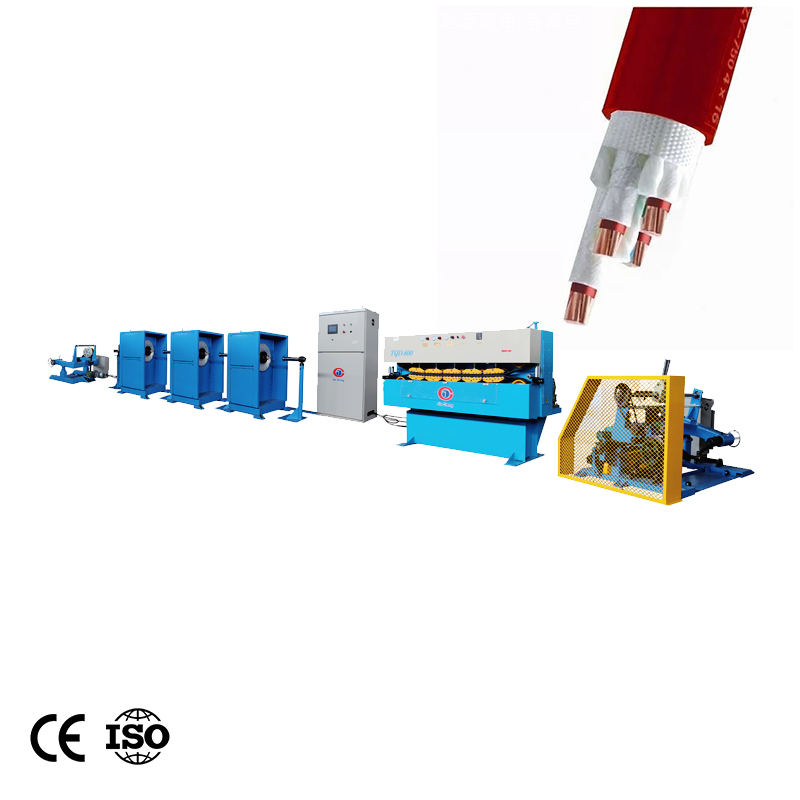
 High Speed Wire Insulation Production Line for Cable CoreExtruder line for PVC, LDPE, NYLPN, and TPU insulation, offering PLC control, high concentricity, and models for varied finished wire diameters.View Product →
Choosing Between 16 AWG and a Metric Size
When a drawing specifies one system and the supplier works in the other, work through these points in order rather than converting on instinct.
- Confirm whether the number is a diameter or an area. "16 gauge" and "1.5 mm²" belong to different measurement families, and mixing them up is the most expensive mistake in this whole topic.
- Match ampacity, not physical size. A 1.0 mm² conductor looks almost identical to 16 AWG but carries noticeably less current.
- Check voltage drop on long runs. For runs beyond roughly 20 metres, the smaller metric size often needs to be stepped up regardless of the current figure.
- Verify terminal and lug fit. Crimp barrels and insulation displacement contacts are dimensioned for a specific conductor range, and a 15 percent area change can push a contact out of specification.
- Compare overall diameter, not just conductor size. Metric cable often carries a thicker insulation wall, so a substitution can affect conduit fill, cable trays and bend radius.
- Check the strand count if flexibility matters. Two conductors with the same area can behave very differently in a drag chain or a moving harness.
- Record the substitution. Whatever you decide, write it into the drawing so the next order does not repeat the debate.
FAQ: 16 Gauge Wire in mm
Is 16 gauge the same as 1.5 mm²?
Not exactly. A 16 AWG conductor contains 1.309 mm² of copper, while a 1.5 mm² conductor contains about 15 percent more. The two are routinely used interchangeably in low-current signal and control work, but on power circuits the difference should be checked against an ampacity table rather than assumed away.
What is 16 gauge wire in millimetres?
A solid 16 AWG conductor is 1.291 mm in diameter, equal to 0.0508 inch, with a nominal cross-sectional area of 1.309 mm².
Is 16 gauge thicker than 18 gauge?
Yes. Lower AWG numbers mean thicker conductors. A solid 16 AWG conductor measures 1.291 mm against 1.024 mm for 18 AWG, which works out to roughly 60 percent more copper.
How many amps can 16 gauge wire carry?
It depends on the installation. A flexible cord with two or three conductors is typically rated around 13 A, a single conductor in free air can be listed as high as 22 A, and bundled conductors inside an enclosure may be limited to roughly 4 A to 10 A. Insulation temperature rating, ambient temperature and derating factors all shift these figures.
How do I convert AWG to mm² myself?
First convert the gauge to a diameter using d (mm) = 0.127 × 92 to the power of ((36 − AWG) ÷ 39), then calculate the area as π × d² ÷ 4. For 16 AWG that gives 1.291 mm and 1.309 mm².
Is 16 SWG the same as 16 AWG?
No, and the difference is significant. British Standard Wire Gauge number 16 is 1.626 mm in diameter, close to 2.08 mm², which is heavier than 14 AWG. Always confirm which gauge system a drawing refers to before ordering conductor or tooling.
Whether you are drawing 16 AWG for a North American control cable or 1.5 mm² for a European build, the line layout starts in the same place: conductor formation, then insulation. Our copper wire processing machine range covers rod breakdown, intermediate and fine drawing, annealing, bunching, extrusion and the testing equipment that verifies the finished conductor, so the whole sequence can be matched to the tolerance your specification actually demands.
If you are working through a conversion question like this one, send us the conductor size, the strand construction and the standard you are building to. We will tell you plainly which drawing schedule and which line configuration will hold that size in production, and where the practical limits sit.