Language
 中文简体
中文简体 English
 عربى
عربى русский
Content
- 1 The Short Answer: What an Extruder Machine Actually Does
- 2 Step by Step: How Plastic Extrusion Works Inside the Machine
- 3 Core Components That Make Up an Extruder Machine
- 4 Single Screw vs Twin Screw Extruders Compared
- 5 The Range of Products Made by Extruder Machines
- 6 Important Parameters That Affect Extrusion Output Quality
- 7 Common Extrusion Process Issues and Their Typical Causes
- 8 Reference Data Worth Keeping on Hand
- 9 Key Takeaways
The Short Answer: What an Extruder Machine Actually Does
An extruder machine works by feeding raw plastic material, usually in pellet or powder form, into a heated barrel where a rotating screw melts, mixes, and pushes the molten plastic forward under pressure through a shaped die, producing a continuous profile that is then cooled and cut or wound to length.
In short: the extruder combines heat, mechanical shear from the screw, and pressure at the die to turn solid resin into a continuous shaped product, and the specific die and downstream equipment determine whether the final output is film, pipe, sheet, wire coating, or profile shapes.
This guide breaks down the step by step process inside the machine, the core components that make extrusion possible, the difference between single screw and twin screw designs, the range of products extrusion actually produces, and the common process issues operators run into on the plant floor.
Step by Step: How Plastic Extrusion Works Inside the Machine
Extrusion is a continuous process rather than a batch process, which is one of the reasons it is favored for high volume production of film, pipe, and profile products. The material moves through five distinct stages inside a typical single screw extruder.
- Feeding. Plastic pellets or powder drop from a hopper into the throat of the barrel, where gravity and the rotating screw pull material into the feed zone.
- Conveying and compaction. As the screw rotates, the flight depth gradually decreases along the feed zone, compacting the loose pellets into a solid bed and pushing air back out through the hopper.
- Melting. In the compression zone, a combination of barrel heater bands and mechanical shear from the screw generates heat that melts the plastic, typically reaching temperatures between 180 and 280 degrees Celsius depending on the resin type.
- Metering and mixing. The metering zone, where flight depth is shallowest, builds consistent pressure and further homogenizes the melt so that temperature and viscosity are uniform before reaching the die.
- Shaping at the die. The molten plastic is forced through a precisely machined die that gives the material its final cross sectional shape, whether that is a flat sheet, a circular pipe profile, or a thin blown film bubble.
After the die, the shaped plastic passes through a cooling stage, commonly a water tank for pipe and profile, or chill rolls for sheet and film, before being pulled by a haul off unit and cut or wound depending on the final product type.
Core Components That Make Up an Extruder Machine
Understanding the main components helps explain why extruder design varies so much between applications. The table below outlines the core parts found on most industrial plastic extruders.
| Component | Function | Typical Design Detail |
| Hopper | Holds and feeds raw material into the barrel | Often includes a dryer or desiccant unit for moisture sensitive resins |
| Barrel | Houses the screw and contains heater bands for melting | Divided into multiple independently controlled temperature zones |
| Screw | Conveys, compresses, melts, and pressurizes the plastic | Length to diameter ratio commonly between 24 to 1 and 32 to 1 |
| Die | Shapes the molten plastic into its final cross section | Custom machined per product, from flat sheet dies to circular pipe dies |
| Cooling System | Solidifies the shaped plastic after the die | Water tanks for pipe, chill rolls for sheet, air rings for blown film |
| Haul Off and Cutter | Pulls the finished product at a controlled rate and cuts to length | Speed synchronized with screw output to control wall thickness |
The screw is generally considered the heart of the machine, since its geometry, including flight depth, pitch, and compression ratio, directly determines melt quality, output rate, and how well different resin types can be processed on the same equipment.
Single Screw vs Twin Screw Extruders Compared
Not every extrusion job calls for the same screw configuration. Single screw and twin screw machines serve different purposes based on the material and process requirements.
| Feature | Single Screw Extruder | Twin Screw Extruder |
| Typical Use | Pipe, film, sheet, and profile production from standard resins | Compounding, filled materials, and resins requiring intensive mixing |
| Mixing Capability | Moderate, relies mainly on shear from a single rotating screw | High, intermeshing screws provide strong distributive and dispersive mixing |
| Equipment Cost | Lower relative capital cost | Higher capital cost, often 30 to 60 percent more than comparable single screw units |
| Output Consistency | Good for simple, unfilled resins | Better for resins with fillers, fibers, or multiple additive streams |
Plants producing standard water supply pipe or basic packaging film typically choose single screw extruders because the resin is largely uniform and does not require heavy compounding. Twin screw extruders become the better choice when producing masterbatch, wood plastic composite, or any formulation that blends multiple raw materials, fillers, or reinforcing fibers into a single homogeneous melt.
The Range of Products Made by Extruder Machines
The die attached to the extruder, along with the downstream cooling and pulling equipment, determines the final product form. Below are the most common categories of extruded plastic products found across industry.
| Product Category | Die Type Used | Common Examples |
| Pipe and Tubing | Circular annular die with a sizing sleeve downstream | Water supply pipe, electrical conduit, medical tubing |
| Film | Flat cast die or circular blown film die | Packaging film, agricultural mulch film, shrink wrap |
| Sheet | Flat wide slot die with chill roll stack | Signage board, thermoforming stock, protective packaging sheet |
| Profile Shapes | Custom shaped die matched to the cross section needed | Window frame profiles, weatherstripping, decking boards |
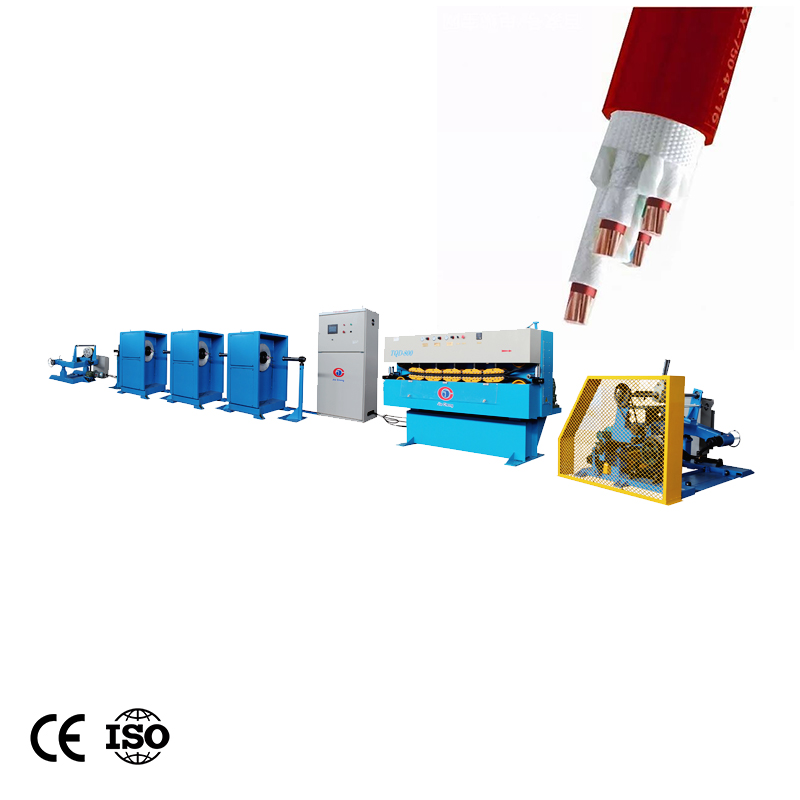
| Wire and Cable Coating | Crosshead die that applies molten plastic around a moving wire | Insulated electrical wire, coated cable jacketing |
| Filament and Strand | Small round hole die, often multiple holes in one die plate | 3D printing filament, synthetic fiber strand for rope or textiles |
A single extruder body paired with different dies and downstream tooling can therefore serve very different product lines, which is why many manufacturers standardize on a common screw and barrel platform and simply swap the die head when moving between pipe, sheet, or profile production runs.
Important Parameters That Affect Extrusion Output Quality
- Length to diameter ratio (L/D). A longer screw relative to its diameter, such as 30 to 1 versus 20 to 1, provides more residence time for melting and mixing, which benefits resins that are harder to process uniformly.
- Compression ratio. This describes how much the flight depth decreases from the feed zone to the metering zone, commonly between 2 to 1 and 4 to 1, and higher ratios generate more shear heat and pressure.
- Screw speed. Measured in revolutions per minute, higher speeds increase output rate but can also increase melt temperature beyond the resin's ideal processing window if not balanced with adequate cooling.
- Barrel zone temperatures. Each heating zone is set slightly differently along the barrel length, typically rising from the feed zone to the metering zone, to control melting rate and prevent premature degradation of heat sensitive resins.
- Die pressure. Consistent die pressure is critical for dimensional stability, since fluctuations of even a few percent can cause visible thickness variation in film or wall thickness variation in pipe.
Common Extrusion Process Issues and Their Typical Causes
| Issue | Likely Cause |
| Surging or pulsating output | Inconsistent feeding, worn screw flights, or unstable barrel temperature control |
| Melt fracture or rough surface | Excessive shear rate at the die, often from screw speed set too high relative to die design |
| Uneven wall thickness in pipe | Misaligned die or inconsistent haul off pulling speed |
| Discoloration or degraded material | Barrel temperature set too high or excessive residence time causing thermal breakdown |
| Bubbles or voids in the extrudate | Moisture in the resin that was not properly dried before feeding |
Many of these issues trace back to a mismatch between screw design and the specific resin being processed, which is why extruder manufacturers often recommend a screw audit or trial run whenever a plant switches to a new material grade rather than assuming the existing screw will perform identically across different resins.
Reference Data Worth Keeping on Hand
Keeping these reference ranges in mind when reviewing a machine specification sheet helps buyers and process engineers quickly judge whether a given extruder is suited to their target resin and product type before committing to a purchase or a new production trial.
Key Takeaways
- An extruder machine melts, mixes, and pressurizes plastic resin through a rotating screw before forcing it through a shaped die to create a continuous product.
- The screw geometry, including length to diameter ratio and compression ratio, is the single most influential factor in melt quality and output consistency.
- Single screw extruders suit standard pipe, film, and profile production, while twin screw extruders are better suited to compounding and filled or multi material formulations.
- The same core extruder platform can produce pipe, film, sheet, profile, wire coating, or filament simply by changing the die and downstream tooling.
- Most common process issues, including surging, melt fracture, and discoloration, trace back to a mismatch between screw design, barrel temperature settings, and the specific resin being processed.