Language
 中文简体
 English
 عربى
 русский
Content
- 1 22 Gauge Wire in mm: The Quick Conversion
- 2 Which 22 Gauge Do You Actually Mean?
- 3 How the AWG Formula Produces 0.6438 mm
- 4 22 AWG in Real Terms: Diameter, Resistance and Current
- 5 Drawing and Annealing a 0.6438 mm Conductor
- 6 Measuring and Verifying 22 AWG Wire
- 7 Common Mistakes When Converting 22 Gauge to mm
- 8 Frequently Asked Questions
Pick up a wire specification from a North American customer and you will read 22 AWG. Pick up the same conductor from a European or Asian buyer and you will read 0.64 mm, or perhaps 0.35 mm². The copper is identical; only the language of measurement has changed. If you are standing at a drawing machine, checking an incoming reel, or writing a purchase order, the first number you need is this: 22 gauge wire in mm is 0.6438 mm in conductor diameter.
That is the headline answer, and for many people it is enough. The useful answer goes a little further. It helps to know why the number is 0.6438 and not a round 0.65, which of the older gauge systems also use the number 22, what resistance and current capacity follow from that diameter, and how a 0.6438 mm conductor is actually drawn, annealed, measured and verified on a production line. That is what this guide covers.
Quick answer: 22 AWG wire has a nominal conductor diameter of 0.6438 mm (0.02535 in) and a nominal cross-sectional area of 0.3255 mm². It is not the same as 22 SWG, which measures 0.7112 mm, and it is noticeably smaller than a 0.5 mm² metric conductor.
22 Gauge Wire in mm: The Quick Conversion
In the American Wire Gauge system, 22 AWG describes a solid round conductor with a nominal diameter of 0.6438 mm and a nominal cross-sectional area of 0.3255 mm². Diameter and area are the two figures that matter most in daily work: diameter drives die selection, clearance and connector fit, while area drives current capacity and voltage drop.
| Property | Metric value | Imperial value |
|---|---|---|
| Nominal conductor diameter | 0.6438 mm | 0.02535 in |
| Nominal cross-sectional area | 0.3255 mm² | 0.000505 in² (642 cmil) |
| Resistance, solid copper, 20 °C | 52.9 Ω/km | 16.1 Ω per 1,000 ft |
| Resistance, stranded, 20 °C | about 55 Ω/km | about 16.8 Ω per 1,000 ft |
| Typical free-air ampacity, single conductor | 5 A to 7 A | 5 A to 7 A |
| Closest metric conductor sizes | 0.35 mm² and 0.5 mm² | not applicable |
One caution before that table is treated as gospel: AWG defines a nominal size, not a tolerance band. The permissible variation comes from the governing product standard, whether that is ASTM B258 for nominal diameters, UL 758 or UL 1007 for appliance wiring, or IEC 60228 for metric cables. A 22 AWG conductor that measures 0.638 mm is not automatically out of specification, while a metric conductor of the same measured diameter might well be.
Which 22 Gauge Do You Actually Mean?
This is the trap that catches more buyers than any other. Gauge is not one system. AWG, SWG and BWG all use small integers, and the same integer means a different diameter in each of them. A purchase order that says only "22 gauge" is an invitation to a dimensional dispute.
| System | Diameter | Cross-sectional area |
|---|---|---|
| 22 AWG (American Wire Gauge) | 0.6438 mm | 0.3255 mm² |
| 22 SWG (Standard Wire Gauge) | 0.7112 mm | 0.3973 mm² |
| 22 BWG (Birmingham Wire Gauge) | 0.7112 mm | 0.3973 mm² |
| Metric 0.5 mm², solid | 0.798 mm | 0.5000 mm² |
| Metric 0.75 mm², solid | 0.977 mm | 0.7500 mm² |
The gap between 22 AWG and 22 SWG looks small, and on a drawing schedule it is. In copper terms it is not: 10 percent more diameter means about 22 percent more metal. That is enough to change a finished cable's diameter, its weight per kilometre, its resistance reading and, in some cases, whether it passes the dimensional clause of the standard it was ordered against.
Metric sizes are a separate question again. There is no exact metric equivalent of 22 AWG. The nearest common sizes are 0.35 mm² in winding wire and 0.5 mm² in cable, and 0.5 mm² carries roughly 54 percent more copper than 0.3255 mm². If a European drawing asks for 0.5 mm², ordering 22 AWG instead will give you a conductor that fits, conducts, and still fails the specification.
How the AWG Formula Produces 0.6438 mm
AWG is a geometric progression rather than a list of arbitrary numbers, which is why the values look irregular but behave predictably. Every three gauge steps doubles the cross-sectional area, and every six steps halves the diameter. The system is anchored at gauge 36, defined as 0.005 in or 0.127 mm, and steps by a fixed ratio of 92 raised to the power of one thirty-ninth.
The familiar form of the equation is:
d(mm) = 0.127 × 92((36 − n) / 39)
Working it through for 22 AWG is quick enough to do on a calculator, and worth doing once so the numbers stop feeling arbitrary.
- Set n equal to 22, so (36 − 22) ÷ 39 = 0.3590.
- Raise 92 to that power: 920.3590 ≈ 5.070.
- Multiply by the gauge 36 reference diameter: 0.127 × 5.070 ≈ 0.6438 mm.
- Convert to area with π ÷ 4 × d², which gives 0.3255 mm².
The same equation explains why the numbers move the way they do. Going from 22 AWG to 20 AWG does not add a fixed amount of diameter; it multiplies the area by about 1.59. Going from 22 AWG to 24 AWG cuts the area by roughly 37 percent. Anyone who has tried to substitute one gauge for another in a tightly specified harness has felt that multiplier in practice.
22 AWG in Real Terms: Diameter, Resistance and Current
Because the progression is geometric, the diameter differences across the neighbouring gauges are modest, but they add up quickly in cross-section. The chart below shows conductor diameter for the five gauges either side of 22 AWG.
Resistance is where the geometry turns into electrical behaviour. A 22 AWG solid annealed copper conductor has a nominal resistance of about 52.9 Ω/km at 20 °C. Stranded versions typically read 3 to 5 percent higher because the individual strands follow a helical path, so they are slightly longer than the finished conductor and slightly less efficient in cross-section.
A practical example makes the figure meaningful. Suppose a 22 AWG sensor lead runs 10 metres to a device and 10 metres back, carrying 0.5 A. The round-trip resistance is 0.020 km × 52.9 Ω/km ≈ 1.06 Ω, and the resulting drop is about 0.53 V. On a 24 V circuit that is negligible. On a 5 V signal line it is more than 10 percent, and it is exactly the kind of error that gets blamed on the sensor rather than the wire.
For current capacity, a single 22 AWG conductor in free air is commonly quoted at 5 A to 7 A. Those figures assume a single conductor, comfortable ambient temperature and free airflow. Bundle twenty of them into a loom, run the loom inside a conduit, or push the ambient to 70 °C, and the honest answer becomes considerably lower. Insulated hook-up wire to UL 1007 is typically rated 300 V and 80 °C, and the insulation wall adds roughly 0.25 to 0.4 mm per side, which puts the overall diameter of an insulated 22 AWG wire somewhere between 1.1 mm and 1.5 mm depending on the standard and material.
Drawing and Annealing a 0.6438 mm Conductor
Nobody produces 22 AWG in a single pass from rod. The conductor usually travels a route that looks something like this: 8 mm oxygen-free copper rod enters a rod breakdown machine and leaves around 2.5 to 3 mm; an intermediate drawing machine takes it to roughly 1.0 to 1.2 mm; a fine wire drawing machine finishes it at 0.6438 mm; then annealing restores the ductility that cold working has consumed.
Reduction per pass is normally held between 18 and 22 percent on fine copper. Push it much beyond that and the wire starts to show surface defects, die wear accelerates, and the risk of breaks rises sharply. The finishing die is the one that sets the actual dimension, so it gets the most attention: its bore is checked regularly, its surface is polished, and its cooling and lubrication are kept stable.
Die schedule
A 22 AWG finish typically follows a 20 to 22 die sequence from rod, with the last few passes working in a narrow band of reduction to keep ovality and surface finish under control.
Annealing
Soft-temper copper for a 0.64 mm conductor usually targets 20 to 25 percent elongation, achieved by inline resistance annealing immediately after drawing.
Lubrication
At this diameter, filtration and emulsion concentration matter as much as the drawing speed. Contaminated lubricant shows up as roughness at the die exit.
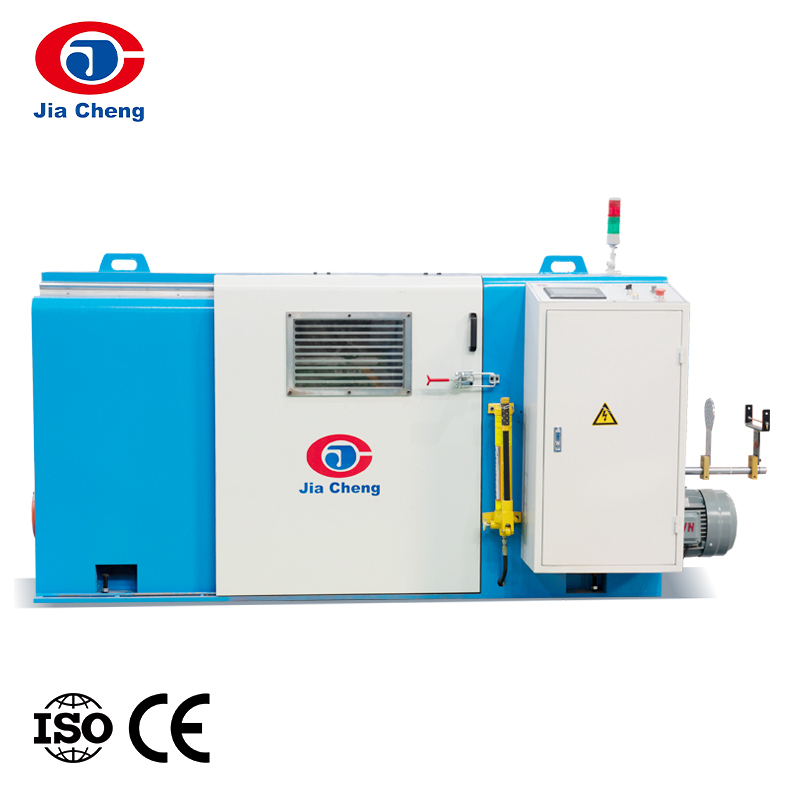
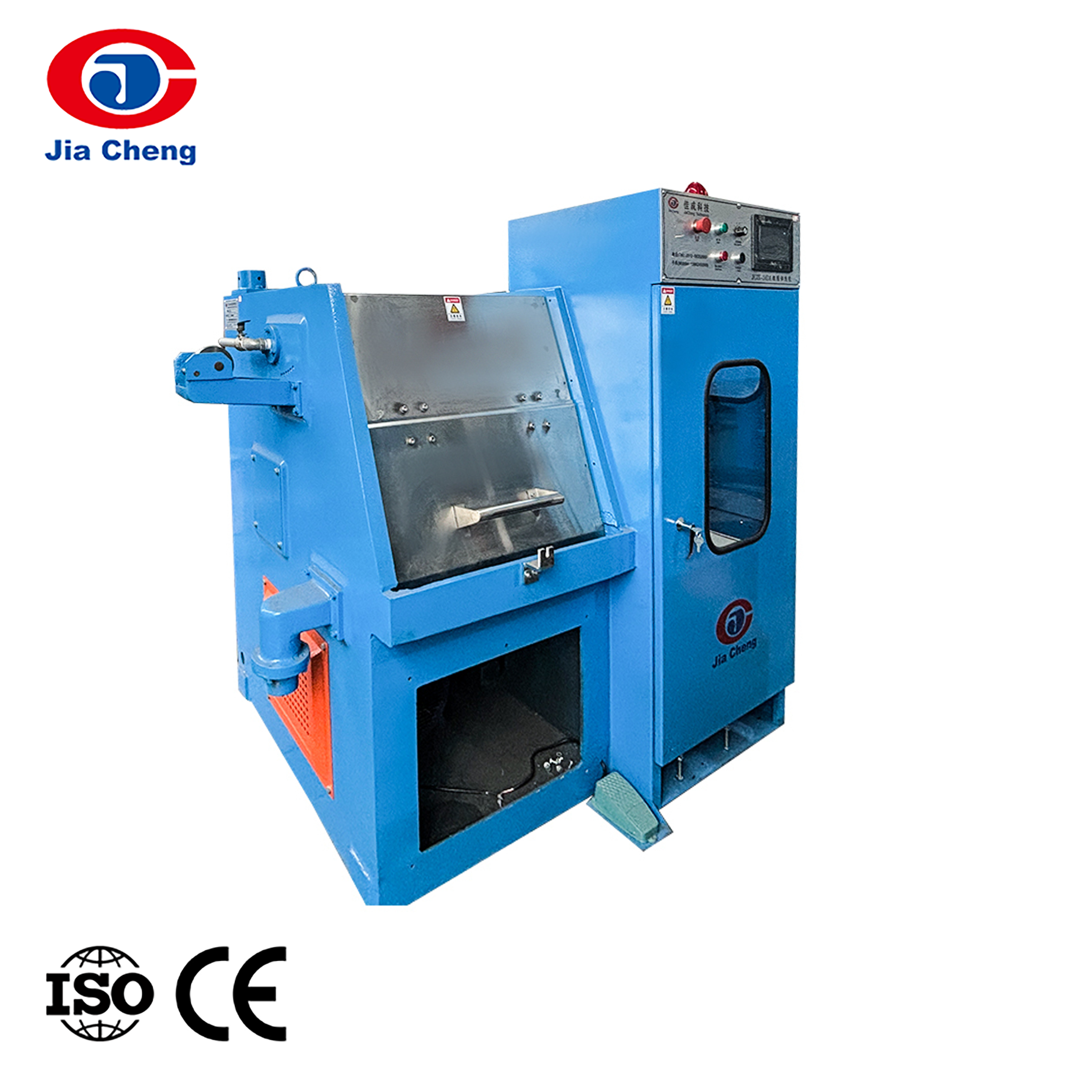
For the final stage, a fine wire drawing machine with an integrated annealer keeps drawing and heat treatment in one continuous pass, which avoids the oxidation and handling damage that come with re-spooling partially processed wire. Its drawing and annealing stages are matched so that the conductor arrives at the take-up soft, clean and dimensionally stable.
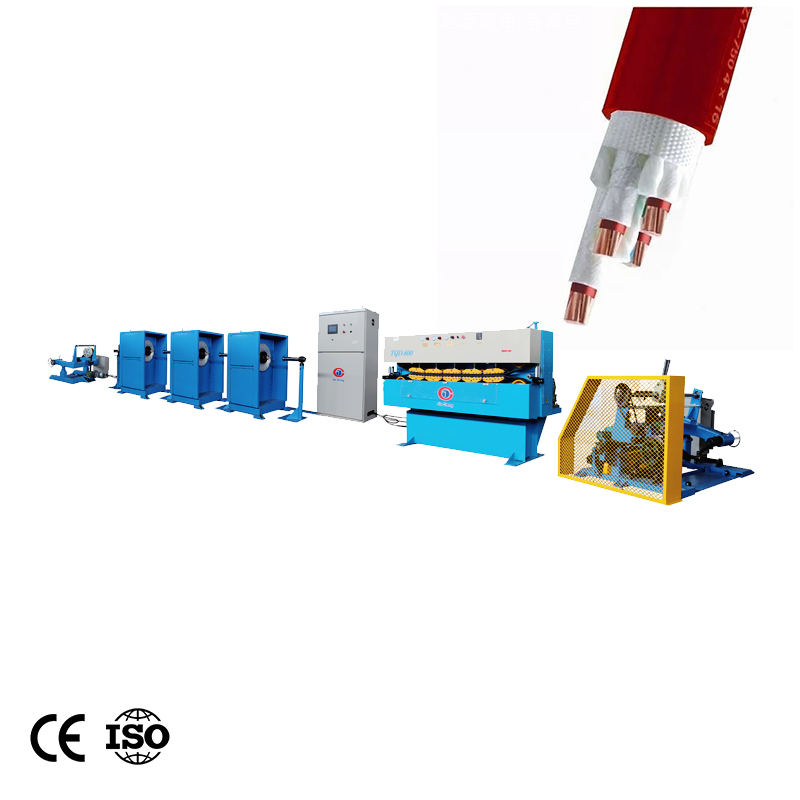
 Fine Wire Drawing Machine with Integrated AnnealerFor final-stage production, this machine integrates drawing and annealing in one continuous line to keep fine copper wire soft, clean, and dimensionally stable before take-up.View Product →
Downstream, the 0.644 mm conductor is either used solid or bunched into flexible constructions. Bunching a number of fine strands gives the same nominal area with far better flex life, which is why 22 AWG equivalents appear in control cables, automotive harnesses, instrumentation leads, patch cords and low-voltage lighting. If you are planning that section of the line, our overview of fine wire processing equipment shows how drawing, annealing and bunching are staged together.
Measuring and Verifying 22 AWG Wire
Three measurements tell you whether a 0.6438 mm conductor is good: diameter, resistance and mechanical properties. Each one fails in a different way, so each one deserves its own check.
Diameter
Contact or laser gauges on the line, with a nominal tolerance that is usually tighter than most people expect for fine wire.
Resistance
A four-terminal measurement on a known length, corrected to 20 °C, is the fastest way to confirm both material quality and true cross-section.
Mechanical
Tensile strength and elongation confirm that the annealing step did its job and that the wire will survive downstream handling.
Diameter is checked continuously in most modern lines. For a 0.64 mm conductor, a tolerance of plus or minus 0.005 mm is common in fine wire production, and ovality needs to be watched separately from average diameter. A non-contacting diameter gauge placed between the drawing capstan and the take-up will catch a drifting die before a full reel of out-of-tolerance wire is produced.
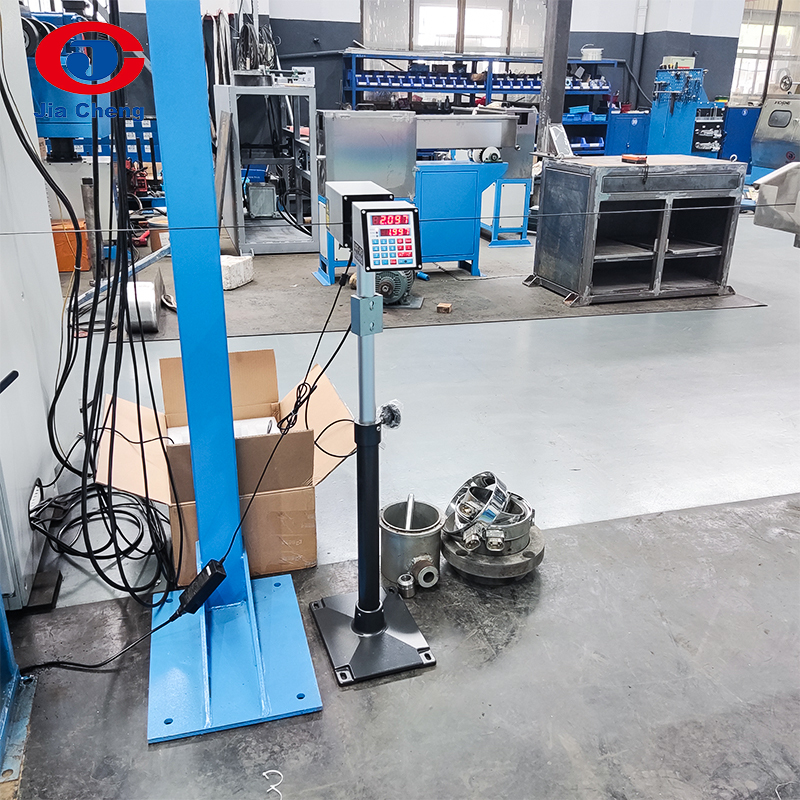 LGD-25 Laser Diameter Gauge for Wire MeasurementNon-contact laser gauge with 0.100–25.000 mm range and RS-485 output for continuous diameter checks between drawing capstan and take-up.View Product →
Resistance testing is the measurement that ties everything together. A one-metre sample measured with a four-terminal bridge removes lead resistance from the result, and correcting the reading to 20 °C removes the effect of ambient temperature. Copper changes resistance by about 0.39 percent per degree Celsius, which for this conductor is roughly 0.21 Ω per kilometre per degree. A reel tested in an unheated warehouse in winter will read noticeably low unless that correction is applied.
 QJ36 Intelligent Digital Resistance Bridge with FixtureHigh-precision bridge for wire and cable resistance testing, with 25 μΩ–2000 Ω range and automatic 20 °C resistivity conversion.View Product →
Mechanical testing follows the same logic. An annealed 0.6438 mm copper conductor typically breaks somewhere around 70 to 80 N, which is a small load, and elongation is often the more revealing figure. A reading below about 15 percent usually means the annealing stage was too cool or the line speed was too high for the current being passed through the conductor.
Common Mistakes When Converting 22 Gauge to mm
Most conversion errors are not arithmetic errors. They are assumptions, and they tend to repeat themselves across the industry.
- Treating 0.6438 mm as 0.65 mm. Rounding is fine in conversation and dangerous on a die order. The difference is 1 percent of diameter, which on a fine drawing line is a real number.
- Assuming 22 gauge means 22 AWG. In the UK and parts of Asia, 22 gauge often means 22 SWG at 0.7112 mm, which is 10 percent larger.
- Equating 22 AWG with 0.5 mm². A 0.5 mm² metric conductor is about 0.8 mm in diameter and carries roughly 54 percent more copper.
- Using the AWG nominal value as a tolerance. AWG says what the size is called, not what variation is acceptable. That comes from the product standard.
- Ignoring strand construction. A 22 AWG conductor may be solid or a 7-strand bunch. The nominal area is the same, but flexibility, resistance and termination practice are not.
- Comparing resistance readings at different temperatures. Always correct to 20 °C before deciding that two reels differ in quality.
Rule of thumb: if a specification mentions AWG, keep the whole conversation in AWG and convert only at the end. Mixing systems mid-document is where most dimensional disputes begin.
Twenty-two gauge sits at an interesting point in the wire world. It is fine enough that drawing and annealing quality matter enormously, yet robust enough to carry signals and modest currents through industrial equipment, vehicles and buildings. Getting the conversion right is the easy part, and it is worth remembering three numbers: 0.6438 mm of diameter, 0.3255 mm² of area, and about 52.9 Ω per kilometre at 20 °C. Everything else in the millimetre conversation follows from those.
We build drawing, annealing, bunching, extrusion and testing equipment for wire and cable plants, and a 0.644 mm conductor passes through those machines every day. If you are setting up a line, retooling a die schedule, or simply trying to reconcile a North American specification with a metric order, the practical experience behind our copper wire processing machinery is usually a faster route to an answer than another conversion table.
Frequently Asked Questions
What is 22 gauge wire in mm?
In the American Wire Gauge system, 22 AWG has a nominal conductor diameter of 0.6438 mm, which corresponds to a cross-sectional area of 0.3255 mm². If the specification refers to 22 SWG instead, the diameter is 0.7112 mm.
Is 22 AWG the same as 0.5 mm²?
No. A 0.5 mm² solid metric conductor is about 0.798 mm in diameter, roughly 24 percent larger than 22 AWG and about 54 percent larger in copper area. They are not interchangeable where the standard specifies one or the other.
Is 22 AWG thicker than 24 AWG?
Yes. In AWG, a lower number means a larger conductor. Going from 22 AWG to 24 AWG reduces the diameter from 0.6438 mm to 0.5106 mm and the area from 0.3255 mm² to about 0.2047 mm².
How many amps can 22 AWG carry?
A single 22 AWG conductor in free air is commonly rated at 5 A to 7 A. Bundled conductors, elevated ambient temperature or installation in conduit all reduce that figure, so the installed ampacity should always be checked against the applicable wiring standard.
What is 22 AWG in inches?
The nominal conductor diameter of 22 AWG is 0.02535 in, which is 25.35 mils. The cross-sectional area works out to 0.000505 in², or 642 circular mils.
Why is 22 AWG 0.6438 mm and not a round number?
Because AWG is a geometric progression anchored at 0.005 in for gauge 36 and stepped by a fixed ratio. The formula 0.127 × 92((36 − n) / 39) returns 0.6438 mm when n is 22, which is why the metric equivalents of AWG sizes never land on round values.