Language
 中文简体
中文简体 English
 عربى
عربى русский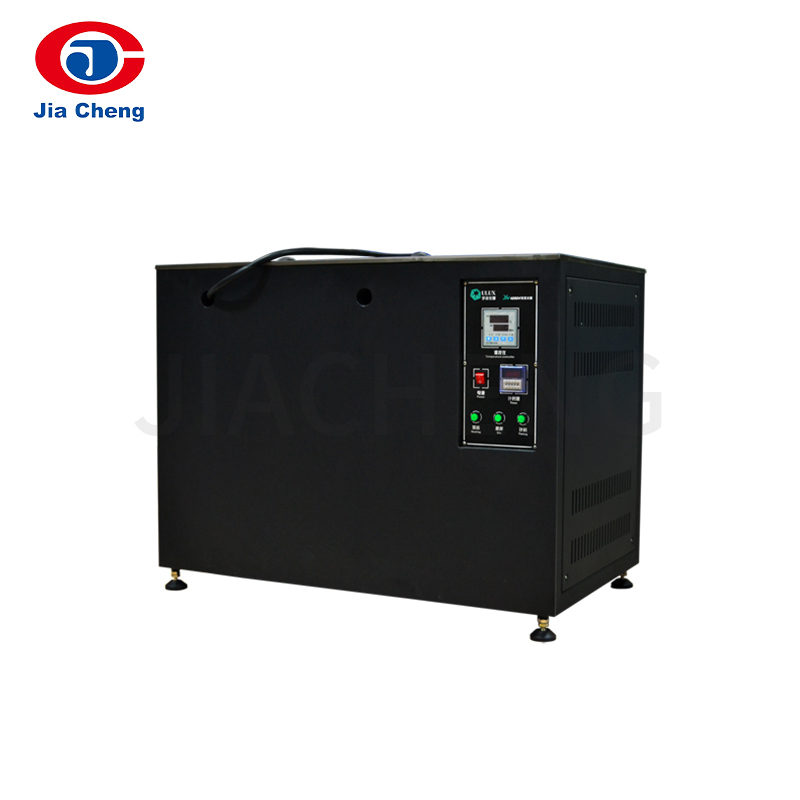
YN42024 constant temperature water tank
Use in conjunction with an insulation resistance tester to test the insulation resistance value of wires and cables in water. Placing wire and cable samples in a constant temperature water bath, heating them to a specific temperature and maintaining a constant temperature, simulating the temperature environment of wire and cable in actual use, can more accurately detect their insulation performance.
Product Overview
The YN42024 Constant Temperature Water Tank is specialized auxiliary equipment designed for insulation resistance and withstand voltage testing of wires and cables; it is intended for use in conjunction with an insulation resistance tester or a withstand voltage tester. By immersing cable samples in an environment with a constant water temperature, the product simulates the thermal conditions encountered during actual operation, enabling users to assess insulation performance with greater accuracy and reliability.
Why is Constant Temperature Water Bath Testing Necessary?
Insulation resistance is a critical performance indicator for wires and cables. It is closely linked to a product's resistance to electrical or thermal breakdown, dielectric loss, and the aging process of insulation materials during operation. In real-world applications, wires and cables operate in varying temperature environments, and the resistivity of insulation materials is highly sensitive to temperature—insulation resistance drops significantly as temperature rises.
Conventional testing at ambient temperature fails to accurately reflect insulation performance under high-temperature operating conditions. The YN42024 Constant Temperature Water Tank addresses this issue by immersing samples in water at a preset temperature, simulating the thermal environments cables may encounter in actual use. This ensures that insulation performance testing closely mirrors real-world operating conditions, yielding results of greater practical value.
Key Features and Technical Advantages
Precise and Stable Temperature Control System
The equipment utilizes a microcontroller-based system with non-contact voltage pulse output to drive Solid State Relay (SSR) control technology. It features PID auto-tuning capabilities and displays temperature readings directly on an LED digital screen. The temperature control range extends from ambient temperature to 98°C, with temperature fluctuation controlled within ±0.5°C and temperature uniformity reaching ±2°C. A forced water circulation system, powered by a booster pump, ensures consistent water temperature throughout the tank, preventing measurement deviations caused by temperature gradients.
Compliance with Major International Standards
The product is designed in strict accordance with various wire and cable testing standards, including UL 1581, VDE, and the GB series. It meets compliance requirements for both export certification testing and domestic quality supervision spot checks (such as GB/T 3048.4-2007, GB/T 5023.2-2008, etc.). Rugged and Durable Structural Design
The inner tank is constructed from SUS304 brushed stainless steel, offering excellent corrosion and aging resistance; it withstands prolonged exposure to high-temperature water without rusting or deforming. The exterior features an electrostatic powder-coated finish that is both aesthetically pleasing and scratch-resistant. A U-shaped stainless steel heating element ensures high heat transfer efficiency and a long service life. The insulation layer is filled with fiberglass material to effectively minimize heat loss, conserve energy, and maintain a stable temperature environment.
Flexible Specification Options
To accommodate cable samples of various lengths and specifications, multiple standard sizes are available, with support for custom, non-standard configurations:
Model | Internal Dimensions (L×W×H) | External Dimensions (L×W×H) | Temperature Range | Heating Power | Input Voltage
Standard | 300×300×300mm | 670×390×500mm | Ambient to 98°C | 2000W | 220V
Extended | 800×500×600mm | 1170×590×880mm | Ambient to 98°C | 6000W | 380V
Large-scale | 1200×600×800mm | 1680×750×1090mm | Ambient to 98°C | 12000W | 380V
Convenient Operation and Maintenance
A manual bottom drain valve allows for easy water replacement and drainage;
Key components, such as the heating element, are easily accessible for inspection and replacement, reducing maintenance costs.
Product Application Areas
Wire and cable manufacturers: Incoming raw material inspection, in-process quality control, and finished product testing;
Quality inspection and certification bodies: Product quality spot checks, type testing, and certification testing;
Research institutes and universities: Insulation material research and cable product development testing;
Power and telecommunications engineering: Performance assessment and fault analysis of in-service cables. Typical Test Procedure
The standard operating procedure for insulation resistance testing of the product is generally as follows:
Sample Preparation: Obtain a 5.5-meter cable sample; strip the insulation from both ends, ensuring approximately 150 mm of the conductor is exposed at one end.
Water Bath Heating: Preheat the constant-temperature water tank to the specified temperature (e.g., 70°C or 90°C).
Sample Immersion: Immerse a length of approximately 5 meters of the sample in the water, ensuring that at least 250 mm of both ends remains above the water surface; maintain immersion at the constant temperature for a minimum of 2 hours.
Wiring and Testing: Connect the measurement input terminal of the insulation resistance tester to the sample conductor and the high-voltage terminal to the water (acting as the ground electrode); apply a voltage of 80–500 V.
Data Reading: Record the insulation resistance value one minute after applying the voltage and convert it to insulation resistance per kilometer (MΩ·km).
Recommended Equipment Combination
To establish a comprehensive insulation performance testing system, it is recommended to pair the YN42024 constant-temperature water tank with the ZC-90 insulation resistance tester, enabling precise testing across the entire process—from the temperature-controlled water bath to the insulation resistance measurement.