Language
 中文简体
中文简体 English
 عربى
عربى русский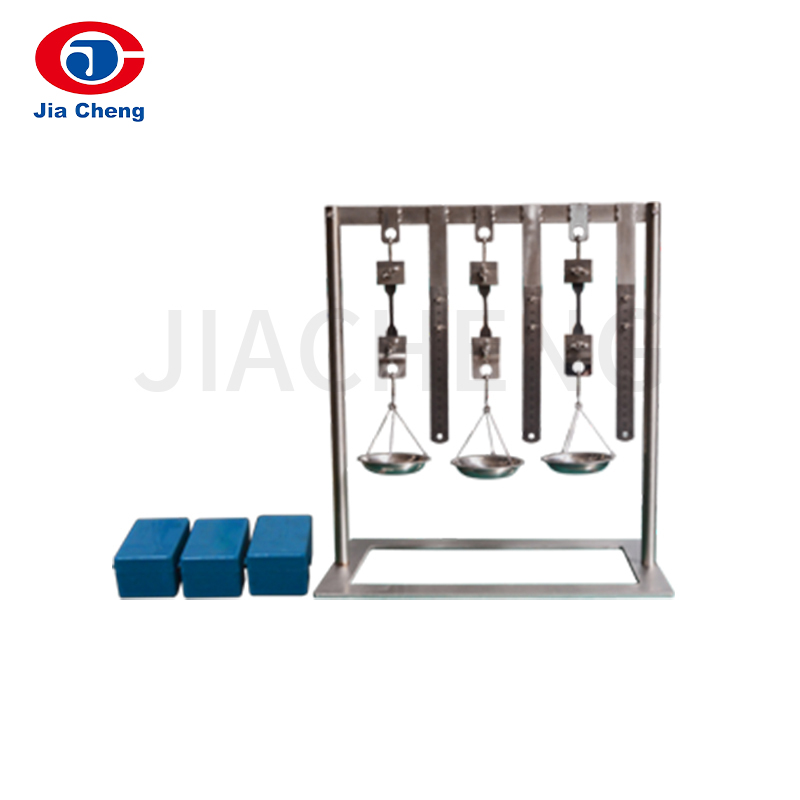
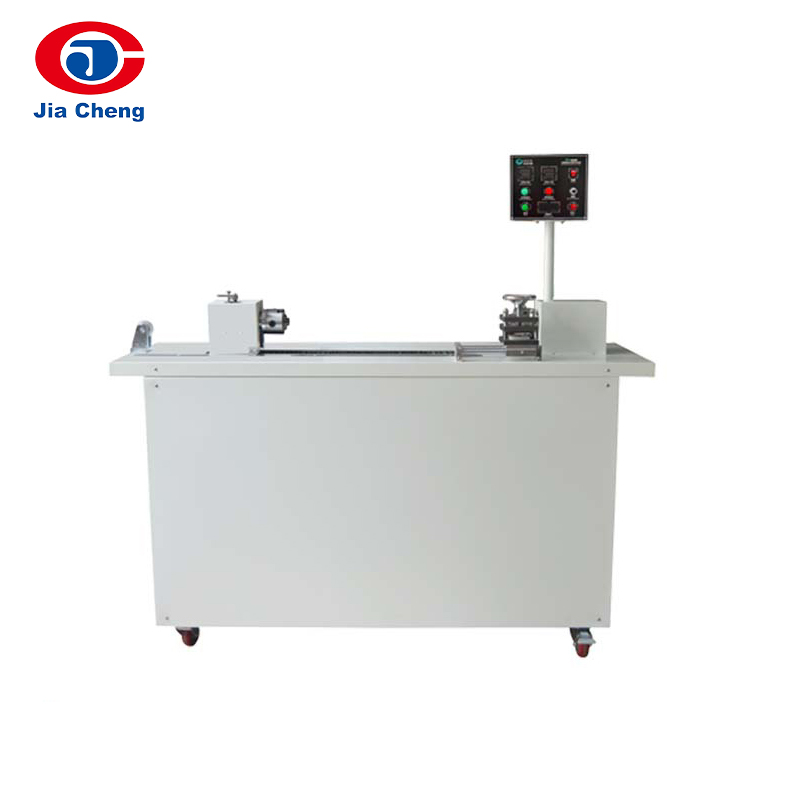
YN42043 thermal extension test device(three-group type)
Equipment used to test the thermal elongation performance of rubber, plastic, or similar materials used for wires and cables during high-temperature aging tests. It evaluates the performance of materials at high temperatures by applying a certain load to the sample and placing it in a high-temperature environment, measuring the dimensional changes of the sample before and after heating.
Product Overview
The YN42043 Hot Set Test Apparatus (Three-Station Model) is specialized equipment designed to test the hot set properties of rubber, plastic, and similar insulation or sheathing materials used in wires and cables under high-temperature aging conditions. Used in conjunction with a high-temperature aging oven, the apparatus applies a specified load to specimens in a high-temperature environment and measures dimensional changes before and after heating, thereby evaluating the material's resistance to deformation at high temperatures.
Why is the Hot Set Test Crucial?
During actual operation, heat generated by conductors or high ambient temperatures can cause insulation and sheathing materials to soften or even undergo flow-induced deformation. Insufficient high-temperature deformation resistance can lead to thinning or cracking of the insulation layer, potentially causing short circuits or dielectric breakdown, which severely compromises the cable's safe service life.
The hot set test simulates the stress state of materials at high temperatures and serves as a key indicator for measuring the cross-linking degree and heat resistance of insulation materials such as cross-linked polyethylene (XLPE), ethylene-propylene rubber (EPR), and silicone rubber. This test is directly linked to whether cable products can pass authoritative domestic and international certifications (such as CCC, UL, and VDE) and is an indispensable part of quality control for cable manufacturers.
Key Features and Technical Advantages
Three Independent Stations for Efficient Parallel Testing
The equipment features a three-station independent design, allowing for the simultaneous loading and measurement of three specimens, which significantly boosts testing efficiency. Each station is equipped with its own independent weight-loading mechanism and displacement measuring device; these operate without mutual interference, ensuring the comparability and repeatability of test data.
Precision Weight-Loading System
Equipped with standard weights, the system allows for the precise application of loads in accordance with various material standards. Load weights are calculated based on the specimen's cross-sectional area, meeting the 20 N/cm² stress requirement specified in standards such as GB/T 2951.21 and IEC 60811-507, thereby ensuring standardized and consistent testing conditions.
High-Precision Displacement Measurement
Equipped with a high-precision displacement measuring device, the apparatus accurately records specimen elongation under high-temperature loading and the permanent deformation rate after cooling. The measurement accuracy meets the standard requirement of ±1%, providing reliable data to support material performance evaluation. Excellent High-Temperature Adaptability and Durability
Clamps and key components are made of high-temperature resistant stainless steel, ensuring no deformation or oxidation during long-term use in environments exceeding 200°C;
The loading mechanism operates smoothly, ensuring vertical loading aligned with gravity and preventing frictional resistance from interfering with test results;
The structural design accounts for the limited space within high-temperature aging ovens, featuring a compact size for easy loading and unloading.
Strict Compliance with Domestic and International Standards
The product design fully meets the technical requirements for hot-set test apparatuses specified in the following standards:
GB/T 2951.21-2008 "Common test methods for insulating and sheathing materials of electric and optical cables – Part 21: Methods specific to elastomeric compounds – Hot-set test"
IEC 60811-507 (corresponding international standard)
Relevant product standards such as GB/T 5013 and JB/T 8734
Typical Test Procedure
Specimen Preparation: Cut dumbbell-shaped specimens from the finished cable's insulation or sheath; measure and record the initial gauge length (typically 20 mm).
Loading and Suspension: Mount the specimen in the clamps and suspend a specified weight from the lower end (subjecting the specimen to a stress of 20 N/cm²).
High-Temperature Aging: Place the entire assembly, including the specimen, into an aging oven preheated to the specified temperature (e.g., 200°C ± 2°C) and maintain the constant temperature for 15 minutes.
Reading and Recording: Read the specimen's elongation before the heating period ends and calculate the hot-set elongation percentage.
Cooling and Measurement: Remove the specimen, allow it to cool to room temperature, re-measure the gauge length, and calculate the permanent deformation rate after cooling.
Application Areas
Wire and Cable Manufacturers: Used for quality inspection and cross-linking degree control of insulation materials such as XLPE, rubber, and PVC;
Raw Material Suppliers: Used for batch performance verification of rubber/plastic pellets;
Quality Inspection and Certification Bodies: Conducting hot-set tests for certifications such as CCC, UL, and VDE;
Research Institutes: Used for the R&D and high-temperature performance evaluation of new insulation materials.
Recommended Product Pairing
It is recommended to use the YN42043 Hot Set Test Apparatus in conjunction with a high-temperature aging oven. Additionally, the YN62026 AC High-Voltage Withstand Tester can be added as an option to establish a comprehensive testing system covering everything from material thermal properties to the electrical strength of the finished product.